When Your Marine Cargo Policy Actually Stops: The Storage Gap Most Shippers Don't Know They Have
Marine cargo cover terminates at the warehouse or 60 days after discharge. Here is what happens to your goods next, and the cleaner fix.
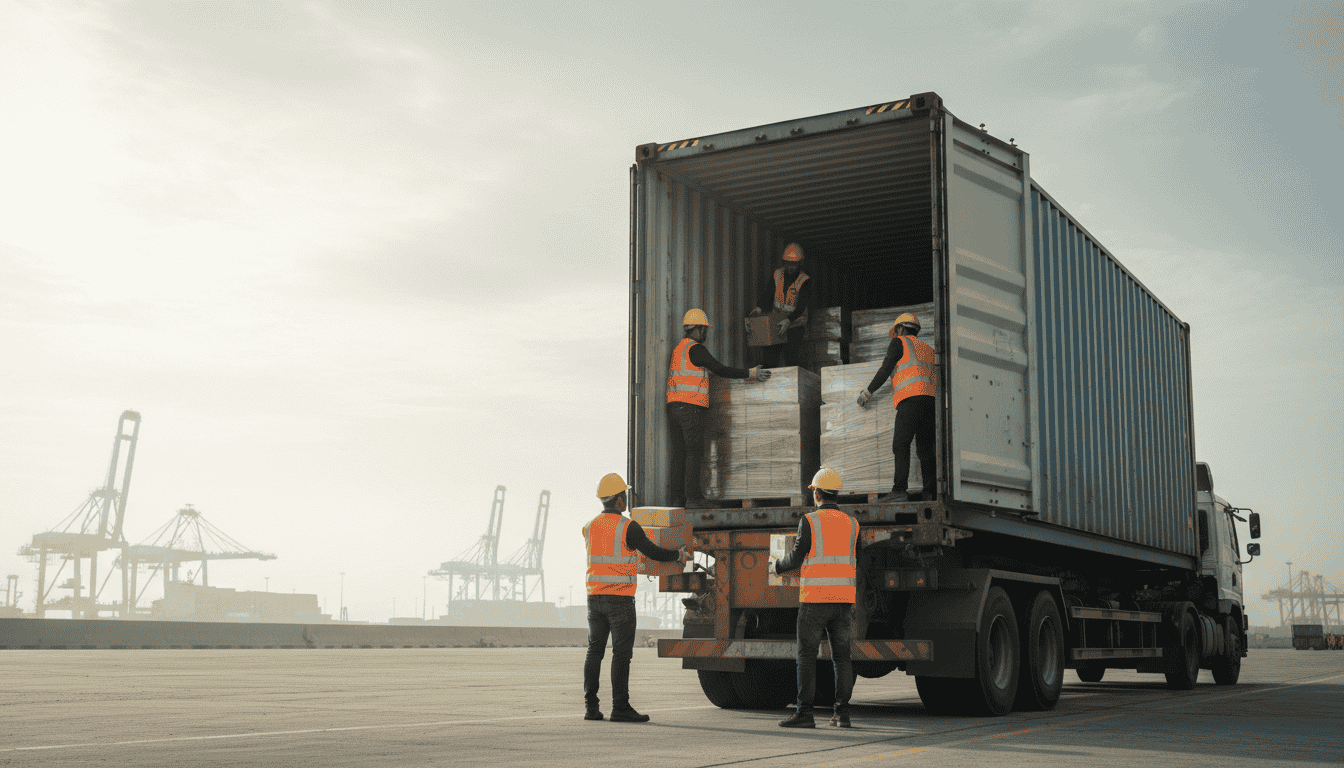
Your shipment arrives at Port Klang on a Tuesday. By Friday the containers are cleared and trucked to your warehouse in Shah Alam. The goods are offloaded and racked, and you turn your attention to the next consignment.
Your marine cargo policy, the one you thought covered your goods until they were sold or shipped onward, has already stopped working. The meter started the moment the vessel discharged at Westports. You didn't hear a click.
This article is about that click. More specifically, it's about Clause 8 of the Institute Cargo Clauses (A) 2009, the transit clause, and the boundary it draws between the marine cover you bought and the property cover you may or may not have in place on the other side.
What Clause 8 Actually Says
The transit clause is the section of every standard marine cargo policy that defines when cover begins and when it ends. Clause 8 of ICC (A) 2009 is precise. Cover attaches from the moment the subject matter insured first moves in the warehouse or at the place of storage for the purpose of immediate loading onto the carrying vehicle, and continues throughout the ordinary course of transit.
The termination of cover is where the trouble starts. Under Clause 8.1, cover ends on the earliest of several triggers:
| Termination Trigger (Clause 8.1) | What This Means in Practice |
|---|---|
| Completion of unloading from the carrying vehicle at the final warehouse or place of storage named in the contract of insurance | The moment your stock is offloaded at the named destination, the marine cover is done with it. |
| Completion of unloading at any other warehouse the assured elects to use for storage other than in the ordinary course of transit, or for allocation or distribution | If you reroute the goods to a storage location that is not part of the natural movement, that election terminates the cover. |
| Expiry of 60 days after completion of discharge overside from the overseas vessel at the final port of discharge | Even if the goods are still moving or sitting in a bonded warehouse, the 60-day clock starts at the moment of discharge and runs regardless. |
The third trigger is the one that catches most shippers. Sixty days sounds generous until you factor in clearance delays, bonded storage, and buyer readiness. A shipment that arrives ahead of schedule, or one that gets caught up in a port backlog, can burn through the window without the goods ever reaching their final destination.
When any one of these triggers fires, the marine cover stops. Not "mostly stops" or "stops once you update your records". It is a hard termination under the clause wording.
What Happens in the Warehouse Next
Once the marine cover terminates, the goods need something else to respond to them. For most businesses, that something else is a fire insurance policy covering the warehouse and its contents. This is the standard arrangement, and it isn't wrong, but it's usually more expensive and narrower than shippers realise.
Fire policies in Malaysia have historically been rated on tariff, with premium reflecting the sum insured, the occupancy class, and the construction of the building. Stock is a large component of the sum insured for any trader, wholesaler, manufacturer, or distributor. In many cases, stock is the largest line on the fire policy, larger than the building itself at current construction costs.
So a significant share of the annual fire insurance premium paid by these businesses is effectively a storage tariff on stock. And the cover that stock receives from the fire policy is, by marine-market standards, narrow.
Why "Fire Plus Extensions" Is Not the Same Thing
A fire policy is a named perils policy at its core. It responds to fire, lightning, and whatever set of extensions has been bolted on by negotiation. Common extensions include explosion, aircraft and vehicle impact, riot and strike damage, malicious damage, burst pipes, and storm and flood.
Even with extensions, a fire policy is not all-risks. If a forklift driver accidentally punctures a pallet of chemical drums, that damage may fall outside the fire and allied extensions. If the stock is contaminated by a leak from a neighbouring unit, the same.
Theft is often a separate extension, usually on restrictive terms, and often with a large deductible.
An all-risks marine cover, by contrast, responds to any fortuitous loss or damage that is not specifically excluded. The exclusion list is known and finite. Everything else is covered, subject to the clause wording.
The difference in breadth isn't academic. It is the difference between being covered for a warehouse accident and discovering at the claim stage that the relevant peril was never added.
The Structural Mismatch
There's a reason most businesses end up with stock on a fire policy rather than a marine policy. The boundary between marine and fire is how the insurance industry has always divided up risk: marine is for transit, fire is for stationary property.
Stock sits in storage, so stock goes on fire. That's the received wisdom, and it's inherited rather than examined.
The problem is that the received wisdom was built for a world where stock stayed put. A warehouse held the same inventory for months, the fire policy covered it, and nobody asked why.
Modern supply chains don't work that way. Stock arrives from overseas, sits for weeks or months, then ships onward to another warehouse, another buyer, or another country. The lines between "in transit" and "in storage" are blurred to the point where it no longer makes sense to pay two underwriters on two policy forms to cover them separately.
The marine market noticed this before the Malaysian property market did, and the structural response is stock throughput.
Stock Throughput as the Structural Answer
Stock throughput is a marine-class policy that extends the transit cover into the storage period, under a single clause set and a single underwriter. The transit portion mirrors ICC (A) 2009. The storage portion provides all-risks cover for the goods while at the named location, typically for up to 12 months.
For a business whose stock is moving internationally and sitting in named warehouses, stock throughput does three things a fire policy with stock extensions cannot. It covers the transit and storage on one continuous clause form, it rates the exposure on marine market terms rather than fire tariff terms, and it allows stock declarations to reflect actual values rather than a fixed sum insured.
We've written a separate explainer on stock throughput specifically, including who it fits and what to clarify with your broker before placing it. The short version is that it isn't the right answer for every business, but for businesses whose fire policies are dominated by stock that has recently been in transit, it's often the cleaner structure.
What to Do With This Information
If you're importing or exporting with any regularity, and if your stock sits in a warehouse for weeks or months after discharge, two practical steps are worth taking before your next fire policy renewal.
| Step | What It Reveals |
|---|---|
| Pull your fire policy schedule and identify the stock component of the sum insured | If stock is a large share of your fire sum insured, most of your fire premium is paying for stock cover. That is the portion that can be restructured. |
| Map the average time your imported stock spends in storage before it is sold or shipped onward | If the average exceeds 30 days, you are likely crossing the Clause 8.1.3 trigger on most shipments. The marine policy is not doing what you think it is. |
The answer isn't always stock throughput. Some businesses are in the right place already, and others have stock exposures too small to justify the restructuring.
But the question is worth asking explicitly, and the fire renewal meeting is the moment to ask it.
Frequently Asked Questions
Can I extend the 60-day period under Clause 8?
Yes, in some cases. Insurers will extend the termination period by endorsement if the delay is ordinary course and within their risk appetite, but extended storage by endorsement is not the same as stock throughput, and is priced and worded on transit terms. For long-term storage, the throughput structure is the cleaner answer.
What happens if I do not have any fire cover on the warehouse?
Then you have a gap between the marine termination and nothing. Once Clause 8 fires, the goods are uninsured. This is more common than it should be with third-party warehouses and with traders who rely on forwarder arrangements they have not examined.
Does Clause 8 work the same under ICC (B) and ICC (C)?
The transit clause structure is the same across all three Institute Cargo Clauses forms. What differs is the scope of cover during transit, not the termination logic. ICC (B) and ICC (C) have the same 60-day window and the same named-warehouse trigger.
If my goods are in a bonded warehouse awaiting duty clearance, is that covered by my marine policy?
For a period, yes. Bonded storage awaiting clearance is generally considered part of the ordinary course of transit, and remains within cover until one of the Clause 8 triggers fires. The 60-day trigger still runs, so if clearance takes longer than 60 days for any reason, you fall out of cover regardless of where the goods physically are.
Does stock throughput replace my marine open cover?
It can, or it can sit alongside it. Some businesses place stock throughput for the combined transit-and-storage exposure and keep separate single-shipment or open cover facilities only for business that does not fit the throughput structure. Others move everything onto throughput, and the right shape depends on the volume mix and the storage profile.
Voyage Conclusion
The gap between Clause 8 and the fire policy on the other side is one of the least-examined lines in Malaysian commercial insurance. For most shippers it is a gap that can be closed with a single structural change to how the stock is insured.
Voyage arranges marine cargo and stock throughput structures through licensed broking partners in Malaysia and Singapore, and the Clause 8 conversation is one we have with clients often enough that we wrote this article instead of having it over email every time. If your stock is stuck on a fire policy because that's how it has always been done, there's a cleaner answer.
Cover ends at the warehouse, or wherever ICC (A) Clause 8 says it does.
Stock Throughput closes the seam in a single policy. Eight-question fit profile and a decision matrix sized for the renewal call.
Download the Stock Throughput Decision Tool →Want a single programme that closes the transit-to-storage seam?
WhatsApp us with your warehouse footprint, current marine cover, and renewal date. We will quote an STP programme.
WhatsApp Us NowDisclaimer: This article provides general guidance on marine cargo insurance and policy structure as of April 2026. Coverage terms, conditions, and availability vary by insurer, policy, and jurisdiction. Regulatory requirements differ between countries and may change. Always review your specific policy wording and consult a qualified insurance or legal professional before making coverage decisions.
Why Voyage
Marine Insurance Specialists
International Underwriter Access
Both Sides of the Supply Chain
Malaysia and Singapore Expertise
Other industries
Explore other industries we cover


Get Best Rates / Quotation

Voyage is a specialist marine insurance intermediary arranging marine cargo and marine liability coverage for businesses in Malaysia, Singapore, and internationally. All insurance is placed through licensed broking partners.
Riskflow Sdn Bhd (202101001225):
Suite 3.19 (North Block), The Ampwalk, 218 Jalan Ampang, 50450 Kuala Lumpur, Wilayah Persekutuan Kuala Lumpur
t: +60149255243 (Kevin H.)
email: kevin@voyagecover.com