BERNAS Rice Import Cargo Insurance
BERNAS rice import cargo insurance Malaysia. Phytosanitary, MAQIS, contamination, infestation, bulk vessel vs container, and claim evidence.
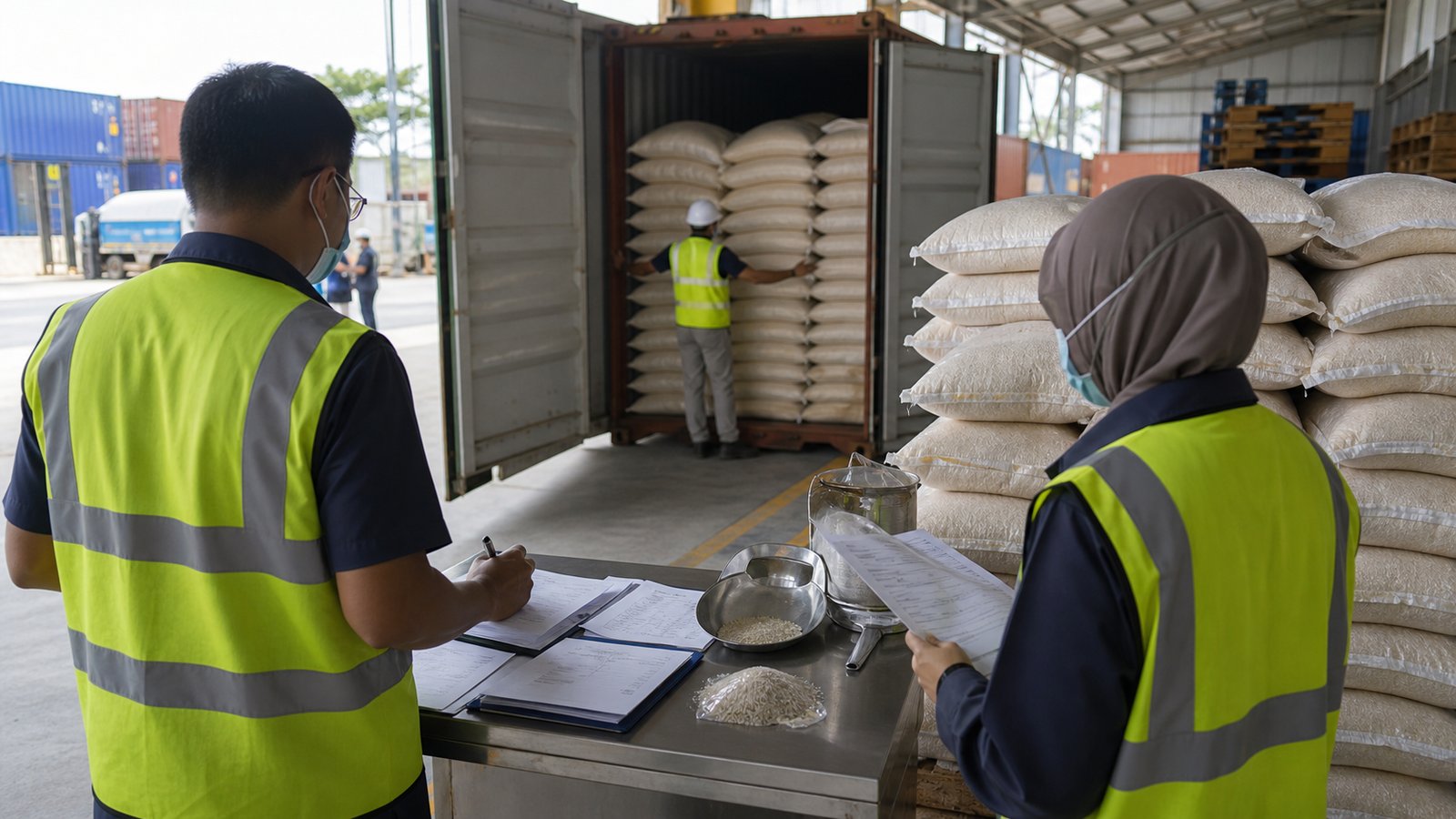
BERNAS Rice Import Cargo Insurance
Does rice cargo insurance cover a Malaysia import shipment rejected for contamination, infestation, or missing phytosanitary documents? It can cover insured physical loss or damage such as wetting, contamination, shortage, or infestation during transit, but it does not fix an import-permit or documentation failure by itself.
That distinction matters under Malaysia's rice import framework because BERNAS, MAQIS, Customs, plant-health documents, origin, and cargo condition are separate files that must line up.
The Import File Question
Before shipment, separate the rice import licence and permit file from the cargo condition file, then make sure the invoice, origin, phytosanitary document, bill of lading, and insurance certificate tell the same story.
Key Facts: Malaysia Rice Import Cover
What is BERNAS rice import cargo insurance? It is marine cargo cover for rice shipments imported into Malaysia under the BERNAS framework, including bagged, containerised, and bulk movements. The policy should match cargo value, origin, packing, route, and inspection evidence.
What is BERNAS' import role? BERNAS states that Malaysia's rice import policy supports national self-sufficiency and supply stability, and that BERNAS acts as the sole importer of rice on behalf of the government. BERNAS also states that bulk import volume is sourced from Vietnam, Thailand, Pakistan, India, and Myanmar.
What permits affect rice imports? Malaysia Customs HS guidance for rice states that importation into Peninsular Malaysia and Labuan requires an import permit issued by or on behalf of the Director General of Control of Paddy and Rice and is subject to MAQIS inspection and approval.
What does MAQIS add? MAQIS handles quarantine and inspection at entry points for agricultural and agro-based products, with import permits and documents such as phytosanitary certificates depending on commodity requirements.
What cargo evidence matters most? Pre-shipment inspection, phytosanitary certificate, fumigation or treatment record, moisture record, container or hold condition, tally, seal, discharge survey, and buyer or warehouse inspection should be retained.
Framework: Import Permission Is Not Cargo Cover
Rice importation is a regulated food and agricultural flow. BERNAS addresses national rice import policy and supply. MAQIS and plant-health authorities address import inspection and quarantine. Cargo insurance addresses physical loss or damage to the rice during the covered transit.
The money page for the insurance product is marine cargo insurance. The industry overlap is food, beverage and halal exports cargo insurance, even though the immediate flow is import rather than export.
Rice Origins and Acceptance Evidence
BERNAS names Vietnam, Thailand, Pakistan, India, and Myanmar as core import sources. Each origin can involve different rice grade, crop year, packing, fumigation, moisture, and phytosanitary documentation. Do not use one origin's document habits for another origin without checking the actual permit terms.
| Evidence | Why it matters | Claim gap if missing |
|---|---|---|
| Phytosanitary certificate | Supports plant-health compliance for regulated plant products | Import hold may be treated as a document issue |
| Fumigation or treatment record | Supports infestation defence | Origin infestation and transit infestation become hard to separate |
| Moisture and quality certificate | Shows condition before shipment | Wetting and mould claims are weak |
| Container or hold inspection | Shows whether the carrying unit was clean and dry | Water ingress source is unclear |
| Discharge survey and tally | Shows shortage, wetting, and damaged bags on arrival | Quantity and condition are disputed |
For the plant-health side, see phytosanitary certificate requirements. For declared value and landed cost alignment, use customs valuation and cargo insured value and the Malaysia import duty and SST calculator.
Bulk Vessel vs Containerised Rice
Bulk vessel rice movements can fit larger volume and lower unit handling, but the claim file depends on hold cleanliness, fumigation, hatch condition, ventilation, shore tally, and discharge survey. Wetting, infestation, and shortage can become large quickly.
Containerised rice gives better separation by lot and buyer, but it adds container condition, door seal, desiccant, condensation, pallet, and bag-damage questions. LCL or mixed consolidation adds another custody layer.
The right choice is not only freight cost. It is how easily the importer can prove what happened if the cargo arrives wet, infested, short, or contaminated.
Incoterms and Insurance Responsibility
Rice import contracts may use CIF, CFR, FOB, or FCA terms depending on seller and buyer. Under ICC Paris, Incoterms 2020, CIF requires the seller to procure at least ICC(C) minimum insurance, while CIP requires ICC(A) minimum. Buyers can ask for broader cover by contract.
For the trade-term decision, see Incoterms 2020 cargo insurance responsibility. If the imported rice is held before distribution, the storage period should be reviewed outside a pure ocean transit certificate.
Coverage Response: Rice as Food Cargo and Agricultural Cargo
Rice import insurance should be written as food cargo and agricultural cargo at the same time. ICC(A), IUA / LMA clause text, 2009 edition, can provide broad physical loss or damage cover, but rice claims often turn on whether wetting, infestation, contamination, or shortage occurred during covered transit or existed before shipment.
The import framework does not replace cargo cover. BERNAS, permit, MAQIS, and phytosanitary files deal with market access and quarantine. The cargo policy deals with the physical condition and value of the rice. When those files are confused, importers can lose time arguing the wrong point.
Bulk vessel cargo may need special survey arrangements: hold inspection, draft survey where used, tally, fumigation record, hatch condition, and discharge survey. Containerised rice needs container inspection, seal, bag count, pallet or dunnage records, moisture and infestation checks, and destination warehouse records.
Where rice is held after arrival before distribution, the importer should check whether the policy ends at port, warehouse, or final delivery. A transit-only certificate may not cover a later warehouse infestation or wetting event.
Risk Categories for Rice Imports
Wetting and mould
Rice can be damaged by seawater, freshwater, condensation, rain during handling, hatch leaks, container roof leaks, or damp warehouse storage. The visual pattern matters. Wet bags at container roof line, hatch-side cargo, or outer rows can point to different causes.
Preserve the carrying unit where practical. Photograph the container or hold, bag positions, water staining, floor condition, dunnage, roof, hatch covers, and affected rice before sorting or disposal.
Infestation and quarantine findings
Infestation can originate at the supplier warehouse, during ocean transit, at a port storage point, or after arrival. A phytosanitary certificate and fumigation record can support the import file, but the claim still needs survey evidence showing when infestation was found and whether it was active.
If MAQIS or another authority orders treatment, segregation, or disposal, keep the official notice, inspection report, and treatment record. Those documents help separate quarantine action from insured damage.
Shortage, spillage, and bag damage
Bulk rice shortage and bagged rice shortage produce different evidence. Bulk shortage uses vessel, shore, and survey figures. Bagged shortage uses tally, seal, warehouse receipt, and delivery record. Spillage during discharge should be photographed and measured before cleanup.
Do not treat shortage as a single number. A shortage file should explain the starting quantity, the custody points, the measured arrival quantity, and the method used to calculate the gap.
Import Documentation Pack
A Malaysia rice import file has to satisfy customs, quarantine, buyer, warehouse, and insurer. The broker should not see the insurance certificate only after the shipment is already under inspection.
| Layer | Documents | Why it matters |
|---|---|---|
| Import authority | Import permit, MAQIS documents, phytosanitary certificate where required | Shows the goods were eligible for import review |
| Origin condition | Inspection certificate, moisture, fumigation or treatment, packing record | Shows whether damage existed before transit |
| Transport | Bill of lading, container seal, hold inspection, tally, draft survey where used | Places quantity and custody during transit |
| Arrival condition | MAQIS inspection, warehouse report, survey photos, lab or pest report | Shows the condition at discovery |
| Loss handling | Treatment, sorting, salvage, disposal, re-export, cost invoices | Supports mitigation and quantum |
For quote intake, Voyage should capture origin country, packing method, bulk or container, shipment value, arrival port, storage after arrival, import permit status, and any prior wetting or infestation loss.
Common Claim Scenarios
Scenario 1: Containerised rice arrives wet at Port Klang
The consignee opens the container and finds wet bags near the roof and sidewall. The importer should stop unloading long enough for photos, seal record, container inspection, and survey. If the rice is moved to warehouse before evidence is captured, the cause becomes harder to prove.
Scenario 2: Bulk rice shortage after discharge
The importer claims a shortage between bill of lading quantity and shore received quantity. The file needs load-port figures, vessel records, discharge survey, shore scale or tally, and any spillage record. The insurer will ask whether the difference is measurement variance or physical loss.
Scenario 3: MAQIS inspection finds infestation
The importer should preserve the MAQIS notice, sample report, origin treatment record, photos, and survey. If infestation was present at loading, the claim is weak. If transit or storage during covered custody introduced infestation, the claim needs evidence of that timing.
Scenario 4: Rice held for document mismatch then deteriorates
A document mismatch causes a hold. During the hold, storage conditions worsen and the rice suffers physical damage. The importer needs two files: one for the compliance hold, one for the physical deterioration. Only the second file is the possible cargo claim.
How to Choose Between Bulk and Container Cover
The insurance decision should follow the physical movement, not only the purchase contract. Bulk rice can concentrate loss into one vessel or parcel. Containerised rice can spread risk across units but adds more handoffs, seals, and warehouse records. The wrong evidence model creates disputes.
For bulk vessel shipments, plan survey before arrival. The importer should know who appoints the surveyor, where samples will be taken, how discharge tally will be recorded, and how damaged or wet cargo will be segregated. For containerised shipments, the importer should have a container opening protocol at the first warehouse or port inspection point.
The policy should also match the sale and storage plan. If rice is purchased under CIF with seller-arranged cover, the Malaysian importer should read the certificate before relying on it. If the importer buys FOB or arranges its own cover, the route and storage after arrival should be stated clearly.
What to Send Before Requesting a Rice Import Quote
| Quote field | Why it matters |
|---|---|
| Origin country and supplier | Shows expected inspection, phytosanitary, and quality documents |
| Bulk vessel or container | Sets survey, tally, shortage, and wetting evidence requirements |
| Packing and rice grade | Separates bagged, bulk, specialty, and ordinary cargo value |
| Import permit and MAQIS status | Shows whether the shipment has a compliance issue before transit begins |
| Warehouse after arrival | Shows whether storage beyond transit needs to be addressed |
A good rice quote request includes the draft invoice, packing list, origin documents, route, arrival port, expected storage location, and highest value at risk. If the shipment is time-sensitive for distribution, tell Voyage that too, because survey and claim notification steps should be agreed before discharge.
Binding Decisions Before Rice Is Loaded
The importer should decide who controls insurance before the seller issues final documents. If the purchase is CIF, the seller may arrange cover, but the Malaysian importer still needs to read the certificate. A CIF certificate that uses narrow cover, low value, or a short transit description may not fit the importer's real exposure.
The second decision is whether arrival storage is part of the insured plan. Rice can be physically sound at discharge and later damaged in a warehouse. If the importer wants cover after arrival, that should be discussed before shipment, not after a warehouse loss.
The third decision is survey protocol. Bulk rice and containerised rice need different survey steps. The importer should identify the surveyor, inspection point, and notification trigger before the vessel arrives or containers are opened. Waiting until after distribution starts can break the evidence chain.
Decision Matrix: Cargo Damage, Import Hold, or Supplier Quality?
Rice import losses should be sorted before the cargo is treated, sold, or distributed. A wetting claim, a phytosanitary hold, and a poor-quality origin lot require different responses.
| Situation | Likely first file | Evidence to collect |
|---|---|---|
| Rice arrives wet or mouldy | Cargo insurance claim | Photos, survey, container or hold inspection, moisture readings |
| MAQIS hold is based on missing import or plant-health document | Import compliance file | Permit, certificate, authority notice, broker correspondence |
| Infestation is found at arrival inspection | Quarantine and cargo causation file | Origin treatment, survey, inspection report, samples |
| Bulk discharge quantity is short | Survey and shortage file | Load figures, discharge figures, tally, spillage, draft or shore calculations |
| Rice grade does not match purchase contract | Supplier quality and sale-contract file | Contract, COA, origin sample, buyer inspection |
First 24 Hours After a Rice Import Problem
Stop distribution of the affected lot and separate sound cargo from damaged cargo. Photograph the rice, bags, container, hold, pallets, and storage condition before sorting. If authorities require treatment or quarantine, keep the written instruction.
Notify the insurer and appoint a surveyor quickly. Rice can be rebagged, dried, treated, or disposed of, but those actions should be recorded. If treatment is needed for food-safety or quarantine reasons, preserve samples first where lawful and practical.
Collect the import documents and cargo documents together. The insurer will ask for invoice, packing list, bill of lading, permit, phytosanitary certificate where relevant, origin inspection, and destination survey. Waiting for documents after the cargo has moved slows recovery.
Programme Design for Rice Importers
Rice import cover should be matched to the import model. A bulk vessel programme, containerised rice programme, and warehouse-heavy distribution programme do not need the same evidence or attachment points.
| Programme setting | Recommended treatment |
|---|---|
| Mode | Separate bulk vessel, FCL, LCL, and warehouse delivery movements |
| Origin file | Keep origin inspection, treatment, phytosanitary, and moisture evidence |
| Arrival inspection | Set survey and MAQIS document collection steps before discharge or opening |
| Storage endpoint | State whether cover ends at port, first warehouse, or final distribution point |
| Shortage evidence | Use tally, seal, draft or shore figures, spillage record, and delivery exception |
The strongest quote request gives Voyage origin country, mode, value, import permit status, arrival port, warehouse endpoint, and prior wetting or infestation history. That information separates a serious rice import lead from a simple certificate request.
Request the BERNAS rice cargo documentation pack.
Send Voyage the origin, packing method, shipment value, import route, and inspection issue. We will map the import, phytosanitary, tally, and cargo claim evidence in one checklist.
WhatsApp Kevin at +60 14 925 5243 or request a callback.
Frequently Asked Questions
Does rice cargo insurance cover MAQIS rejection?
Not by itself. MAQIS rejection for missing documents or permit issues is usually a compliance problem. Cargo insurance needs insured physical loss or damage.
Who imports rice into Malaysia?
BERNAS states that it acts as the sole importer of rice on behalf of the government under Malaysia's rice import policy.
What rice origins does BERNAS name?
BERNAS names Vietnam, Thailand, Pakistan, India, and Myanmar as bulk import sources used for import diversification.
Is bulk rice riskier than containerised rice?
It is different. Bulk vessel claims turn on holds, fumigation, draft or discharge survey, and large-volume wetting, while container claims turn on container condition, seals, condensation, and bag damage.
Does a phytosanitary certificate prove no cargo damage?
No. It supports plant-health compliance. Cargo condition still needs inspection, moisture, tally, photos, and survey evidence.
What should be done after rice arrives wet?
Stop distribution, appoint a surveyor, photograph bags and carrying unit, preserve samples, record seal and tally, and collect discharge or warehouse inspection reports.
Compliance-Ready Rice Import Cargo Cover from Voyage
Rice import cargo needs a clean split between BERNAS framework documents and physical cargo evidence. Voyage can help importers and suppliers arrange marine cargo insurance that matches origin, permit, phytosanitary, bulk or container movement, contamination, infestation, shortage, and wetting claim files.
Get a tailored quote. WhatsApp Kevin at +60 14 925 5243 or request a callback. Quotes turn around in 24-48 hours where the underlying cover is in place.
Disclaimer: This article provides general guidance on BERNAS rice import cargo insurance Malaysia as of May 2026. Coverage terms, conditions, and availability vary by insurer, policy, and jurisdiction. Always review your specific policy wording and consult a qualified insurance professional before making coverage decisions.
Why Voyage
Marine Insurance Specialists
International Underwriter Access
Both Sides of the Supply Chain
Malaysia and Singapore Expertise
Other industries
Explore other industries we cover


Get Best Rates / Quotation

Voyage is a specialist marine insurance intermediary arranging marine cargo and marine liability coverage for businesses in Malaysia, Singapore, and internationally. All insurance is placed through licensed broking partners.
Riskflow Sdn Bhd (202101001225):
Suite 3.19 (North Block), The Ampwalk, 218 Jalan Ampang, 50450 Kuala Lumpur, Wilayah Persekutuan Kuala Lumpur
t: +60149255243 (Kevin H.)
email: kevin@voyagecover.com