Pharmaceutical Imports Cargo Insurance Malaysia
Marine cargo insurance for NPRA-licensed pharmaceutical importers, Product Registration Holders, wholesalers, and the GDP-compliant logistics providers who move temperature-sensitive medicines into Malaysia. Voyage arranges Institute Cargo Clauses (A) cover with temperature deviation, GDP-aligned documentation conditions, controlled substances handling, biologics endorsements, and air-and-sea coverage on the corridors that supply the Malaysian pharmaceutical market: India, Germany and the European Union, China, and the United States.
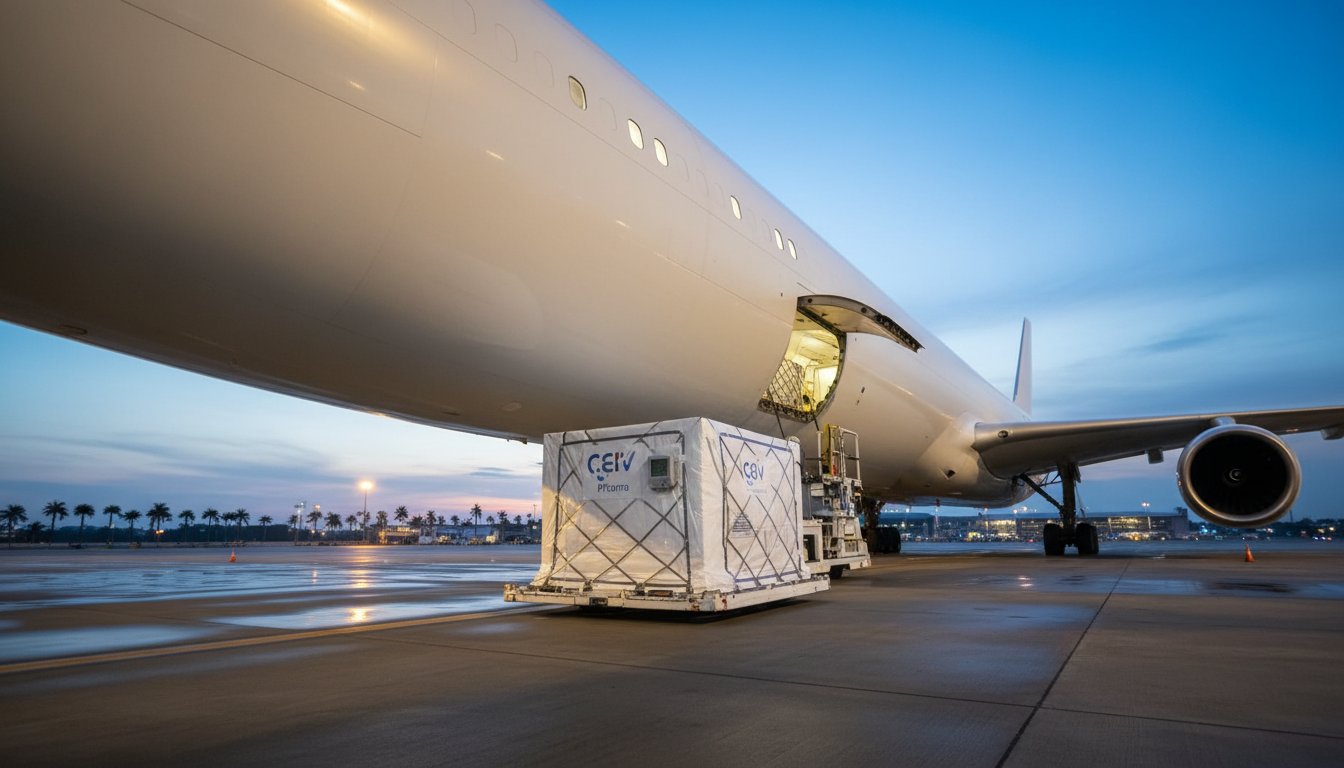
Our Specialisation
Marine Cargo and Liability Specialists. Voyage focuses on marine cargo insurance and freight forwarder liability. Deeper underwriter relationships, faster placements, and sharper terms for cold chain trade programmes.
Asia-Pacific Trade Corridors. We work with underwriters who understand the corridors feeding the Malaysian pharmaceutical market: India APIs and generics, Germany and EU biologics, China APIs and intermediates, United States innovator drugs. Regional placement expertise, global coverage.
Specialist Extensions. Temperature deviation endorsements, reefer breakdown cover, controlled substances handling, war risk on active corridors, and Montreal Convention gap cover on air freight. We arrange coverage others decline, subject to underwriter approval.
The Importer Picture in Malaysia
Malaysia imported approximately $2.4 billion of pharmaceutical product in 2024 (UN COMTRADE), with imported medicines accounting for around 63 percent of the pharmaceutical market by value (industry market research, 2024). The National Pharmaceutical Regulatory Agency (NPRA) maintains the QUEST3+ register of active pharmaceutical import licence holders, published as a public dataset on data.gov.my and updated daily. Once MNC subsidiaries, MLM-structured companies trading in supplements, and MOH-procurement-aligned distributors are filtered out, the addressable private-sector Sdn Bhd importer-distributor universe is a defined commercial segment. These are the cargo owners who bear full insurable interest from origin port to Malaysian warehouse.
If you hold an NPRA import licence and bring pharmaceutical product into Malaysia, your cargo insurance programme must address temperature deviation on cold chain shipments (2°C to 8°C for refrigerated, below minus 20°C for frozen, 15°C to 25°C controlled room temperature for ambient), Good Distribution Practice (GDP) documentation conditions imposed at the claims stage, controlled substances handling under the Dangerous Drugs Act 1952 and Poisons Act 1952, biologics and biosimilars insured at full declared value, and the Montreal Convention liability gap on air freight where carrier liability of 26 SDR per kilogramme is dwarfed by per-kilogramme cargo values that can run into the thousands. Standard ICC (A) without pharmaceutical-specific endorsements leaves identifiable gaps that surface only at claim.
This page covers:
- The pharmaceutical import profile for Malaysia
- What this page covers and who it covers
- Why standard cargo insurance is not enough for pharmaceutical cargo
- What Voyage arranges differently for NPRA-licensed importers
- Routes, modes, and corridor risk
- Insured value, MAL registration value, and NPRA considerations
- Who in pharmaceutical imports needs marine cargo insurance
- Common claims in pharmaceutical imports
- Frequently asked questions
Malaysian Pharmaceutical Import Profile
Malaysia's pharmaceutical import market is structured around a small number of large distributors servicing government and major chain pharmacy demand, including the Pharmaniaga Logistics Sdn Bhd concession that supplies the Ministry of Health under a seven-year agreement effective July 2023 to June 2030. Alongside the large distributor segment sits a long tail of private Sdn Bhd importer-distributors who source finished dose pharmaceuticals, biologics, OTC products, and health supplements directly from overseas principals. The independent importer-distributor is the typical Voyage client profile: an NPRA import licence holder making cargo insurance decisions without specialist broker input.
| Metric | Value | Source |
|---|---|---|
| Pharmaceutical imports into Malaysia (2024) | Approximately $2.4 billion | UN COMTRADE, 2024 |
| Imported medicines as share of pharmaceutical market by value | Approximately 63 percent | Industry market research, 2024 |
| Active NPRA pharmaceutical import licence register | Several hundred active licence holders, complete list published daily | NPRA QUEST3+ via data.gov.my, accessed May 2026 |
| Primary import origins (by trade flow) | India (APIs and generics), Germany and EU (biologics and specialty), China (APIs and intermediates), United States (innovator drugs) | Pharmaceutical trade flow data |
| Primary entry points | KLIA air cargo, Port Klang sea cargo | JKDM, MAHB Cargo |
What This Coverage Addresses
The pharmaceutical import cargo insurance programme arranged through Voyage addresses the specific exposures that the NPRA import licence holder carries from origin port to GDP-certified Malaysian warehouse. Coverage is placed on Institute Cargo Clauses (A) 2009 as the minimum standard, with named endorsements layered for pharmaceutical-specific risk.
| Coverage Element | What It Addresses |
|---|---|
| ICC (A) 2009 all-risks base | Physical loss or damage to pharmaceutical cargo in transit, warehouse-to-warehouse under Clause 8, subject to exclusions in Clauses 4 to 7 and to policy terms and conditions. |
| Temperature deviation endorsement | Loss arising from excursion outside the stated temperature range during transit. Defined trigger (time plus degrees) agreed with underwriter. Subject to policy terms. |
| Reefer equipment breakdown extension | Damage caused by mechanical or electrical failure of the refrigeration system during sea transit and at transshipment ports. |
| Controlled substances handling | Coverage for Schedule 1 and Schedule 2 poisons and Dangerous Drugs Act controlled substances where standard policies impose sub-limits or exclusions. |
| Biologics and biosimilars at declared value | Insurance value aligned to full replacement cost including landed value, registration fees, and any required testing. |
| Air and sea on the same declaration | Single open cover responding to both modes, with Montreal Convention gap clearly addressed for air freight. |
| GDP-aligned documentation clauses | Clarification of GDP documentation conditions imposed at claim stage, including logger data format and chain-of-custody handover records. |
| Institute War Clauses (Cargo) CL385 | War risk cover for shipments transiting Joint War Committee listed areas, including Red Sea and Bab-el-Mandeb corridors. |
| Institute Strikes Clauses (Cargo) CL386 | Strike, riot, and civil commotion cover, including delay exposure where pharmaceutical product has limited shelf life or stability window. |
For the foundational explainer, see Institute Cargo Clauses and what marine cargo insurance covers.
Who This Page Covers
| Audience | Insurance Need | Primary Product |
|---|---|---|
| NPRA-licensed importers and wholesalers | Annual cargo cover for finished dose pharmaceuticals, OTC products, and health supplements imported into Malaysia. | Open cover marine cargo with temperature deviation endorsement |
| Product Registration Holders acting as importers | Coverage aligned to the registered MAL number, with insured value matching the import value declared at customs. | Open cover marine cargo |
| Biologics and specialty distributors | Cold chain cover at 2°C to 8°C with reefer breakdown extension and full declared value including landed cost. | Specialist and high-value transit cover |
| Controlled substances importers | Cover for Schedule 1 and Schedule 2 poisons and DDA-controlled substances with handling endorsements. | Single shipment cover or open cover |
| GDP-certified logistics providers | Liability cover for temperature-sensitive pharmaceutical cargo in their care, including transshipment exposure. | Freight forwarder's liability |
| Bonded warehouse operators handling pharma | Liability cover for cold chain product dwelling at the terminal under power. | Terminal operator's liability |
Why Standard Cargo Insurance Is Not Enough for Pharmaceutical Cargo
ICC (A) 2009 is broad cover but it was not written with pharmaceutical cargo in mind. Three specific gaps surface repeatedly when an NPRA importer reads the small print only after a loss.
Gap one: temperature deviation is not part of the base wording. ICC (A) covers physical loss and damage. Temperature excursion that renders a vaccine consignment unusable, even where the product is physically intact, is treated as a deterioration claim rather than a covered peril unless a temperature deviation endorsement is written into the policy. The endorsement must specify the temperature range, the excursion trigger (combination of time and degrees), and the evidence standard for logger data.
Gap two: GDP documentation conditions can shift the burden of proof. Several policy wordings on the Asian market impose GDP documentation as a claims condition. If logger data is incomplete, chain-of-custody handover records are missing, or temperature validation at origin is not certified, the insurer can argue the loss arose from the claimant's failure to maintain required conditions rather than from a covered peril. This is not an exclusion in the classical sense; it is an evidence trap.
Gap three: controlled substances are commonly sub-limited or excluded. Standard pharmaceutical cargo policies frequently apply sub-limits to controlled substances or exclude them entirely unless a handling endorsement is purchased. For importers with mixed cargo (generics plus controlled analgesics, for example) the gap is identified at claim rather than at placement.
What Voyage Arranges Differently for NPRA-Licensed Importers
Voyage places pharmaceutical import cargo programmes directly with the international underwriters who write specialist cold chain and biologics risk, without the forwarder-intermediary markup that creeps into bundled marine open cover pricing. The placement model has four practical consequences for the importer.
Direct underwriter access. Quotes typically return within 24 to 48 hours, with terms structured around the importer's specific cargo profile (cold chain segment, controlled substances, biologics share, mode mix) rather than a generic pharma-class rating.
Temperature deviation as default, not endorsement-by-exception. Voyage arranges policies with temperature deviation written into the base cover wherever the cargo profile justifies it, with the excursion trigger negotiated against the importer's stability data rather than insurer template.
GDP-aligned documentation clauses. Documentation conditions are reviewed line-by-line at placement against the importer's actual handover process, so the claims-stage evidence standard matches what the operations team is already capturing.
Claims support with NPRA-aware loss adjusters. Loss adjusters appointed on Voyage placements are briefed on NPRA destruction certificate requirements, WHO good distribution practice guidance, and the practical realities of cold chain handover at KLIA and Port Klang.
Need cargo cover for your NPRA-licensed pharmaceutical import programme?
Voyage arranges specialist marine cargo insurance for Malaysian pharmaceutical importers, with temperature deviation, GDP-aligned documentation, and controlled substances handling written in at placement. Request a quote at voyagecover.com/#contact-form or WhatsApp Kevin at +60 14 925 5243.
Routes, Modes, and Corridor Risk
The four corridors that account for the majority of Malaysian pharmaceutical imports each carry a distinct risk profile. Mode selection (air freight versus reefer sea freight) drives the insurance structure more than origin country does.
| Corridor | What Ships | Typical Mode | Key Risk Factors |
|---|---|---|---|
| India to Malaysia | Generics, APIs, finished dose pharmaceuticals | Sea from west and east coast Indian ports to Port Klang; air for time-critical product to KLIA | Reefer container management, transshipment exposure at regional hubs, monsoon delay risk on west coast routes |
| Germany and EU to Malaysia | Biologics, biosimilars, specialty drugs, vaccines | Air from EU hubs to KLIA for biologics; sea reefer from EU ports for stable cold chain product | High value density, IATA CEIV Pharma chain-of-custody, Montreal Convention liability gap, war risk surcharge exposure on routes transiting Red Sea |
| China to Malaysia | APIs, intermediates, generics, health supplements | Sea from major Chinese container ports to Port Klang; air for finished dose to KLIA | Short transit time, container condensation on monsoon-routed sea freight, port congestion at peak season |
| United States to Malaysia | Innovator drugs, specialty biologics, oncology products | Air from US hubs to KLIA | High per-shipment value, Montreal Convention 1999 liability cap of 26 SDR per kilogramme effective 28 December 2024, transshipment dwell at intermediate hub airports |
Air freight sits under Montreal Convention 1999 carrier liability of 26 SDR per kilogramme of gross weight, approximately $35 per kilogramme at April 2026 rates, effective 28 December 2024 under the ICAO five-year inflation review. For high-value biologics, the cargo value per kilogramme commonly runs far in excess of the carrier liability cap, so a single pallet's exposure to the carrier is a small fraction of the insurable interest. The gap between carrier liability and cargo value is the cargo insurance gap, subject to policy terms.
Insured Value, MAL Registration Value, and NPRA Considerations
The insurable interest on pharmaceutical imports sits with the NPRA import licence holder from the moment risk transfers under the contractual Incoterm. Insured value, MAL registration value, and customs declared value should align but are not the same number.
| Value Reference | What It Represents | Common Discrepancy |
|---|---|---|
| Invoice value | Commercial value as billed by the overseas principal. | Does not include freight, insurance, or duty. |
| MAL registration value | Value associated with the NPRA-registered product. | Often a reference, not the actual cargo value at risk for a specific shipment. |
| Customs declared value | CIF or CIP value declared to Royal Malaysian Customs (JKDM) for duty calculation. | May lag the actual replacement cost where registration, testing, or revaluation has not been updated. |
| Insured value | Sum insured under the cargo policy, typically CIF or CIP plus 10 percent uplift. | Underinsurance is common where biologics are declared at invoice value rather than full replacement cost including registration and testing. |
The 10 percent uplift over CIF or CIP value follows UCP 600 Article 28 for Letter of Credit transactions and is standard practice for non-LC pharmaceutical placements. For biologics and biosimilars, the uplift may need to extend to cover NPRA registration costs, batch-specific stability data, and lead time for replacement supply.
Common Claims in Pharmaceutical Imports
Scenario 1: Temperature Excursion on a Biologics Air Freight Shipment (illustrative)
Consider an illustrative scenario where a Malaysian importer brings a biologics consignment from an EU hub to KLIA on an active temperature-controlled air freight movement. During a delayed transshipment, the active container experiences a sustained temperature excursion against the 2°C to 8°C requirement, breaching the stability data submitted to NPRA at registration. ICC (A) with a temperature deviation endorsement responds, subject to policy terms, while carrier liability under Montreal Convention 1999 is capped at 26 SDR per kilogramme of gross weight, leaving the cargo insurance gap as the primary recovery route.
Scenario 2: GDP Documentation Challenge on a Generics Sea Shipment (illustrative)
Consider a scenario where an NPRA-licensed importer brings a reefer container of generics from an Indian west coast port to Port Klang. On arrival, a portion of the consignment shows visible thermal damage. The insurer requests logger data, chain-of-custody handover records, and origin GDP certification, but the handover record from the transshipment terminal is incomplete and the logger data has a gap. The insurer may challenge the claim on documentation grounds; where GDP-aligned documentation clauses were negotiated at placement, the importer's evidence position is materially stronger. Outcome subject to policy terms.
Scenario 3: Reefer Equipment Breakdown on a Vaccine Shipment (illustrative)
Consider a scenario where a vaccine consignment moves from an EU port to Port Klang on reefer sea freight at 2°C to 8°C. The reefer unit experiences a compressor failure mid-voyage and the temperature rises outside the stability range before the carrier restores cooling. Under WHO good distribution practice guidance for pharmaceutical products (WHO Technical Report Series 957, Annex 5), product that has fallen outside the specified storage conditions should not be released for use unless it can be brought back into specification through validated processes. ICC (A) with a reefer equipment breakdown extension responds, subject to policy terms; without the extension, equipment failure can fall outside the ICC (A) base wording for pharmaceutical cargo.
Frequently Asked Questions
Who holds insurable interest on pharmaceutical imports into Malaysia?
The NPRA import licence holder holds insurable interest once risk transfers under the contractual Incoterm, typically at the origin port under CIF or CIP, or on board the vessel under FOB or CFR. Insurable interest is the legal basis for claiming under the cargo policy.
Is temperature deviation covered under standard ICC (A) for pharmaceutical cargo?
Not by default. Temperature excursion that renders pharmaceutical product unusable but leaves it physically intact is treated as deterioration rather than as a covered peril unless a temperature deviation endorsement is written into the policy. The endorsement defines the temperature range, excursion trigger, and evidence standard. Subject to policy terms and conditions.
How does GDP compliance affect a cargo insurance claim?
Several pharmaceutical cargo wordings impose GDP documentation as a claims condition, including logger data, chain-of-custody handover records, and origin GDP certification. If documentation is incomplete, the insurer can argue the loss arose from the claimant's failure to maintain required conditions. Negotiating GDP-aligned documentation clauses at placement reduces the risk of an evidence trap.
Are controlled substances and Schedule 1 poisons covered under a standard policy?
Standard pharmaceutical cargo policies frequently apply sub-limits to controlled substances under the Dangerous Drugs Act 1952 and Poisons Act 1952, or exclude them entirely unless a handling endorsement is purchased. Importers with mixed cargo should review controlled substances scope at placement, not at claim.
Does the Montreal Convention liability of 26 SDR per kilogramme protect my air freight pharmaceutical cargo?
Montreal Convention 1999 caps carrier liability at 26 SDR per kilogramme of gross weight, approximately $35 per kilogramme at April 2026 rates, effective 28 December 2024 under the ICAO five-year inflation review. For high-value biologics and specialty drugs, this cap is well below typical cargo values per kilogramme. Cargo insurance closes the gap, subject to policy terms.
Should I declare biologics at invoice value or full replacement cost?
Biologics should be declared at full replacement cost, which typically includes the landed cost, NPRA registration fees, any required testing, and the lead time for replacement supply. Declaring at invoice value alone is the most common cause of underinsurance on biologics claims. The standard 10 percent uplift over CIF or CIP value may be insufficient for biologics; agree the basis with the underwriter at placement.
How does Letter of Credit insurance certificate compliance work for pharmaceutical imports?
LC insurance certificates for pharmaceutical imports must satisfy UCP 600 Article 28: CIF or CIP value plus 10 percent uplift, currency matching the LC, clauses matching LC requirements, and dated no later than the shipment date. For pharmaceutical-specific cargo, the certificate must also reference any cold chain or controlled substances endorsements. See the LC Insurance Certificate Requirements guide for the full UCP 600 Article 28 framework.
What documentation should I have ready before a temperature excursion claim?
The standard evidence pack is temperature logger data with no gaps, chain-of-custody handover records at every transshipment, GDP certification at origin, the carrier's protest note, a surveyor's report from a recognised loss adjuster, and an NPRA destruction certificate where applicable. Capturing this before transit begins is cheaper than gathering it after a loss.
Voyage Conclusion
Pharmaceutical imports into Malaysia carry insurable exposures that standard ICC (A) without pharmaceutical-specific endorsements does not fully address: temperature deviation, GDP documentation conditions, controlled substances handling, the Montreal Convention gap on air freight, and the underinsurance trap on biologics declared at invoice value rather than full replacement cost. Voyage arranges open cover marine cargo insurance for NPRA-licensed importers with these endorsements negotiated at placement, supported by NPRA-aware loss adjusters at claim.
If you hold an NPRA import licence and bring pharmaceutical product into Malaysia, request a quote at voyagecover.com/#contact-form or WhatsApp Kevin at +60 14 925 5243. For corridor-specific risk depth, see the pharmaceutical imports cargo insurance guide.
Disclaimer: This page provides general guidance on cargo insurance for pharmaceutical importers in Malaysia as of May 2026. Coverage terms, conditions, and availability vary by insurer, policy, and jurisdiction. Regulatory requirements under NPRA, the Dangerous Drugs Act 1952, and the Poisons Act 1952 are the responsibility of the importer; cargo insurance provides financial protection but does not replace regulatory compliance programmes.
Always review your specific policy wording and consult a qualified insurance professional before making coverage decisions.
Why Voyage
Marine Insurance Specialists
International Underwriter Access
Both Sides of the Supply Chain
Malaysia and Singapore Expertise
Other industries
Explore other industries we cover


Get Best Rates / Quotation

Voyage is a specialist marine insurance intermediary arranging marine cargo and marine liability coverage for businesses in Malaysia, Singapore, and internationally. All insurance is placed through licensed broking partners.
Riskflow Sdn Bhd (202101001225):
Suite 3.19 (North Block), The Ampwalk, 218 Jalan Ampang, 50450 Kuala Lumpur, Wilayah Persekutuan Kuala Lumpur
t: +60149255243 (Kevin H.)
email: kevin@voyagecover.com