Cargo Insurance for Pharmaceutical Importers in Malaysia: The Complete Guide
Complete guide to cargo insurance for NPRA-licensed pharmaceutical importers in Malaysia. Cold chain, GDP, biologics, controlled substances, air and sea.
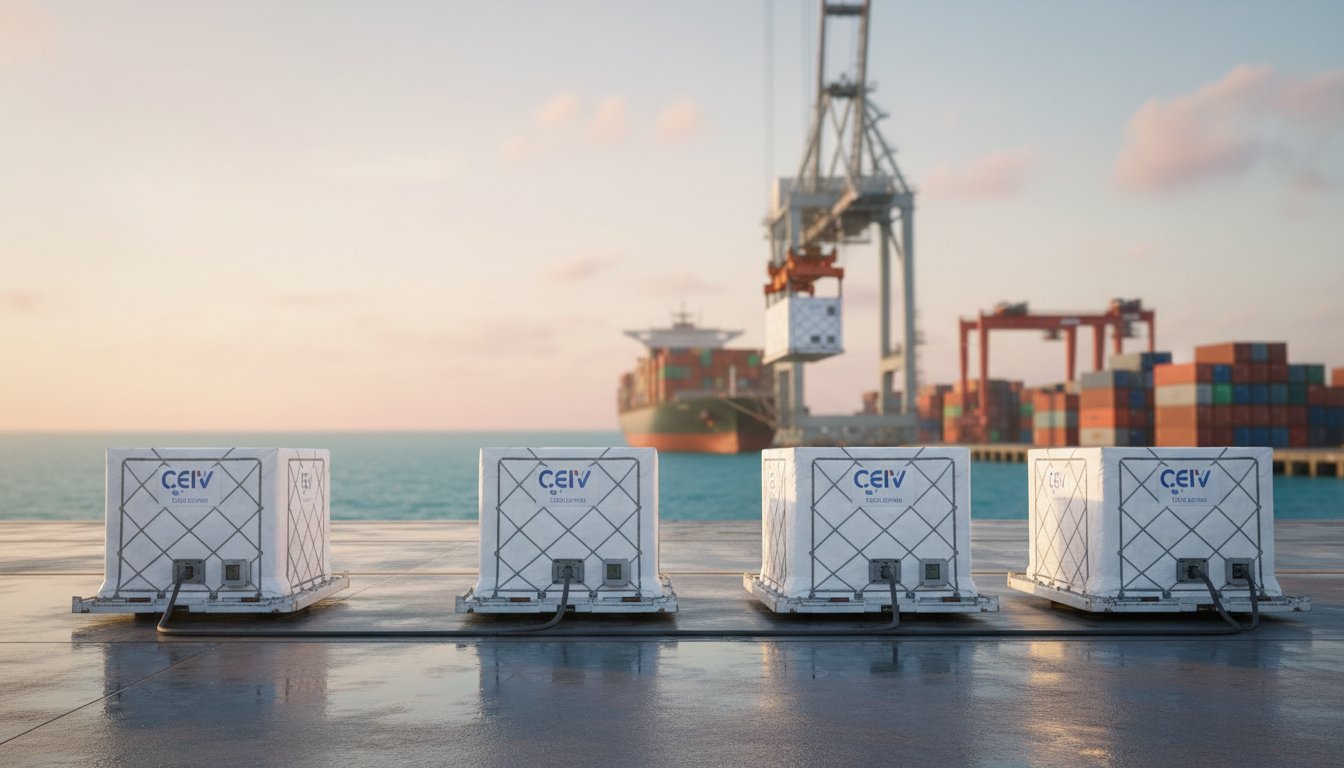
The Malaysian pharmaceutical import market is built on a long tail of private-sector Sdn Bhd importer-distributors holding active pharmaceutical import licences on the NPRA QUEST3+ register (data.gov.my, accessed May 2026). Those companies, together with the large MOH-aligned distributors, bring approximately $2.4 billion of pharmaceutical product into Malaysia each year (UN COMTRADE, 2024), with imported medicines accounting for around 63 percent of the pharmaceutical market by value (industry market research, 2024). Most of that cargo travels under Institute Cargo Clauses (A) 2009 with no pharmaceutical-specific endorsements, on policies placed through forwarder-bundled marine open covers, with documentation conditions that surface only at claim.
This guide is a working reference for the person who actually carries the insurable interest: the NPRA import licence holder. It covers the licensing framework, the GDP documentation trap, mode selection between air freight and reefer sea freight, the Montreal Convention gap, the underinsurance trap on biologics, controlled substances handling, and the claims evidence pack that determines whether a temperature excursion is paid.
Key Facts: Cargo Insurance for Pharmaceutical Importers in Malaysia
What does an NPRA import licence make you responsible for? The NPRA import licence holder is legally responsible for the registered product from origin port to Malaysian warehouse, which is why insurable interest on pharmaceutical imports sits with the importer rather than with the overseas principal, regardless of who arranged the shipping.
What is the standard minimum cargo cover for pharmaceutical imports? Institute Cargo Clauses (A) 2009, an all-risks form with named exclusions in Clauses 4 to 7 (inherent vice, insufficient packing, delay, insolvency, war, strikes, unseaworthiness) and a warehouse-to-warehouse transit clause at Clause 8, subject to policy terms and conditions.
What is the Montreal Convention liability cap on air freight cargo? 26 SDR per kilogramme of gross weight, effective 28 December 2024 under the ICAO five-year inflation review (up from 22 SDR per kilogramme), approximately $35 per kilogramme at April 2026 rates. For biologics where per-kilogramme cargo value typically far exceeds the carrier liability cap, the gap between carrier liability and cargo value is the cargo insurance gap.
What is the LC insurance certificate standard for pharmaceutical imports? UCP 600 Article 28: CIF or CIP value plus 10 percent uplift, currency matching the LC, clauses matching LC requirements, dated no later than the shipment date. Pharmaceutical-specific certificates must also reference any cold chain or controlled substances endorsements.
What is the Joint War Committee position on relevant corridors in May 2026? The Persian Gulf, Red Sea and Bab-el-Mandeb, and Black Sea remain listed as enhanced risk areas, which materially affects air and sea freight surcharges on the Germany and EU to Malaysia corridor.
What changed under Incoterms 2020 for pharmaceutical importers? CIP was upgraded from ICC (C) minimum to ICC (A) minimum, aligning the insurance obligation under CIP with the broader cover that pharmaceutical cargo realistically requires. CIF still defaults to ICC (C) minimum, which is rarely fit for purpose for pharmaceutical product.
For the foundational explainer, see Institute Cargo Clauses, Incoterms 2020, and the Pharmaceutical & Medical Devices Cargo Insurance industry page.
Resource: Cargo Insurance Coverage Audit
Take the 9-question Cargo Insurance Coverage Audit to score your current cover against the industry baseline. Particularly relevant for cold-chain, biologic, and high-value pharmaceutical importers. Free, no signup wall.
Why This Matters for Malaysian Pharmaceutical Importers
Malaysia's pharmaceutical import dependency is structural. Imported medicines account for around 63 percent of the pharmaceutical market by value (industry market research, 2024), with the remainder served by domestic manufacturers and the Pharmaniaga Logistics Sdn Bhd concession that supplies the Ministry of Health under a seven-year agreement effective July 2023 to June 2030. The private-sector importer base sources finished dose pharmaceuticals, biologics, biosimilars, OTC products, and controlled substances from a small number of dominant origins: India for generics and APIs, Germany and the European Union for biologics and specialty drugs, China for APIs and intermediates, and the United States for innovator and specialty product.
The NPRA QUEST3+ register, published as a public dataset on data.gov.my and updated daily, sets out the active pharmaceutical import licence holder list. Filtering that register to private-sector Sdn Bhd importer-distributors (removing MNC subsidiaries, MLM-structured companies trading in health supplements, and MOH-procurement-aligned distributors) leaves a defined commercial segment of independent importer-distributors. These are the companies making cargo insurance decisions without specialist broker input, often defaulting to whatever marine cover their forwarder bundles into the freight quote.
That default is rarely fit for pharmaceutical cargo. ICC (A) 2009 is broad cover but it was written for cargo generally, not for pharmaceutical product specifically. Cold chain shipments at 2°C to 8°C or below minus 20°C carry temperature excursion exposure that the ICC (A) base wording treats as deterioration rather than as a covered peril unless a temperature deviation endorsement is written in. GDP documentation conditions imposed by several Asian-market wordings can shift the burden of proof to the importer at claim. Controlled substances under the Dangerous Drugs Act 1952 and Schedule 1 and Schedule 2 poisons under the Poisons Act 1952 are commonly sub-limited or excluded. Biologics and biosimilars are routinely underinsured because they are declared at invoice value rather than at full replacement cost including NPRA registration, stability testing, and replacement lead time.
Layer Malaysia's tropical climate on top. Average maximum daytime temperatures at Kuala Lumpur sit at 32°C to 33°C year-round, with the historical record high at the KLIA weather station reaching 39°C in October 2019. Reefer container condensation on monsoon-routed sea freight is a documented loss pattern across both Indian and Chinese corridors. Add Joint War Committee enhanced risk listings on the Red Sea and Bab-el-Mandeb that drive war risk surcharges on routes from Germany and the EU, and the cargo insurance picture for the Malaysian pharmaceutical importer is meaningfully more complex than the freight forwarder's standard bundled cover acknowledges.
The Topical Map: What This Guide Covers
This guide is structured around twelve linked articles, grouped by the question each one answers. The grouping follows the path the NPRA importer typically walks: compliance and licensing, mode and logistics, risk and liability, coverage gaps, and claims documentation.
Licensing and Compliance
The starting point is the NPRA import licence itself: what it grants, what conditions attach, and how the licence interacts with insurable interest. The detailed walkthrough of NPRA import licence requirements, the application process, and the renewal cycle sits in the NPRA import licence guide. Alongside that, the Good Distribution Practice framework that NPRA imposes during transit (origin certification, in-transit temperature control, chain-of-custody handover, post-delivery verification) is covered in GDP pharmaceutical distribution in Malaysia. Importers handling Schedule 1 and Schedule 2 poisons or Dangerous Drugs Act controlled substances should read importing controlled substances and scheduled poisons into Malaysia before placing cargo cover, because handling endorsements are routinely missing from generic pharmaceutical placements.
Mode Selection and Logistics
The decision between air freight and reefer sea freight is the single largest driver of cargo insurance structure for pharmaceutical imports. The full air-versus-sea comparison, including transit time, transshipment exposure, and cost per kilogramme, sits in cold chain transport for pharmaceutical imports: air freight versus sea freight. For importers on the India and Europe sea routes, the choice between passive reefer containers and active temperature-controlled containers carries distinct equipment failure risk profiles, which is covered in reefer containers versus active temperature control. For the biologics segment, the IATA CEIV Pharma certification regime and stability-data-driven excursion tolerance are addressed in biologics and biosimilars transport: cold chain requirements for Malaysian importers.
Risk and Liability
A temperature excursion during transit raises three questions in sequence: what happened, who caused it, and who carries the financial loss. Liability sits with whoever failed GDP at that transit stage, but the financial loss almost always sits with the NPRA import licence holder regardless of cause. That asymmetry is the core argument in temperature excursion during pharmaceutical transit: who bears the financial loss. The related claims question, where GDP documentation gaps allow an insurer to challenge a temperature excursion claim on evidence grounds, is the focus of GDP compliance failure and cargo insurance claims.
Coverage Gaps
The named coverage gaps in standard ICC (A) for pharmaceutical cargo are itemised, with the corresponding endorsements, in what standard ICC (A) cargo insurance does not cover for pharmaceutical shipments. For air freight specifically, the Montreal Convention 1999 carrier liability cap of 26 SDR per kilogramme creates a structural gap between carrier liability and cargo value that is explained in detail in air freight cargo insurance for pharmaceutical imports: Montreal Convention limits and policy gaps.
Claims and Documentation
The two articles that close the cluster are the most directly operational. Importers using Letters of Credit on pharmaceutical purchases need cargo insurance certificates that satisfy both UCP 600 Article 28 and NPRA import conditions, which is covered in cargo insurance certificate requirements for pharmaceutical LCs and NPRA imports. The claims documentation pack that determines whether a temperature excursion claim is paid (logger data, chain-of-custody records, GDP deviation reports, NPRA destruction certificates) is itemised in cold chain cargo claims: documentation required for a successful temperature excursion claim in Malaysia.
Decision Framework: Air Freight Versus Sea Freight Cargo Insurance for Pharma
Mode selection is downstream of product type, shelf life, value density, and origin. The cargo insurance structure follows from mode, not the other way around. The table below sets out the common decision pattern.
| Factor | Air Freight | Reefer Sea Freight |
|---|---|---|
| Typical transit | Hours to several days, plus transshipment dwell at intermediate hubs | Around 7 to 14 days direct from Indian ports, around 30 days from EU container ports, subject to routing and transshipment |
| Carrier liability framework | Montreal Convention 1999, 26 SDR per kilogramme of gross weight (approx $35 per kilogramme) | Hague-Visby Rules, SDR 666.67 per package or 2 SDR per kilogramme (approx $900 per package or $2.70 per kilogramme) |
| Primary cargo insurance exposure | Excursion during transshipment dwell, ground handling damage, Montreal liability gap | Reefer equipment breakdown, container condensation, port congestion delay, transshipment cold chain handover |
| Required endorsements | Temperature deviation, Montreal gap cover, war risk on Red Sea routes via Institute War Clauses (Cargo) CL385 | Temperature deviation, reefer equipment breakdown extension, delay cover via Institute Strikes Clauses (Cargo) CL386 where applicable |
| Best fit | Biologics, vaccines, high-value specialty drugs, time-critical OTC launches | Generics with adequate stability, APIs and intermediates, large-volume controlled room temperature product |
For pharmaceutical importers running ongoing programmes, Marine Cargo Open Cover is the structure that holds. For high-value transit (biologics, controlled drugs, specie-grade pharmaceutical specialty), see Specialist High-Value Transit Insurance. Read more on Pharmaceutical & Medical Devices Cargo Insurance.
Common Coverage Pitfalls Drawn from Across the Cluster
Five pitfalls recur across the twelve linked articles in this cluster. They are listed here as a single reference so the importer can audit their current policy against them in one pass.
Pitfall one: temperature deviation treated as deterioration, not as a covered peril. ICC (A) covers physical loss and damage, but temperature excursion that renders product unusable while leaving it physically intact can fall outside the base wording without a temperature deviation endorsement. The endorsement must specify the temperature range, the excursion trigger (combination of time and degrees), and the evidence standard for logger data.
Pitfall two: GDP documentation clauses turning into an evidence trap. Several Asian-market wordings impose GDP documentation as a claims condition. Incomplete logger data, missing transshipment handover records, or uncertified origin GDP compliance can let the insurer argue the loss arose from the importer's failure to maintain required conditions rather than from a covered peril. The fix is to negotiate the documentation standard at placement against the importer's actual handover process.
Pitfall three: controlled substances sub-limited or excluded by default. Schedule 1 and Schedule 2 poisons and Dangerous Drugs Act controlled substances are commonly capped at sub-limits well below cargo value, or excluded entirely without a handling endorsement. Importers with mixed cargo discover this at claim rather than at placement.
Pitfall four: biologics declared at invoice value rather than full replacement cost. Biologics and biosimilars carry a replacement cost that includes the landed value, NPRA registration fees, stability testing, and the lead time for replacement supply, sometimes amounting to a meaningful uplift on invoice value. Declaring at invoice value alone is the most common underinsurance pattern on biologics losses.
Pitfall five: air freight cargo insurance not explicitly endorsed for pharmaceutical use. Open covers written for general cargo can cover air freight in principle but exclude or sub-limit pharmaceutical-specific air movements, particularly biologics on active temperature-controlled units. Reviewing the air freight scope and the Montreal Convention gap cover at placement avoids the surprise.
Does your current cargo insurance actually cover cold chain failure?
The Voyage Pharmaceutical Cold Chain Coverage Gap Checklist is a 20-point audit across policy scope, temperature deviation, GDP documentation, and cargo-specific coverage. Request the checklist at voyagecover.com/#contact-form or WhatsApp Kevin at +60 14 925 5243.
Insurance and Coverage Implications
The cargo insurance programme that addresses the gaps identified above is structured around Institute Cargo Clauses (A) 2009 as the base, layered with named pharmaceutical-specific endorsements. The placement model matters as much as the wording: pharmaceutical cargo placed directly with international underwriters who write specialist cold chain and biologics risk, rather than through forwarder-bundled marine open covers, typically returns sharper terms and explicit temperature deviation cover.
For the standalone product overview, see the open cover marine cargo insurance page, which sets out how annual facilities work for regular pharmaceutical imports. For high-value biologics, vaccine consignments, and specialty oncology product where per-shipment values can exceed standard open cover limits, see specialist and high-value transit insurance. For one-off pharmaceutical movements, including controlled substances under specific NPRA permits, see single shipment marine cargo insurance. GDP-certified logistics providers handling pharmaceutical cargo on behalf of importers should review freight forwarder's liability insurance, which addresses the GDP-driven higher standard of care.
The full industry positioning, including the audience-by-audience coverage map and the trade corridor risk table, sits on the Pharmaceutical & Medical Devices Cargo Insurance industry page.
Frequently Asked Questions
Who holds insurable interest on a pharmaceutical import shipment?
The NPRA import licence holder holds insurable interest once risk transfers under the contractual Incoterm. Under CIF and CIP, risk transfers at the origin port. Under FOB and CFR, transit risk sits with the buyer (the Malaysian importer) once the goods are on board the vessel at the origin port, with the seller retaining pre-loading and contingent exposure. Subject to policy terms and conditions.
Does Incoterms 2020 CIP require ICC (A) coverage for pharmaceutical imports?
Yes. Under Incoterms 2020, CIP requires the seller to obtain insurance on Institute Cargo Clauses (A) minimum, which was upgraded from ICC (C) in the 2020 revision. CIF still requires ICC (C) minimum, which is rarely fit for pharmaceutical cargo. Importers buying CIF should consider purchasing top-up cover to bring the insurance scope to ICC (A) with pharmaceutical endorsements.
What is the difference between ICC (A), ICC (B), and ICC (C) for pharmaceutical cargo?
ICC (A) is all-risks cover with specific exclusions in Clauses 4 to 7. ICC (B) is named perils including fire, explosion, vessel stranding, collision, jettison, washing overboard, and water entry. ICC (C) is the most restrictive named perils form, excluding theft, washing overboard, and most water damage. For pharmaceutical cargo with temperature, sterility, and handling sensitivities, ICC (A) is the practical minimum, subject to policy terms.
How does the Montreal Convention 1999 affect air freight pharmaceutical cargo?
Montreal Convention 1999 caps carrier liability at 26 SDR per kilogramme of gross weight, effective 28 December 2024 under the ICAO five-year inflation review (approximately $35 per kilogramme at April 2026 rates). For biologics where per-kilogramme cargo value typically far exceeds the carrier liability cap, cargo insurance closes the gap, subject to policy terms.
What temperature ranges are typical for pharmaceutical cold chain transit?
Controlled room temperature (CRT) is 15°C to 25°C, refrigerated cold chain is 2°C to 8°C, frozen is below minus 20°C. Each range carries its own excursion trigger definition, logger calibration requirement, and stability data tolerance. The temperature deviation endorsement should specify the exact range and trigger relevant to the importer's product.
Is reefer container equipment failure covered under standard ICC (A)?
Not by default. Equipment failure causing temperature excursion typically falls outside the ICC (A) base wording unless a reefer equipment breakdown extension is written into the policy. The extension covers mechanical or electrical failure of the refrigeration system during transit and at transshipment ports, subject to policy terms.
What does GDP compliance require during transit?
WHO good distribution practices for pharmaceutical products (Technical Report Series 957, Annex 5) and the NPRA-aligned interpretation cover documented temperature control throughout transit, validated shipping lanes, qualified packaging, chain-of-custody handover records at every transshipment, and post-delivery temperature verification. GDP is not itself a cargo insurance requirement but it materially affects the claims evidence position.
Are controlled substances and Schedule 1 poisons covered under standard pharmaceutical cargo policies?
Standard policies commonly apply sub-limits to controlled substances under the Dangerous Drugs Act 1952 and Schedule 1 and Schedule 2 poisons under the Poisons Act 1952, or exclude them entirely without a handling endorsement. Importers with mixed cargo should review controlled substances scope at placement.
How should biologics be valued for cargo insurance purposes?
Biologics should be insured at full replacement cost, which typically includes the landed value, NPRA registration fees, any required stability testing, and the practical lead time for replacement supply. The standard 10 percent uplift over CIF or CIP value under UCP 600 Article 28 may be insufficient for biologics; the basis should be agreed with the underwriter at placement.
What documentation is required for a successful temperature excursion claim?
The standard evidence pack is temperature logger data with no gaps, chain-of-custody handover records at every transshipment, GDP certification at origin, the carrier's protest note, a surveyor's report from a recognised loss adjuster, and an NPRA destruction certificate where the consignment is destroyed. Capturing this before transit begins is materially cheaper than gathering it after a loss.
Does war risk cover apply to pharmaceutical imports from Germany and the EU?
Yes, where the routing crosses Joint War Committee listed areas such as the Red Sea and Bab-el-Mandeb. Institute War Clauses (Cargo) CL385 dated 01.01.2009 provides the standard cargo war risk cover, with 7 days' cancellation notice. War risk surcharges on EU-to-Malaysia air freight and sea freight have been volatile since 2024 and should be reviewed corridor-by-corridor.
What is the Letter of Credit insurance certificate requirement for pharmaceutical imports?
UCP 600 Article 28 requires the insurance certificate to be denominated in the LC currency, valued at CIF or CIP plus 10 percent uplift, dated no later than the shipment date, and to include clauses matching the LC requirements. For pharmaceutical cargo, the certificate must also reference any temperature deviation, reefer breakdown, controlled substances handling, or biologics-specific endorsements. See the LC Insurance Certificate Requirements guide for the full framework.
How do I move from forwarder-bundled marine open cover to a specialist pharmaceutical placement?
The practical sequence is to review the existing open cover wording for temperature deviation, GDP documentation conditions, controlled substances scope, biologics valuation basis, and Montreal Convention gap cover; gather the importer's cargo profile (cold chain segment, controlled substances share, mode mix, origin mix) and a year of shipment declarations; and request a specialist placement quote directly with international underwriters. Specialist placements typically return within 24 to 48 hours when the cargo profile is documented.
Related Voyage Resources
The cluster of pharmaceutical import resources includes the Pharmaceutical & Medical Devices Cargo Insurance industry page for the commercial overview, the Pharmaceutical Cold Chain Coverage Gap Checklist as a downloadable 20-point audit, the Pharmaceutical Import Transit Risk Guide as a phase-by-phase reference from origin warehouse to GDP-certified Malaysian warehouse, and the Pharmaceutical Cargo Coverage Checker as an interactive tool returning a personalised coverage gap report. For broader marine cargo context, see what marine cargo insurance covers and the Malaysian exporter cargo insurance guide for the reverse-direction framework.
Voyage Conclusion
Cargo insurance for pharmaceutical importers in Malaysia is not a generic marine open cover question. It is a structured exercise in matching policy wording, endorsements, and documentation conditions to the cargo profile of an NPRA-licensed importer carrying full insurable interest from origin port to GDP-certified warehouse. The named gaps (temperature deviation, GDP documentation, controlled substances, biologics underinsurance, Montreal Convention exposure) are addressable with the right placement model and the right underwriter relationships.
Talk to Voyage about Marine Cargo Open Cover for Malaysian pharmaceutical importers and distributors moving cold-chain, biologic, and standard pharmaceutical cargo. For high-value transits (biologics, controlled drugs), Specialist High-Value Transit Insurance applies. For the industry view, see Pharmaceutical & Medical Devices Cargo Insurance. Share this hub with your QA, regulatory, and procurement team. WhatsApp +60 14 925 5243 or use the contact form.
Take the Cargo Insurance Coverage Audit
Score your pharmaceutical cargo programme against the industry baseline. Cargo Insurance Coverage Audit. Free, no signup wall.
Explore the pharmaceutical cluster spokes: NPRA import licence for pharmaceuticals, GDP pharmaceutical distribution in Malaysia, cold chain pharmaceutical transport in Malaysia, reefer container pharmaceutical handling, importing controlled drugs into Malaysia, temperature excursion pharmaceutical liability, GDP compliance and cargo insurance, cargo insurance pharmaceutical exclusions, air freight pharmaceutical cargo insurance, biologic drug transport in Malaysia.
Disclaimer: This guide provides general guidance on cargo insurance for pharmaceutical importers in Malaysia as of May 2026. Coverage terms, conditions, and availability vary by insurer, policy, and jurisdiction. Regulatory requirements under NPRA, the Dangerous Drugs Act 1952, the Poisons Act 1952, and WHO Good Distribution Practices may change.
Always review your specific policy wording and consult a qualified insurance or legal professional before making coverage decisions.
Why Voyage
Marine Insurance Specialists
International Underwriter Access
Both Sides of the Supply Chain
Malaysia and Singapore Expertise
Other industries
Explore other industries we cover


Get Best Rates / Quotation

Voyage is a specialist marine insurance intermediary arranging marine cargo and marine liability coverage for businesses in Malaysia, Singapore, and internationally. All insurance is placed through licensed broking partners.
Riskflow Sdn Bhd (202101001225):
Suite 3.19 (North Block), The Ampwalk, 218 Jalan Ampang, 50450 Kuala Lumpur, Wilayah Persekutuan Kuala Lumpur
t: +60149255243 (Kevin H.)
email: kevin@voyagecover.com