Specialty Coffee Cargo Insurance Malaysia Singapore
Specialty coffee cargo insurance Malaysia Singapore for roasters importing green beans. Moisture, mould, GrainPro, infestation, microlots, and claims.
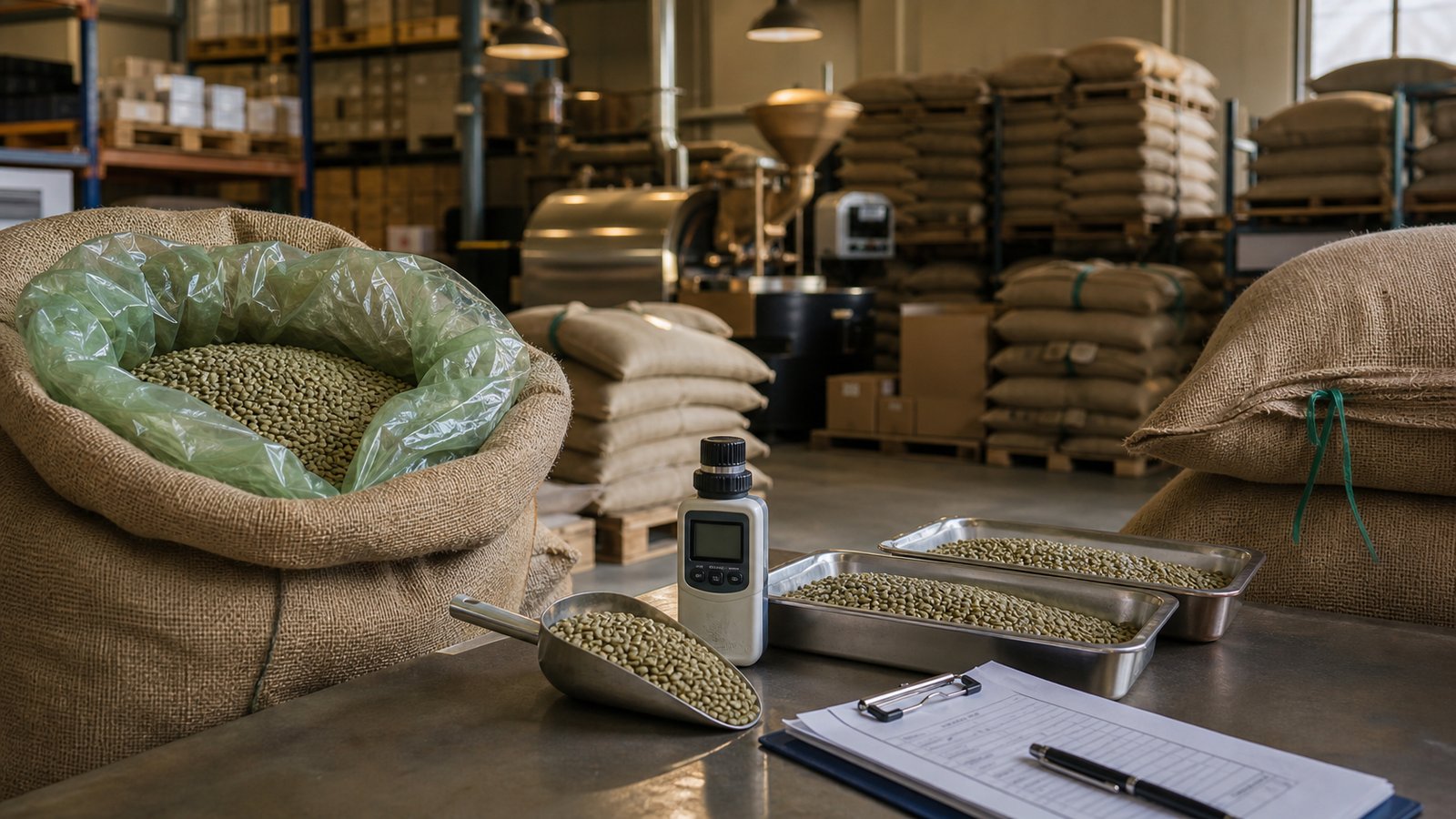
Specialty Coffee Cargo Insurance Malaysia Singapore
The roaster does not need a culture essay when a microlot arrives mouldy. They need to know whether the green coffee was too wet at origin, exposed during ocean transit, stored badly at transshipment, or damaged after arrival in Malaysia or Singapore.
Specialty coffee is high-value bagged agricultural cargo. The insurance file turns on moisture, mould, infestation, odour, packaging, lot identity, and whether the buyer can prove condition before and after transit.
The Microlot Claim Question
Before booking, decide how each coffee lot, bag, liner, moisture reading, and arrival sample will be identified if only one microlot is damaged.
Key Facts: Green Coffee Cargo Cover
What is specialty coffee cargo insurance Malaysia Singapore? It is marine cargo cover for green coffee beans imported by roasters, traders, and distributors into Malaysia or Singapore, including jute bags, hermetic liners, vacuum packs, samples, and microlots.
What moisture standard matters? International Coffee Organization quality guidance identifies 8.0% to 12.5% moisture for green coffee measured by ISO 6673 as the target moisture standard. Coffee outside that band can face quality and trade problems.
What storage and transport standard applies? ISO 8455:2011 gives guidelines to reduce infestation, contamination, and quality deterioration of green coffee from export packing to arrival in the importing country.
What does hermetic packaging do? GrainPro describes hermetic bags and pouches as storage and transport tools for dry agricultural commodities, including green coffee, designed to reduce moisture, mould, and infestation exposure.
What is the insurance distinction? A hermetic liner, vacuum pack, or jute bag is evidence and risk control. It is not proof by itself that transit damage occurred.
Commodity Profile: Green Beans for Roasters
Malaysia and Singapore roasters import green coffee from origins such as Ethiopia, Brazil, Colombia, Indonesia, and other producing countries. The cargo may arrive as full bags, small specialty lots, vacuum-packed competition lots, samples, or consolidated trader shipments.
The industry overlap is food, beverage and halal exports cargo insurance and commodity trading insurance Malaysia and Singapore. Repeat importers usually use marine cargo open cover.
Moisture, Mould, and Infestation Evidence
Green coffee can absorb moisture, lose moisture, pick up odour, or suffer infestation during storage and transit. A claim needs lot-level evidence, not only a roaster's cupping note after arrival.
| Evidence point | Why it matters | Claim gap if missing |
|---|---|---|
| Origin moisture reading | Shows whether the lot was export-ready | Origin defect and transit damage blur |
| ICO certificate or origin document | Links lot identity and export record | Damaged lot may not match sale documents |
| Bag and liner photos | Shows jute, GrainPro-style liner, vacuum pack, or damage | Packing condition becomes speculation |
| Container inspection | Shows dry, clean, odour-free carrying unit | Contamination or wetting source is unclear |
| Arrival sample and survey | Shows condition at destination | Roast or storage damage may be blamed |
For agricultural documentation context, see phytosanitary certificate requirements.
GrainPro, Vacuum Packing, and Jute Bags
Hermetic liners such as GrainPro-style bags can reduce moisture exchange, odour uptake, and insect exposure. Vacuum packs can be useful for very high-value lots. Traditional jute bags are common but more exposed to ambient humidity and odour.
The insurance file should not treat packaging as a slogan. It should record the exact packing: jute only, jute plus hermetic liner, vacuum brick, carton, pallet, and container stowage. If the liner is torn or not sealed, photograph it before moving the coffee.
KL, Penang, and Singapore Roaster Flows
Kuala Lumpur, Penang, and Singapore are practical buyer clusters because roasters, importers, sample labs, warehouses, and air or sea links concentrate there. The risk changes after arrival. A transit policy may end before the coffee sits in a roaster's warehouse, bonded store, or third-party storage.
For Singapore-side context, see marine cargo insurance Singapore. For policy structure, compare open cover vs single shipment and stock throughput insurance Malaysia.
Microlot Value and Partial Loss
Specialty coffee claims are often partial. One microlot, one pallet, or one origin lot may be damaged while the rest of the container is sound. The policy limit, deductible, invoice breakdown, and lot identity must allow that partial loss to be valued.
Keep purchase contract, lot number, bag marks, cupping score or quality spec where used, pre-shipment sample, arrival sample, and resale or salvage documents. If the roaster blends or roasts the damaged lot before survey, the claim becomes harder.
Coverage Response: Agricultural Cargo with Specialty Value
Green coffee is agricultural cargo, but specialty coffee adds value concentration. A container may include several origins, grades, and microlots, each with different invoice values and buyer expectations. ICC(A), IUA / LMA clause text, 2009 edition, can be the broad physical loss or damage starting point, but the declaration and invoice need enough lot detail to value a partial loss.
The policy should state whether the client imports full containers, LCL coffee, samples, vacuum-packed microlots, jute bags with hermetic liners, or trader consolidations. A roaster who buys small high-value lots needs more precise evidence than a commodity trader buying a standard lot by container.
Moisture and infestation disputes often raise inherent vice and pre-shipment condition questions. If the coffee was outside moisture specification before shipment, or packed in unsuitable bags for the route, cargo insurance may not solve the loss. The roaster's protection is origin evidence, packing evidence, and fast arrival inspection.
Storage is also important. Many roasters hold green coffee for weeks or months after import. A transit policy may end before a warehouse mould or infestation issue appears. Stock throughput can be worth reviewing if the roaster carries meaningful green coffee inventory.
Risk Categories for Specialty Coffee
Moisture migration and mould
Green coffee can move between dry origin conditions, humid port handling, ocean container environment, and destination warehouse storage. Moisture migration can create mould, musty cup, bag staining, or quality downgrade. The claim file should record origin moisture, bag and liner type, container condition, voyage route, arrival moisture, and survey findings.
The difference between 11.5% and 13.5% moisture can matter commercially. Do not rely only on cup quality after roasting. Keep measured data and physical evidence.
Infestation and contamination
Infestation can be present at origin, introduced in storage, or discovered after arrival. Treatment records, origin inspection, bag condition, and warehouse hygiene records help establish timing. Contamination can come from odour, chemical residue, wet container floors, or nearby cargo.
Specialty coffee buyers often reject lots for sensory reasons. Cargo insurance still needs a physical event and evidence, not only a cupping disappointment.
Microlot identity and partial loss valuation
A microlot claim can be financially painful even when the number of bags is small. If the damaged lot is mixed with other lots, the claim may lose its value basis. Bag marks, ICO marks where used, lot number, producer name, contract, and invoice line should match.
If the roaster blends, roasts, samples heavily, or sells the damaged lot before survey, the claim value becomes harder to prove. Hold suspect lots until condition and value are documented.
Documentation Pack for Roasters and Importers
The coffee cargo file should travel with the lot, not with the accounting folder only. The people receiving the coffee should know what documents to preserve before opening, sampling, or moving the bags.
| Stage | Documents | Why it matters |
|---|---|---|
| Origin purchase | Contract, invoice, lot number, moisture, quality spec, sample record | Shows the agreed value and starting condition |
| Packing and export | Bag marks, liner type, vacuum pack photos, container inspection, seal | Shows packing suitability and lot identity |
| Transit | Bill of lading, route, transshipment, warehouse receipts, carrier notices | Shows custody and possible exposure points |
| Arrival | Photos before unloading, moisture test, survey, sample report | Shows condition at first discovery |
| Mitigation | Sorting, reconditioning, salvage sale, roast test, disposal record | Supports loss amount and buyer decision |
For quote qualification, Voyage should ask origin countries, annual bag count, highest shipment value, average microlot value, packing format, warehouse storage period, and whether shipments enter Malaysia, Singapore, or both.
Common Claim Scenarios
Scenario 1: Ethiopian microlot arrives with mould
The roaster opens a small lot and finds mould in bags near the container wall. The file needs origin moisture, bag marks, liner photos, container inspection, arrival photos, and survey before sorting. If the affected bags are roasted or blended first, evidence disappears.
Scenario 2: Vacuum-packed lot loses seal integrity
A high-value vacuum-packed lot arrives with broken vacuum seals and quality concern. The roaster should photograph each pack, record lot numbers, keep packaging, take samples, and obtain a survey. The issue may be handling damage, packaging defect, or temperature and pressure exposure.
Scenario 3: Container odour affects multiple origins
The shipment contains several origins, and all show unusual odour. Inspect the container floor, walls, prior-cargo residue where known, and nearby cargo. Retained origin samples help distinguish normal cup profile from transit odour uptake.
Scenario 4: Shortage discovered after warehouse receipt
The warehouse receives fewer bags than invoiced. The importer needs origin tally, container seal, delivery order, warehouse receipt, bag marks, and exception note. If the warehouse receipt was signed clean and the shortage is discovered later, the claim is much harder.
Malaysia vs Singapore Importer Differences
Malaysia and Singapore roasters may buy from the same origin but operate different logistics patterns. A Malaysian roaster may import through Port Klang or Penang, clear locally, then store green coffee in its own warehouse. A Singapore roaster may use consolidation, bonded storage, or regional redistribution. The cargo policy should match those physical movements.
Singapore's hub role can create a transshipment or storage layer before the coffee reaches the final roaster. Malaysia's geography can create longer inland trucking from port to roaster. Neither is automatically riskier. The question is where the coffee sits, who controls it, and when the transit cover ends.
For roasters with both Malaysia and Singapore entities, do not assume one certificate covers both. The named assured, route, warehouse, and final destination should match the actual business that owns the coffee at the time of loss.
What to Send Before Requesting a Coffee Cargo Quote
| Quote field | Why it matters |
|---|---|
| Origin and lot list | Shows whether the shipment contains standard lots, microlots, or samples |
| Packing method | Separates jute, hermetic liner, vacuum pack, carton, and pallet risks |
| Moisture and quality evidence | Gives the claim file a pre-shipment baseline |
| Import country and warehouse | Shows where transit ends and storage begins |
| Highest microlot value | Sets partial-loss sensitivity and whether high-value handling is needed |
The strongest quote request includes a sample invoice with lot breakdown, bag marks, packing photos, moisture readings, route, and storage plan. That gives Voyage the difference between a commodity coffee shipment and a specialty coffee shipment with meaningful partial-loss exposure.
Binding Decisions Before a Green Coffee Shipment
The first decision is whether the policy values each lot separately or treats the container as one blended shipment. Specialty roasters often buy several lots in one container. If one microlot is damaged, the claim needs invoice line, bag mark, and lot identity to value that partial loss.
The second decision is where transit ends. If the coffee is delivered to a third-party warehouse, stored in Singapore before onward movement, or trucked from Port Klang to a roastery, the route should be stated. Otherwise a warehouse mould claim may fall outside the transit period.
The third decision is how quality evidence will be preserved. Origin sample, pre-shipment moisture, arrival sample, bag photos, and survey should be collected before the coffee is roasted, blended, or sold. Once the lot is consumed, the physical evidence is gone.
Decision Matrix: Cargo Damage, Quality Downgrade, or Warehouse Loss?
Specialty coffee losses need early classification because the commercial language of quality can hide the insurance question. A low cup score is not automatically a cargo claim. Mould, wetting, odour uptake, infestation, or shortage may be.
| Situation | Likely first file | Evidence to collect |
|---|---|---|
| Microlot arrives mouldy or wet | Cargo insurance claim | Origin moisture, arrival photos, bag position, survey, samples |
| Cup score is lower than contracted but no physical damage is shown | Quality and sale-contract file | Contract, origin sample, arrival sample, cupping notes, buyer correspondence |
| Infestation appears after warehouse storage | Storage and cargo causation file | Arrival inspection, warehouse records, pest report, timing evidence |
| Vacuum pack loses seal during transit | Packing and cargo claim file | Pack photos, seal condition, survey, lot identity, transit records |
| Bag count is short after delivery | Shortage and custody file | Tally, seal, warehouse receipt, delivery exception, bag marks |
First 24 Hours After a Green Coffee Cargo Issue
Hold the affected lot. Do not roast, blend, rebag, or sell it before photos, samples, and survey unless there is a written mitigation reason. If only a few bags are affected, separate them and record their position in the container or warehouse.
Take moisture readings from affected and unaffected bags. Photograph bag marks, liners, pallets, container condition, and any visible wetting or mould. Keep the original bags and liners because packing condition often decides whether the loss is transit damage or packing failure.
Notify the insurer, warehouse, carrier, and seller in writing. If the coffee moved through Singapore storage before Malaysia delivery, or vice versa, collect receipts for each handoff. Specialty coffee claims often fail because the buyer can prove damage but not the point in the chain where it happened.
Programme Design for Specialty Coffee Importers
Specialty coffee importers should design cover around lot value and storage, not only container value. A small microlot may be more important commercially than a large ordinary lot, and the policy should be able to value that difference.
| Programme setting | Recommended treatment |
|---|---|
| Lot identity | Keep invoice lines, bag marks, origin, farm or cooperative name, and microlot references |
| Packing method | Separate jute, hermetic liner, vacuum pack, carton, pallet, and sample shipments |
| Moisture evidence | Record origin and arrival moisture readings for high-value or long-haul lots |
| Storage endpoint | Name roaster warehouse, bonded store, third-party warehouse, or onward Singapore/Malaysia delivery |
| Partial loss valuation | Use lot-level values so one damaged microlot can be quantified without arguing the whole container |
A strong coffee cargo lead includes origin list, lot breakdown, packing method, highest microlot value, route, storage duration, and prior mould or infestation history. That data lets Voyage treat the shipment as specialty coffee, not anonymous agricultural cargo.
Request the specialty coffee shipment documentation pack.
Send Voyage the origin, bag count, packaging type, shipment value, route, and arrival issue. We will map the moisture, liner, microlot, and claim evidence needed before roasting or resale.
WhatsApp Kevin at +60 14 925 5243 or request a callback.
Frequently Asked Questions
Does cargo insurance cover mouldy green coffee?
It can, if mould is linked to insured physical loss or damage during transit. If the coffee was outside moisture specification before shipment, the claim will be difficult.
What moisture range should roasters check?
ICO guidance uses 8.0% to 12.5% measured by ISO 6673 as the target green coffee moisture standard. Specialty buyers may set tighter commercial targets.
Does GrainPro packaging guarantee a claim?
No. It is useful evidence and risk control, but the claim still needs proof of what happened during transit.
Can one damaged microlot be claimed separately?
Yes, if the invoice, bag marks, lot numbers, and survey evidence identify that lot and the policy value basis supports partial loss.
Should roasters use open cover?
Regular roasters and importers should consider open cover because origins, lot values, and shipment frequency can change throughout the year.
What should be done before roasting a suspect lot?
Hold the lot, photograph bags and liners, take samples, appoint a surveyor, keep arrival records, and avoid blending or roasting before the condition is documented.
Insuring Specialty Coffee Imports with Voyage
Specialty coffee cargo needs a file that respects moisture, microlot identity, packaging, and warehouse timing. Voyage can help Malaysian and Singapore roasters place marine cargo open cover for green bean imports where mould, infestation, odour, shortage, and partial lot loss are real claim issues.
Get a tailored quote. WhatsApp Kevin at +60 14 925 5243 or request a callback. Quotes turn around in 24-48 hours where the underlying cover is in place.
Disclaimer: This article provides general guidance on specialty coffee cargo insurance for Malaysia and Singapore roasters as of May 2026. Coverage terms, conditions, and availability vary by insurer, policy, and jurisdiction. Always review your specific policy wording and consult a qualified insurance professional before making coverage decisions.
Why Voyage
Marine Insurance Specialists
International Underwriter Access
Both Sides of the Supply Chain
Malaysia and Singapore Expertise
Other industries
Explore other industries we cover


Get Best Rates / Quotation

Voyage is a specialist marine insurance intermediary arranging marine cargo and marine liability coverage for businesses in Malaysia, Singapore, and internationally. All insurance is placed through licensed broking partners.
Riskflow Sdn Bhd (202101001225):
Suite 3.19 (North Block), The Ampwalk, 218 Jalan Ampang, 50450 Kuala Lumpur, Wilayah Persekutuan Kuala Lumpur
t: +60149255243 (Kevin H.)
email: kevin@voyagecover.com