Sarawak Palm Oil Cargo Insurance Bintulu
Sarawak palm oil cargo insurance for Bintulu exporters. Ship-to-shore risk, FFB and CPO movement, bulking, samples, and claim response.
Sarawak Palm Oil Cargo Insurance Bintulu
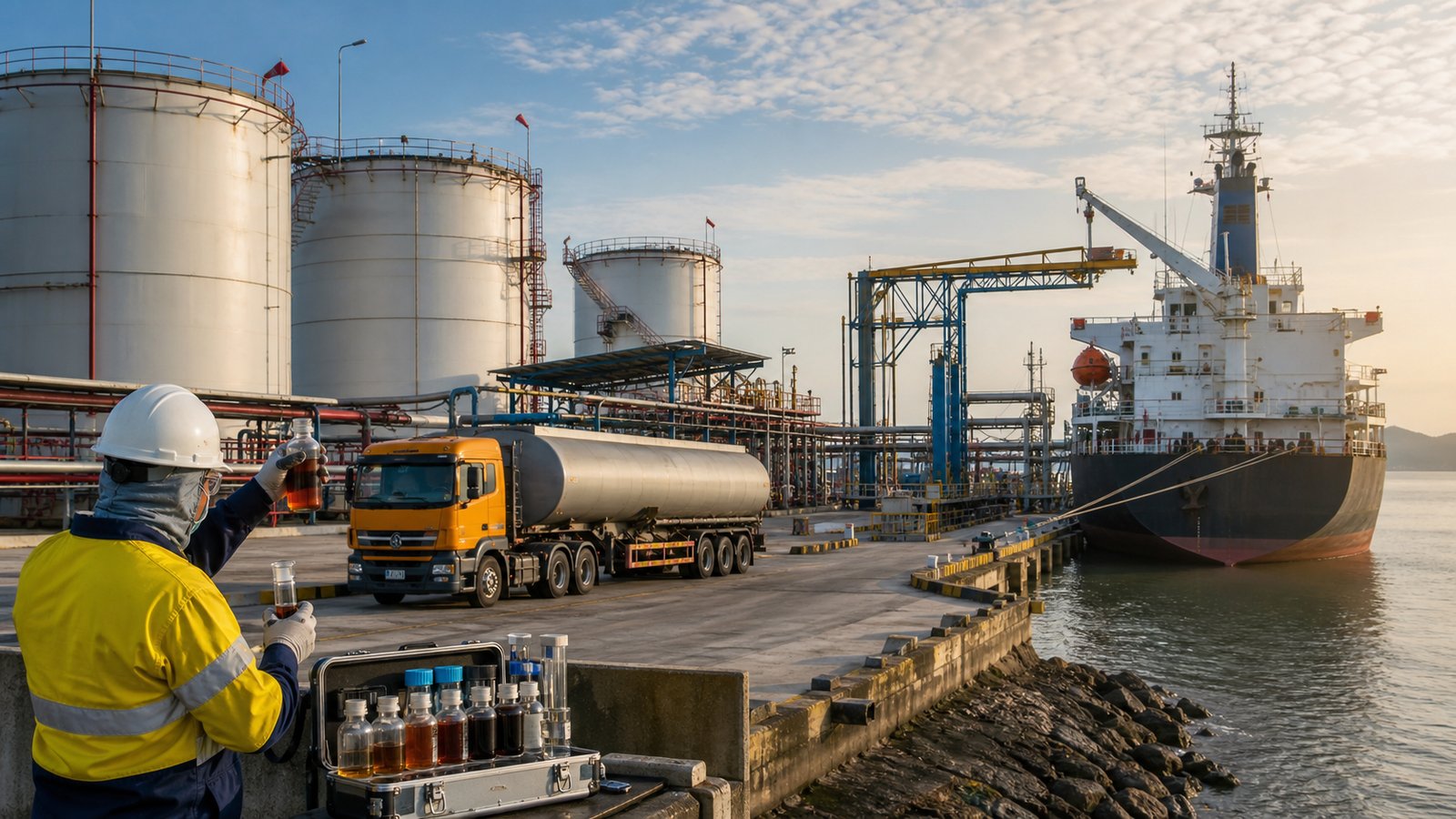
The tanker has left the estate, the CPO is in a Bintulu shore tank, and the buyer wants the bill of lading issued cleanly. The claim problem begins when the discharge sample, load-port sample, or shore measurement does not match the commercial document.
For Sarawak refiners and traders, palm oil cargo insurance is not only a Port Klang or KL service line. The evidence sits in East Malaysia: estate roads, FFB delivery, mill records, refinery tanks, Bintulu bulking, shore samples, and ship-to-shore transfer.
The Bintulu Claim Decision
Write the Bintulu movement into the cargo programme from estate or mill handoff through shore tank and vessel loading, rather than treating Sarawak as a remote extension of a Peninsular policy.
Key Facts: Sarawak Palm Oil Cover via Bintulu
What is Sarawak palm oil cargo insurance Bintulu? It is marine cargo cover for CPO, RBD palm products, palm kernel oil, and related palm cargo moving through Sarawak supply chains and Bintulu port facilities. The policy should reflect inland movement, storage, bulking, sampling, and export loading.
How large is Sarawak's palm oil base? MPOB's 2025 planted-area summary records Sarawak at 1,659,857 hectares of oil palm, or 29.1% of Malaysia's oil palm planted area. MPOB's 2024 overview records Sarawak CPO production at 4,172,409 tonnes.
What is Bintulu's port role? Bintulu Port Holdings' 2024 Integrated Annual Report describes Bintulu Port as the largest multipurpose port in Sarawak, the largest oil palm bulking operation in Sarawak, and third-ranked among Malaysian ports in 2024 with 51.92 million tonnes of total cargo throughput.
What does a Bintulu palm oil claim turn on? It turns on load-port and discharge samples, tank cleanliness, heating records, shore measurement, seals, road tanker documents, bill of lading quantity, and survey reports.
What programme structure fits repeat exporters? Repeat Sarawak exporters usually need marine cargo open cover with East Malaysia routes, bulking points, and survey procedures stated clearly.
Corridor Context: Estate, Mill, Refinery, Bintulu
Sarawak palm oil cargo has several movement stages before the ocean voyage begins. Fresh fruit bunches move from estate to mill. CPO moves from mill to refinery, bulking tank, or export terminal. Refined product then moves by road tanker, ISO tank, flexitank, parcel tanker, or bulk vessel.
The industry hub is palm oil cargo insurance Malaysia, while the broader commodity treatment is insuring palm oil exports from Malaysia. Sarawak deserves its own file because the evidence holders are often local: mill, road tanker, Bintulu terminal, surveyor, vessel, and buyer.
Risk Profile for East Malaysian Palm Oil
| Movement stage | Claim risk | Evidence to keep |
|---|---|---|
| Estate to mill | FFB quality and timing dispute before oil production | Harvest record, mill weighbridge, delivery note |
| Mill to refinery or tank | Road tanker shortage, contamination, heating issue | Tanker seal, loading note, cleanliness record, sample |
| Shore tank storage | Commingling, residue, quality drift, quantity variance | Tank history, calibration, sample, temperature record |
| Ship-to-shore loading | Line contamination, pump issue, survey disagreement | Load-port survey, line flush record, vessel tank inspection |
| Ocean voyage | Heating, contamination, shortage, discharge variance | Bill of lading, voyage records, discharge survey |
If stock is held before sale or after arrival, compare the programme against stock throughput vs open cover for Malaysian trading houses.
Ship-to-Shore and Shore Tank Evidence
Palm oil cargo claims often become arguments about where the product changed. The product may be sound at mill, compromised in a road tanker, mixed in a shore tank, or affected during loading or discharge. Without samples at each custody point, the exporter is left arguing from invoice value alone.
Load-port survey reports should state tank identity, quantity, temperature, sample identity, seal details, and any observed contamination. Discharge survey reports should use a comparable method. If the two reports do not speak the same language, the claim slows down.
For declared value and customs value alignment, see customs valuation and cargo insured value.
CPO, Refined Products, and Kalimantan Context
Sarawak exporters also operate near Indonesian Kalimantan supply chains. That does not make every cargo a competing-origin dispute, but it makes origin, tank identity, and traceability documents more important when buyers compare Malaysian and Indonesian cargoes.
CPO, RBD palm olein, stearin, PFAD, palm kernel oil, and palm-based oleochemicals do not have the same claim profile. CPO and bulk liquid cargo turn on sampling, heating, tank cleanliness, and shore measurement. Refined containerised cargo adds flexitank, valve, and container suitability risk.
For EU-facing cargoes, keep the documentation file separate from ordinary damage evidence. The related regulatory guide is EUDR compliance for Malaysian palm oil and rubber.
Open Cover Settings for Bintulu Exporters
An East Malaysia palm oil programme should list accepted cargo descriptions, per-conveyance limits, shore tank or temporary storage assumptions, survey triggers, route territories, and the highest aggregation at port or terminal. If the policy only names "Malaysia exports" without the Bintulu movement, claim handlers may ask avoidable route questions.
For annual renewals, use cargo open cover renewal questions to test whether Sarawak values, ports, tank methods, and peak accumulations still match current trade.
Coverage Response: Inland Leg, Shore Tank, and Ocean Voyage
A Bintulu palm oil programme should be written as one movement with several custody points, not as an ocean voyage with local records attached later. The cover should state whether inland road tanker movement, temporary shore tank storage, bulking, loading, ocean transit, transshipment, and destination discharge are covered.
ICC(A), IUA / LMA clause text, 2009 edition, is the usual broad starting point for physical loss or damage. For liquid bulk and palm products, underwriters also read the survey requirements, tank warranty, packing method, heating instructions, and contamination controls. A policy that is broad on paper can still be weak if the declaration describes the cargo too generally or leaves out the storage and tank movement that created the loss.
For flexitank or ISO tank cargo, check whether the policy has packing, tank suitability, and valve-control expectations. For deep tank or parcel tanker movements, check whether load-port and discharge surveys are required above a value or volume threshold. For road tankers, check whether the inland conveyance and route are accepted, especially where the cargo moves from mill to refinery or terminal before export.
The service problem for Sarawak exporters is often speed of response. If the broker, insurer, surveyor, and terminal evidence are not coordinated quickly, the buyer may blend, discharge, heat, or reject the cargo before the file is built. An open cover should set claim notification steps in advance for Bintulu, not only for Port Klang.
Risk Categories for Sarawak Exporters
Quality drift before the cargo reaches port
Palm oil can be affected before the vessel ever arrives. Mill delay, tanker contamination, water ingress, wrong previous cargo, or poor heating control can create a quality dispute that later appears at discharge. The insurer will ask whether the cargo was in specification when the insured transit began.
Use mill records, refinery COA, road tanker cleanliness certificates, load temperature, sample identity, and seal records. If the first reliable sample is taken only at Bintulu shore tank, earlier custody points become hard to prove.
Shore tank commingling and residue
Shore tanks make export logistics efficient, but they also create causation problems. A cargo may be mixed, heated, settled, pumped through lines, or held before loading. Contamination can arise from tank residue, shared lines, hose condition, prior cargo, or cleaning failure.
Tank history and line records should be retained. If the buyer alleges contamination at discharge, the exporter needs a clean chain from road tanker or refinery tank into shore tank, then from shore tank to vessel manifold.
Quantity variance and measurement method
Bulk liquid quantity disputes are not solved by the bill of lading alone. Density, temperature correction, tank calibration, shore-tank readings, vessel tank readings, and discharge measurement can differ. The question is whether a difference is normal measurement tolerance, physical shortage, leakage, or documentation mismatch.
Do not agree to a buyer allowance until the surveyor has reviewed both load and discharge calculations. A commercial discount can prejudice the claim if it is given without preserving evidence.
Bintulu Documentation and Survey Pack
The East Malaysia cargo file should be designed for the real location of evidence. The exporter may need documents from estate, mill, refinery, road tanker, Bintulu terminal, surveyor, carrier, buyer, and destination terminal. If one party holds the key record, request it before the cargo moves again.
| File layer | Documents | Loss question answered |
|---|---|---|
| Pre-port condition | Mill or refinery COA, sample ID, road tanker cleanliness, seal, weighbridge | Was the oil sound before port custody? |
| Terminal custody | Shore tank number, tank history, heating log, pump and line record | Did storage or transfer affect quality or quantity? |
| Loading survey | Load-port survey, sample labels, quantity calculation, vessel tank inspection | What condition and quantity shipped? |
| Voyage and discharge | Bill of lading, heating instructions, discharge survey, buyer test report | What changed between loading and arrival? |
| Commercial file | Sale contract, Incoterms basis, invoice, declared value, buyer rejection letter | How should the loss be valued? |
For MQL intake, ask for cargo form, shipment frequency, highest single shipment value, route through Bintulu, tank method, storage duration, buyer market, and whether cargo is declared monthly under an open cover.
Common Bintulu Claim Scenarios
Scenario 1: Discharge sample shows contamination
The buyer says the discharge sample shows contamination. The exporter should immediately match the discharge sample with load-port retained samples, shore tank samples, road tanker samples, and tank history. If only one sample was retained, the exporter may not be able to place where contamination entered.
Scenario 2: Shore variance after bulk discharge
The buyer claims a shortage based on shore received quantity. The exporter needs the load-port survey, vessel tank figures, shore tank calibration, discharge survey, density, temperature correction, and any line or pump loss record. Shortage is not proven by a single number.
Scenario 3: Road tanker accident before Bintulu terminal
A tanker overturns or leaks before the cargo reaches terminal custody. If the policy only describes "Bintulu to destination port", the inland leg may become contested. The shipment declaration should identify the origin point and inland movement before the cargo begins moving.
Scenario 4: Buyer rejects for FFA or moisture
The buyer alleges quality deterioration. The exporter needs COA at refinery, load-port sample, voyage records, discharge sample, and buyer lab result. If the cargo was already off-spec before shipment, the claim moves away from transit damage and toward quality control or sale-contract handling.
How a Sarawak Palm Oil Programme Should Be Set Up
A Sarawak exporter should not wait for the renewal date to discover that the open cover was written around Peninsular assumptions. The schedule should name the cargo forms, origin points, Sarawak ports, temporary storage locations, inland conveyances, tank methods, and destination markets that actually appear in the book.
The declaration process matters too. If the exporter declares only at bill of lading stage, the policy record may miss earlier inland movement from estate, mill, refinery, or shore tank. For Bintulu cargo, the value at risk can begin moving long before the ocean vessel is alongside.
| Programme setting | Why it matters for Bintulu |
|---|---|
| Territory and route wording | Names Sarawak inland movement, Bintulu terminal, and onward ocean route |
| Accepted cargo forms | Separates CPO, refined products, palm kernel oil, and related palm products |
| Tank and packing method | Distinguishes road tanker, shore tank, ISO tank, flexitank, and bulk vessel risk |
| Survey trigger | States when load-port, shore tank, or discharge survey is needed |
| Peak accumulation | Captures the largest value sitting in tanks or at terminal before loading |
This is also where local responsiveness matters. A Sarawak claim needs survey appointment, sample preservation, and terminal evidence fast. If the claim instruction has to travel through several unrelated desks before anyone contacts the Bintulu surveyor, the evidence may already be altered by heating, pumping, blending, or discharge.
Binding Decisions Before a Bintulu Shipment
Before binding or renewing cover, Sarawak exporters should decide whether they want the policy to respond from refinery gate, mill gate, shore tank, terminal, or vessel loading. That starting point changes the evidence and the premium discussion.
The exporter should also decide how samples will be controlled. Load-port samples, shore tank samples, and discharge samples should be labelled in a way that allows a third party to identify source, time, tank, seal, and surveyor. A sample without custody detail is easy to challenge.
Finally, the insured value should reflect the sale stage. Cargo sold FOB from Bintulu, CIF to buyer port, or held in stock before sale will not have the same value basis. If the declaration value does not match the invoice or stock record, a loss can become a valuation dispute even where physical damage is clear.
Decision Matrix: Cargo Damage, Measurement Variance, or Quality Dispute?
Palm oil claims often begin with the same sentence: the buyer says the cargo is short or off-spec. The correct response depends on whether the problem is physical loss, measurement method, quality before loading, or a sale-contract tolerance issue.
| Situation | Likely first file | Evidence to collect |
|---|---|---|
| Discharge sample shows contamination not present at loading | Cargo insurance claim | Load sample, shore tank sample, discharge sample, tank history, survey |
| Shore received quantity differs from bill of lading | Measurement and survey file | Tank calibration, density, temperature correction, load and discharge surveys |
| Cargo fails buyer FFA or moisture specification at discharge | Quality and cargo causation file | COA, retained samples, voyage records, buyer lab report |
| Road tanker leaks before terminal arrival | Inland transit claim | Route declaration, tanker seal, police or incident report, survey, photos |
| Buyer requests discount without physical evidence | Commercial negotiation file | Contract, specification, correspondence, survey response |
First 24 Hours After a Bintulu Palm Oil Notice
Preserve samples before anything else. Ask the surveyor or terminal to secure load-port retained samples, shore tank samples, discharge samples, and any road tanker samples. If samples are not sealed or labelled properly, the dispute can collapse into competing lab reports.
Notify the insurer and request survey guidance before agreeing to blending, discount, reprocessing, or sale. Those steps may be commercially sensible, but they can change the evidence and valuation. The written instruction trail matters.
Collect all quantity records on the same day: weighbridge, shore tank reading, vessel tank figure, bill of lading quantity, temperature correction, and discharge calculation. A shortage claim becomes harder when parties argue days later from different spreadsheets.
Programme Design for Bintulu Palm Oil Exporters
A Sarawak palm oil programme should be designed around the full physical chain, not only the export bill of lading. The underwriter needs to understand where value first attaches and where the highest accumulation sits before loading.
| Programme setting | Recommended treatment |
|---|---|
| Attachment point | State whether cover begins at mill, refinery, road tanker loading, shore tank, or vessel loading |
| Storage and accumulation | Name shore tanks, terminal storage, and peak values at Bintulu |
| Survey requirement | Set load, shore tank, and discharge survey triggers by cargo value or buyer market |
| Tank method | Separate road tanker, ISO tank, flexitank, deep tank vessel, and bulk parcel cargo |
| Claims response | Pre-agree local surveyor access, sample custody, and terminal document request process |
This programme design also improves lead quality. A refiner that can provide tank method, annual tonnes, highest shipment value, route, and buyer markets is not browsing. It is ready for an open-cover review.
Request the East Malaysia cargo claims response checklist.
Send Voyage your Sarawak route, cargo form, tank method, port, and buyer market. We will map the evidence holders from estate or mill through Bintulu loading and destination survey.
WhatsApp Kevin at +60 14 925 5243 or request a callback.
Frequently Asked Questions
Does a KL-arranged open cover automatically fit Bintulu exports?
It can, if the policy territory, cargo description, inland leg, storage, and port operations match the actual Sarawak route. Check the schedule before shipment.
What is the biggest evidence gap in palm oil claims?
The biggest gap is usually weak sampling discipline. Load-port samples, shore tank samples, road tanker records, and discharge samples must be traceable.
Can road tanker movement be insured?
Yes, if the inland transit is included in the declared route and the value, vehicle, seal, and handoff documents are kept.
Does EUDR failure trigger cargo insurance?
Usually no. EUDR is a regulatory and buyer-compliance issue unless a separate insured physical loss or damage event occurs.
Should Bintulu exporters use stock throughput insurance?
Consider it if cargo is held in tanks or storage before and after ocean transit. Transit-only cover may end too early for a stock-heavy trader.
What should be done after a shore variance notice?
Preserve both survey reports, tank calibration data, samples, temperature records, bill of lading quantity, and all correspondence before agreeing to an allowance.
Insuring Sarawak Palm Oil Cargo with Voyage
Bintulu palm oil cargo needs a programme that understands East Malaysia handoffs, not only the ocean bill of lading. Voyage can help Sarawak refiners and traders place marine cargo open cover around road tanker movement, shore tanks, bulking, ship-to-shore transfer, and survey evidence.
Get a tailored quote. WhatsApp Kevin at +60 14 925 5243 or request a callback. Quotes turn around in 24-48 hours where the underlying cover is in place.
Disclaimer: This article provides general guidance on Sarawak palm oil cargo insurance via Bintulu as of May 2026. Coverage terms, conditions, and availability vary by insurer, policy, and jurisdiction. Always review your specific policy wording and consult a qualified insurance professional before making coverage decisions.
Why Voyage
Marine Insurance Specialists
International Underwriter Access
Both Sides of the Supply Chain
Malaysia and Singapore Expertise
Other industries
Explore other industries we cover


Get Best Rates / Quotation

Voyage is a specialist marine insurance intermediary arranging marine cargo and marine liability coverage for businesses in Malaysia, Singapore, and internationally. All insurance is placed through licensed broking partners.
Riskflow Sdn Bhd (202101001225):
Suite 3.19 (North Block), The Ampwalk, 218 Jalan Ampang, 50450 Kuala Lumpur, Wilayah Persekutuan Kuala Lumpur
t: +60149255243 (Kevin H.)
email: kevin@voyagecover.com