Pasir Gudang Chemical Cargo Insurance
Pasir Gudang chemical cargo insurance for Johor exporters. IMDG declaration, ISO tanks, flexitanks, drums, oleochemicals, and claim evidence.
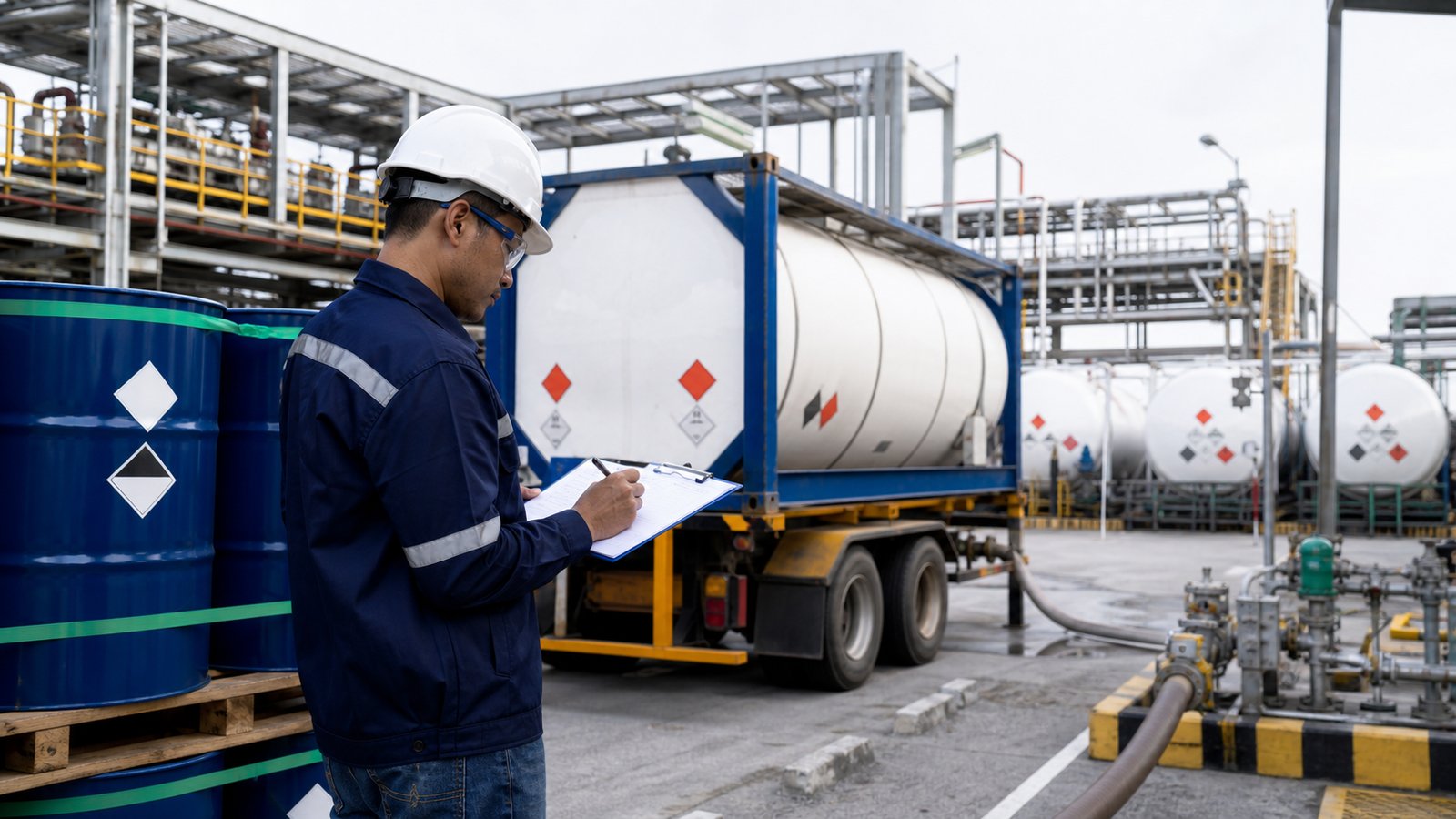
Pasir Gudang Chemical Cargo Insurance
Does chemical cargo insurance cover a leaking ISO tank, rejected flexitank, or damaged drum shipment from Pasir Gudang? It can, where the loss is insured physical loss or damage during the covered transit and the cargo was correctly declared, packed, labelled, and carried.
The claim problem is usually not the word "chemical". It is the mismatch between the product, IMDG status, SDS, tank choice, packing certificate, stowage requirement, and survey evidence.
The Declaration Decision
Before shipment, decide whether the cargo is dangerous goods, non-DG liquid bulk, oleochemical, specialty chemical, or industrial input, then make the cargo policy and shipping file use the same description.
Key Facts: Pasir Gudang Chemical Cover
What is Pasir Gudang chemical cargo insurance? It is marine cargo cover for chemicals, petrochemicals, oleochemicals, fatty acids, glycerine, additives, resins, solvents, and industrial liquids moving through Pasir Gudang and Johor-linked logistics chains.
What is Johor Port's role? MMC Ports describes Johor Port in Pasir Gudang as equipped with 24 berths and 4.9 kilometres of berthing length, with container, bulk and break bulk, liquid terminal, and warehousing facilities.
What does IMDG change? IMO states that SOLAS Chapter VII makes the relevant IMDG Code provisions mandatory for dangerous goods in packaged form, and the Code covers packing, container traffic, stowage, and segregation. The 2024 edition, Amendment 42-24, became mandatory from 1 January 2026.
What is the insurance issue in DG cargo? A cargo policy may respond to insured physical loss or damage, but misdeclaration, unsuitable packing, prohibited stowage, or incompatible cargo segregation can weaken the claim and create liability exposure.
What evidence matters most? SDS, UN number where applicable, dangerous goods declaration, packing certificate, tank cleaning certificate, seal record, pre-loading survey, photos, bill of lading, and incident report are core documents.
Corridor Context: Pasir Gudang and Johor Chemical Exports
Pasir Gudang is a natural search point for chemical cargo because it sits close to industrial estates, liquid terminals, tank depots, and Johor-Singapore logistics. The cargo may be palm-based oleochemical, petroleum-linked chemical, specialty liquid, packaged additive, or manufacturing input.
The base product for repeat exporters is marine cargo open cover. The industry overlap is split between energy and petroleum cargo insurance Malaysia and manufacturing and industrial exports cargo insurance, depending on whether the cargo is feedstock, processed chemical, or finished industrial input.
DG vs Non-DG: The Claim Difference
Dangerous goods are not uninsurable, but they are document-heavy. The shipping line, terminal, surveyor, insurer, and buyer will read the SDS and dangerous goods declaration against the cargo description and packing method. If those documents conflict, the claim file starts badly.
| Document | Why it matters | Claim issue if wrong |
|---|---|---|
| SDS | States hazards, handling, storage, and emergency data | Cargo may be misdescribed or mishandled |
| DG declaration | Links UN number, class, packing group, and quantity | Carrier or insurer may question acceptance and stowage |
| Packing certificate | Shows the unit was packed for sea transport | Packing exclusion arguments become stronger |
| Tank cleaning certificate | Shows prior cargo and residue controls | Contamination source becomes unclear |
| Survey report | Places condition, seal, quantity, and visible damage at a point in time | Cause and custody become hard to prove |
For the wider pricing and risk factors that underwriters review, see marine cargo underwriting and pricing factors.
ISO Tank, Flexitank, Drum, or IBC
ISO tanks suit many bulk liquid chemicals because they offer stronger containment, cleaning records, and valve control. The claim file still needs tank suitability, prior cargo, cleaning certificate, pressure or temperature controls where relevant, and seal evidence.
Flexitanks are more sensitive. They may be suitable for some non-hazardous liquids, but many DG cargoes and incompatible liquids are unsuitable. The exporter needs written acceptance from the carrier and tank provider, not informal assurance from a booking desk.
Drums and IBCs suit smaller lots and specialty chemicals. The risk moves toward palletisation, bracing, compatibility, leakage, cap failure, forklift damage, and container stowage.
If the cargo can cause damage to third-party property after leakage, the claim can overlap with cargo owners legal liability. Cargo insurance protects the goods; liability questions need a separate review.
Oleochemicals and Fatty Acid Cargo
Johor has a deep oleochemical footprint, including palm-based chemical manufacturers and plants around Pasir Gudang. Oleochemical cargo can include fatty acids, fatty alcohols, glycerine, soap noodles, esters, and related products.
The technical claim issue is often not dramatic. It can be contamination, wrong previous cargo, moisture ingress, heating problem, colour shift, odour, oxidation, leakage, or buyer specification rejection. The file needs samples from loading and discharge, tank cleanliness, and product specification.
For valuation alignment when product is sold under formula, invoice, or contract value, compare customs valuation and cargo insured value.
Coverage Response: ICC Clauses, DG Acceptance, and Liability
Chemical cargo needs a declared underwriting file. ICC(A), IUA / LMA clause text, 2009 edition, can provide broad physical loss or damage cover, but the insurer must know what is being carried. A vague cargo description such as "industrial goods" is a weak starting point for acids, solvents, resins, oleochemicals, or DG cargo.
The policy should state accepted cargo categories, excluded cargoes, territorial limits, per-conveyance limits, tank and packing methods, and whether dangerous goods are accepted subject to full IMDG declaration. Where cargo can damage other cargo or property after leakage, marine cargo insurance for the goods may need to sit beside liability cover. Do not assume a cargo policy will pick up third-party cleanup, terminal penalties, or pollution liabilities.
For DG cargo, the claim handler will compare the SDS, DG declaration, packing certificate, booking acceptance, container packing, and bill of lading. If the cargo was misdeclared, rejected by the carrier, or placed in unsuitable packaging, the insurer may raise misrepresentation, packing, or reasonable-care issues.
For non-DG oleochemicals, the issue is more often contamination, quality change, leakage, or wrong tank. The underwriter will look for tank cleaning certificates, previous cargo record, temperature or heating instructions, and buyer specification.
Risk Categories for Pasir Gudang Exporters
Leakage and loss of containment
Leakage is the most visible chemical cargo claim, but it is not always the easiest. A valve leak, drum seam failure, flexitank rupture, ISO tank gasket failure, or IBC puncture creates product loss, cleanup, possible cargo contamination, and sometimes third-party damage. The exporter should preserve the failed unit, valve, gasket, seal, and packing before repair or disposal.
Photographs should show the full container, individual package, leak source, label, UN marking where applicable, pallet condition, bracing, and any affected neighbouring cargo. If the terminal moves the container to a dangerous goods area, request the movement record.
Contamination from tank, hose, or previous cargo
Contamination claims often start as buyer specification disputes. The cargo arrives, the buyer tests it, and the product is rejected for colour, odour, water, residue, or unexpected chemistry. The file needs prior cargo, tank cleaning, line flushing, sample identity, and load-port test results.
For ISO tank shipments, retain the cleaning certificate and previous cargo declaration. For drums and IBCs, retain packaging supplier specification, batch number, cap seal, and filling record. For flexitanks, retain the flexitank model, installation record, container inspection, and approved cargo list.
DG hold, carrier refusal, and stowage errors
A DG issue may appear before sailing. The carrier may reject cargo after reviewing the declaration, the terminal may hold the container, or the vessel planner may require different stowage. If that issue is caused by wrong documentation, it is not a cargo-damage claim.
If an accepted DG cargo is damaged during handling or stowage, the claim file should include the carrier's acceptance, stowage instruction, terminal incident note, and survey report. That helps separate a covered physical incident from a documentation failure.
Trade Documentation for Chemical Cargo
Pasir Gudang exporters should keep the shipping, safety, and insurance files in one place. Chemical cargo claims fail when the sales team holds the invoice, the logistics team holds the DG declaration, the plant holds the SDS, and the insurance team sees only a damaged photo.
| Document | Owner | Why claims need it |
|---|---|---|
| SDS and product specification | Plant, compliance, QA | Identifies hazards, handling requirements, and buyer acceptance range |
| DG declaration and packing certificate | Logistics, forwarder | Shows IMDG status, proper shipping name, class, packing group, and packing compliance |
| Tank or packaging records | Tank provider, warehouse, plant | Shows suitability, cleaning, prior cargo, filling, seals, and bracing |
| Transport records | Forwarder, carrier, terminal | Shows route, custody, incident timing, and handoff points |
| Survey and lab reports | Surveyor, buyer, QA | Shows the physical condition and chemical finding at discovery |
Quote qualification should capture product name, UN number and class where applicable, packing type, shipment frequency, highest shipment value, route, prior claims, and whether the exporter wants cargo-only or cargo plus liability review.
Claims That Fit Pasir Gudang Cargo
Scenario 1: ISO tank arrives with residue contamination
The buyer rejects a liquid chemical after lab testing shows contamination. The exporter should collect the tank cleaning certificate, previous cargo declaration, load-port sample, seal record, discharge sample, and buyer lab method. Without the previous cargo and cleaning record, the contamination source is hard to prove.
Scenario 2: Flexitank rupture during terminal handling
The container is moved to a terminal exception area after product leaks through the doors. The exporter needs photos, terminal incident report, flexitank installation record, container inspection, valve evidence, and survey before cleanup. If the cargo was unsuitable for flexitank carriage, the policy may not respond as expected.
Scenario 3: Drum puncture and mixed cargo contamination
A forklift punctures a drum during loading or discharge, damaging the chemical and nearby cargo. The cargo claim for the damaged product is one file. Liability for third-party cargo, cleanup, or terminal cost is another file. Both need evidence from the same incident.
Scenario 4: DG misdeclaration discovered before sailing
The carrier refuses loading because the product was booked as non-DG but the SDS indicates regulated dangerous goods. That is a declaration and compliance issue, not physical cargo damage. The exporter should correct the booking and review whether the insurance declaration also needs amendment.
What to Send Before Requesting a Pasir Gudang Quote
A chemical cargo quote should begin with the product file, not the freight booking. Voyage needs enough detail to decide whether the shipment is an ordinary marine cargo risk, a dangerous goods placement, a liquid bulk risk, or a cargo plus liability conversation.
| Quote field | Why it matters |
|---|---|
| Product name and SDS | Identifies hazard, handling, storage, and emergency requirements |
| UN number and IMDG class where applicable | Shows whether DG acceptance, segregation, and packing rules apply |
| Packing or tank method | Separates ISO tank, flexitank, drum, IBC, and packed container risks |
| Shipment value and annual volume | Sets limits and decides whether open cover or single shipment is cleaner |
| Prior loss or rejection history | Shows whether contamination, leakage, or declaration issues have appeared before |
If the exporter uses several packing methods for the same product, each method should be disclosed. A product that is acceptable in an ISO tank may be a poor flexitank risk. A drum shipment that looks low value can still create serious recovery and cleanup problems if packaging fails.
For Pasir Gudang exporters, the best review point is before the first shipment of a new chemical, new tank provider, new buyer, or new route. Once the cargo is already gated into port, the underwriter has less room to ask the right questions.
Binding Decisions Before a Chemical Shipment
Before cover is bound, the exporter should decide whether the insurance placement is cargo-only or part of a wider risk review. A leaking drum may damage the insured goods only. A leaking ISO tank can also damage third-party cargo, terminal property, vessel equipment, or create cleanup costs. Those are not the same insurance conversation.
The second decision is whether the policy should treat the shipment as a routine declaration or require pre-shipment approval. New DG cargo, high-value chemical cargo, or cargo using a new tank method may need insurer approval before each shipment, even where an open cover exists.
The third decision is who controls emergency response. Chemical cargo damage often triggers safety procedures before insurance procedures. The exporter should know who can authorise survey attendance, salvage, neutralisation, repacking, disposal, and buyer notice so evidence is preserved without compromising safety.
Decision Matrix: Cargo Damage, DG Compliance, or Liability?
Chemical incidents can cross several insurance categories at once. The exporter should separate damage to its own goods, regulatory compliance, third-party liability, and cleanup cost before assuming one policy handles everything.
| Situation | Likely first file | Evidence to collect |
|---|---|---|
| Product leaks from an accepted ISO tank during transit | Cargo claim and possible recovery file | Tank record, seals, photos, survey, cleaning certificate, incident report |
| Carrier refuses shipment after SDS review | DG compliance and contract file | SDS, booking, DG declaration, carrier refusal, corrected declaration |
| Leaked product damages another shipper's cargo | Liability file | Third-party notice, photos, survey, cause analysis, policy review |
| Buyer rejects product for contamination | Cargo causation and quality file | Load sample, discharge sample, tank history, lab reports |
| Terminal imposes cleanup or emergency charges | Cost and liability review | Terminal notice, invoices, incident timeline, cause report |
First 24 Hours After a Chemical Cargo Incident
Safety comes first, then evidence. Follow terminal, carrier, and emergency instructions, but record what was done, who instructed it, and why. Chemical cargo evidence can be destroyed by necessary cleanup unless photos, samples, and reports are captured early.
Notify the insurer before authorising disposal, neutralisation, repacking, or salvage where practical. If immediate action is required for safety, document the reason and preserve the failed component: valve, drum, gasket, flexitank section, or pallet.
Ask for the terminal incident report, carrier exception, DG area movement record, and survey access. If the event involves third-party cargo or property, create a separate liability notification rather than trying to squeeze every cost into the cargo claim.
Programme Design for Chemical Exporters
Pasir Gudang chemical exporters should segment their cargo book before asking for a quote. A policy that works for non-DG oleochemical drums may not work for DG solvents, ISO tank liquids, or flexitank cargo. Segmentation makes the placement clearer and the claim file faster.
| Programme setting | Recommended treatment |
|---|---|
| Cargo classes | Separate DG, non-DG, oleochemical, petrochemical, packed chemical, and liquid bulk cargo |
| Declaration basis | Require SDS and UN or IMDG details for regulated cargo before shipment |
| Tank and packing controls | Record ISO tank, flexitank, drum, IBC, cleaning certificate, and previous cargo details |
| Liability review | Flag cargo that can damage third-party property or trigger cleanup cost |
| Emergency workflow | Pre-agree who can authorise survey, salvage, repacking, disposal, and buyer notice |
The most useful quote request includes the SDS, cargo value, tank method, route, annual shipments, and prior loss history. That data lets Voyage separate routine marine cargo from cargo that needs specialist underwriter review.
Request the DG declaration and cargo insurance crossover checklist.
Send Voyage the SDS, packing method, route, shipment value, and buyer specification. We will map the insurance, declaration, and claim documents that need to match before the next Pasir Gudang export.
WhatsApp Kevin at +60 14 925 5243 or request a callback.
Frequently Asked Questions
Does cargo insurance cover dangerous goods?
It can, if the insurer accepts the cargo and the shipment is correctly declared, packed, labelled, and carried. The policy schedule and declaration details matter.
Is an SDS enough for a cargo claim?
No. The SDS is only one document. The file also needs DG declaration where applicable, packing certificate, tank cleaning record, survey report, and transport documents.
Can flexitanks be used for chemical cargo?
Only for suitable cargo accepted by the carrier and flexitank provider. Many dangerous or incompatible liquids should not move in flexitanks.
What is the most common chemical cargo evidence gap?
Tank cleaning and prior-cargo evidence is a frequent gap. Without it, contamination claims become hard to place in the transit chain.
Does cargo insurance pay for regulatory penalties?
Standard cargo insurance is built around physical loss or damage to the goods. Penalties, fines, and liability need separate policy review.
What should be done after chemical leakage?
Stop cleanup until evidence is captured where safe, notify the insurer, appoint a surveyor, photograph the unit, preserve seals and packing, and follow emergency response rules.
Insuring Pasir Gudang Chemical Cargo with Voyage
Pasir Gudang chemical cargo needs cover that follows the real declaration, tank, packing, and port evidence. Voyage can help Johor exporters place marine cargo open cover for chemical, petrochemical, and oleochemical shipments with DG and non-DG claim files aligned from booking.
Get a tailored quote. WhatsApp Kevin at +60 14 925 5243 or request a callback. Quotes turn around in 24-48 hours where the underlying cover is in place.
Disclaimer: This article provides general guidance on Pasir Gudang chemical cargo insurance as of May 2026. Coverage terms, conditions, and availability vary by insurer, policy, and jurisdiction. Always review your specific policy wording and consult a qualified insurance professional before making coverage decisions.
Why Voyage
Marine Insurance Specialists
International Underwriter Access
Both Sides of the Supply Chain
Malaysia and Singapore Expertise
Other industries
Explore other industries we cover


Get Best Rates / Quotation

Voyage is a specialist marine insurance intermediary arranging marine cargo and marine liability coverage for businesses in Malaysia, Singapore, and internationally. All insurance is placed through licensed broking partners.
Riskflow Sdn Bhd (202101001225):
Suite 3.19 (North Block), The Ampwalk, 218 Jalan Ampang, 50450 Kuala Lumpur, Wilayah Persekutuan Kuala Lumpur
t: +60149255243 (Kevin H.)
email: kevin@voyagecover.com