Palm Oil India Cargo Insurance for Malaysian Exporters
Palm oil India cargo insurance for Malaysian exporters. Refinery acceptance, FFA degradation, shore variance, duty, and declared value timing.
Palm Oil India Cargo Insurance for Malaysian Exporters
Most palm oil exporters treat the India corridor as a freight and buyer relationship problem. That is incomplete. The insurance problem starts when the Indian refinery says the cargo is outside specification, the shore tank measurement does not match the bill of lading, or the declared value no longer matches the hedge and sale timing.
The cargo may have arrived. The loss is still real if FFA, moisture, impurity, temperature, or shore variance turns a clean sale into a discount, dispute, or claim.
The Refinery Acceptance Decision
For India-bound palm oil, decide before loading how quality, quantity, and declared value evidence will be preserved if the buyer disputes the cargo at discharge.
Key Facts: Malaysia-India Palm Oil Cover
What is palm oil India cargo insurance? It is marine cargo cover for Malaysian CPO, RBD palm olein, stearin, and related palm products moving to Indian buyers and refineries. The policy should be built around the cargo form, transport tank, buyer specification, and discharge evidence.
How large is the India corridor? MPOB's 2025 overview states that Malaysia exported 15.27 million tonnes of palm oil in 2025 and India was the largest destination for the twelfth consecutive year, importing 2.66 million tonnes or 17.4% of the total.
What changed on India duty? India's Ministry of Commerce and Industry stated in February 2026 that the import duty on crude palm oil had been reduced from 20% to 10%, with effective duty around 16.5%, from May 2025. Duty changes affect landed cost and buyer behaviour, but they are not cargo insurance claims by themselves.
What value reference matters? Bursa Malaysia Derivatives' FCPO contract is a 25 metric ton crude palm oil futures contract quoted in Malaysian ringgit. It is a price discovery and hedging reference, but the insured value should still follow the sale contract, invoice, and Incoterms basis.
Corridor Context: Malaysia to India
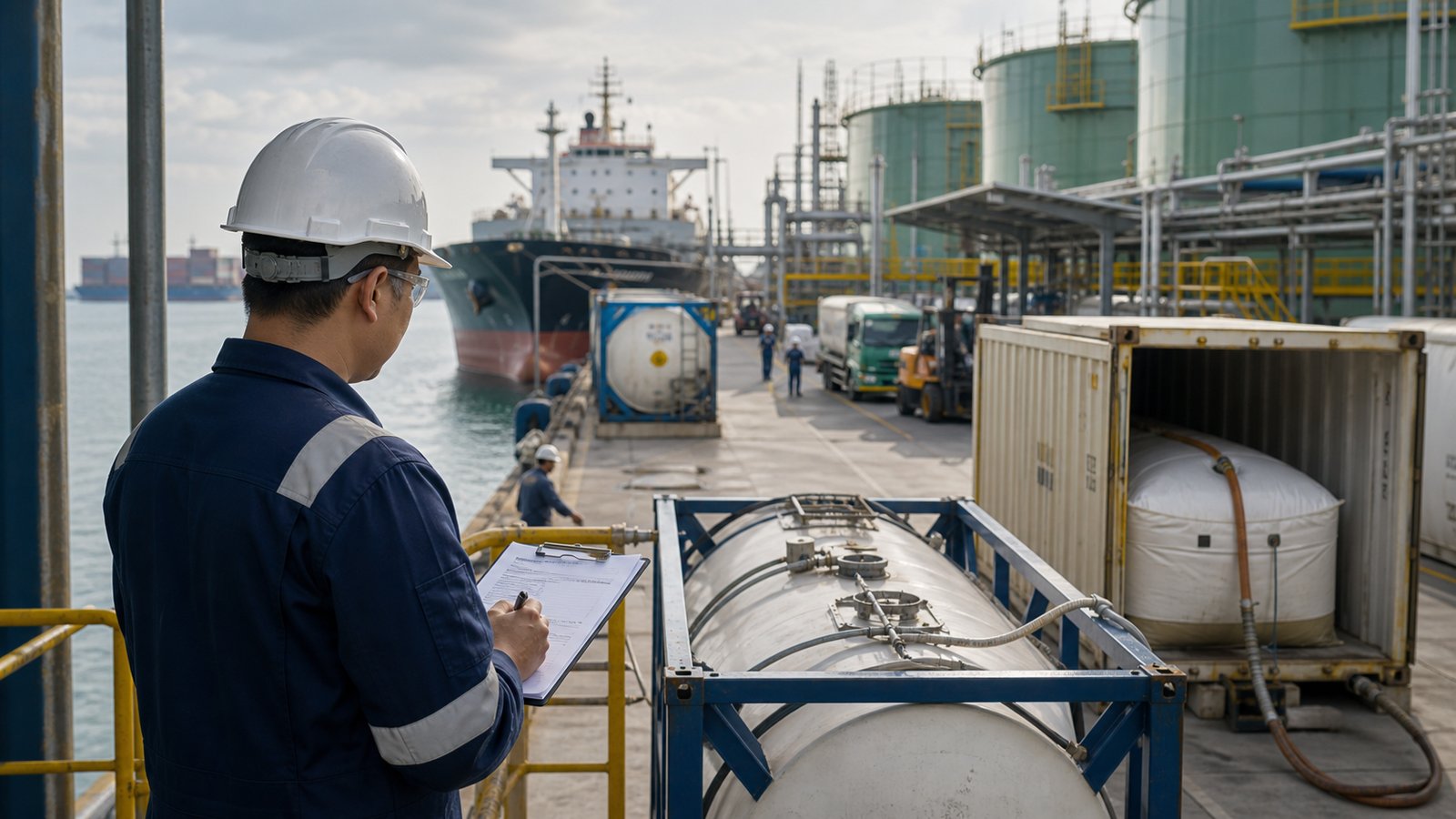
India is not just one of many destinations for Malaysian palm oil. MPOB identifies India as Malaysia's largest palm oil export destination in 2025. The corridor includes bulk cargoes, ISO tanks, flexitanks, and containerised refined products moving to ports and refinery zones such as Kandla, Mundra, and Mangalore.
The base product for repeat exporters is marine cargo open cover. The industry hub is palm oil cargo insurance Malaysia, and the wider commodity treatment is insuring palm oil exports from Malaysia.
Refinery Acceptance: FFA, Moisture, Impurity
Indian refinery disputes commonly turn on specification. Free fatty acid, moisture and impurities, colour, peroxide value, and temperature at discharge can all affect acceptance or price. The insurance question is whether the cargo suffered insured physical loss or damage during transit, or whether the dispute is a pure quality or contract issue.
FFA degradation can occur through oxidation, heat, contamination, or time. The cargo file needs pre-shipment certificate of analysis, tank cleanliness records, load-port samples, seal records, voyage temperature records where relevant, discharge samples, and buyer test reports.
If the cargo was already off-spec at loading, the policy is unlikely to fix the sale. If the cargo was in specification at loading and changed during transit due to an insured event, the claim file has a better starting point.
Tank Shore Variance and Quantity Disputes
Shore tank variance is a measurement problem before it is an insurance problem. Bulk liquid cargo is measured through shore tanks, vessel tanks, density, temperature correction, and sampling. Small differences may fall within commercial tolerance. Larger differences can trigger shortage allegations.
| Evidence point | Why it matters | Who usually holds it |
|---|---|---|
| Load-port survey | Shows quantity and quality at shipment | Surveyor, seller, terminal |
| Bill of lading quantity | Sets the commercial starting point | Carrier, seller, bank |
| Voyage temperature record | Explains heating, solidification, or discharge difficulty | Vessel, tank operator |
| Discharge survey | Shows shore received quantity and condition | Buyer, surveyor, refinery |
| Retained samples | Supports or challenges quality allegations | Surveyor, seller, buyer |
The related documentation issue is explained in customs valuation and cargo insured value, because the declared value and measured quantity must line up when a claim is made.
Flexitank, ISO Tank, or Deep Tank Vessel
Flexitanks suit refined palm products and smaller containerised buyers. The risk is packing and bladder failure, valve leaks, container suitability, and terminal handling. A packing exclusion can become central if the flexitank specification was wrong before the journey began.
ISO tanks offer stronger containment and cleaning controls, but the economics differ. They can fit higher-value or more sensitive cargo where residue, heating, and cleaning evidence matter.
Deep tank vessels suit bulk parcel movements. The claim risks shift toward tank cleanliness, heating coils, cross-contamination, shore measurement, and discharge sampling. The exporter should pick the tank method first on cargo and buyer requirements, then align insurance around that choice.
BMD, MCX Suspension, and Declared Value Timing
Bursa Malaysia Derivatives FCPO is a Malaysian ringgit crude palm oil futures contract with a 25 metric ton contract size. MCX India states that trading in its crude palm oil contract is suspended until 31 March 2027 under SEBI directions, so exporters should not assume there is a live Indian CPO futures hedge matching the Malaysian shipment date. The insurance issue is not hedging advice. It is value timing.
If a sale is priced against a futures reference, the insured value should still be tied to the commercial invoice, Incoterms basis, and any agreed uplift. For CIF sales, Incoterms 2020 requires the seller to procure at least ICC(C) minimum cargo insurance for the buyer, although many buyers contractually ask for ICC(A). For CIP, Incoterms 2020 uses ICC(A) minimum.
For the Incoterms bridge, see Incoterms 2020 cargo insurance responsibility. For traders holding inventory before onward sale, the structure comparison is stock throughput vs open cover for Malaysian trading houses.
India Duty and Cargo Insurance
India's edible oil duty changes affect landed cost, substitution between crude and refined oils, and buyer negotiation. They do not create a cargo claim by themselves. A duty change is a market or customs cost event, not physical loss or damage to the cargo.
The insurance relevance is indirect. Duty, invoice value, and sale price can affect the declared value and the buyer's appetite for rejection or discount. When market terms move, exporters should confirm that open-cover declaration values still match their actual sale basis.
Common Claim Scenarios on the India Corridor
The first claim is contamination at load or discharge. Residue from a previous cargo, line contamination, or tank cleaning failure can push the shipment outside refinery specification.
The second is heating and discharge difficulty. Palm oil can become hard to pump if temperature is mishandled. The cargo file should show heating instructions, vessel capability, and discharge temperature.
The third is flexitank leakage. For containerised palm olein, a ruptured bladder can create product loss, cleanup cost, and third-party contamination claims.
The fourth is shore variance. A quantity dispute without physical loss is hard; a shortage tied to leakage, misdelivery, or contamination has a clearer insurance path.
For regulatory documentation on palm oil and rubber flows, compare EUDR compliance for Malaysian palm oil and rubber and EUDR Article 9 enforcement, even though India is not the EU corridor.
Request the CPO India shipment documentation checklist.
Send Voyage the cargo form, tank method, Incoterms basis, buyer port, and declared value basis. We will map the documents needed for refinery acceptance, shore variance, and cargo claim evidence.
WhatsApp Kevin at +60 14 925 5243 or request a callback.
Frequently Asked Questions
Does cargo insurance cover Indian refinery rejection?
Only if the rejection is tied to insured physical loss or damage during transit. A pure specification or market rejection without cargo damage is usually a sale-contract issue.
What evidence matters most for FFA degradation?
Pre-shipment certificate of analysis, retained samples, tank cleanliness records, voyage temperature records, discharge samples, and buyer test reports are the core evidence set.
Are flexitanks suitable for India palm oil shipments?
They can be suitable for refined products and certain buyers, but the exporter needs the right flexitank specification, container inspection, fill procedure, and valve control.
Does India duty change affect insured value?
It can affect landed cost and buyer price, but insured value should still follow the invoice and Incoterms basis. A duty change alone is not a cargo claim.
Should CPO to India use ICC(A)?
Many exporters prefer ICC(A) because it is broader than named-perils cover. CIF only requires ICC(C) minimum under Incoterms 2020 unless the sale contract requires more.
What is the first step after a shore variance dispute?
Preserve all survey reports, retained samples, tank calibration data, temperature correction calculations, and discharge records before negotiating any allowance or discount.
Insuring Malaysia-India Palm Oil Cargo with Voyage
The India corridor needs more than a generic palm oil certificate. Voyage can help Malaysian exporters align marine cargo open cover with refinery acceptance evidence, tank choice, shore variance files, and declared value timing for CPO and refined palm products.
Get a tailored quote. WhatsApp Kevin at +60 14 925 5243 or request a callback. Quotes turn around in 24-48 hours where the underlying cover is in place.
Disclaimer: This article provides general guidance on palm oil India cargo insurance for Malaysian exporters as of May 2026. Coverage terms, conditions, and availability vary by insurer, policy, and jurisdiction. Always review your specific policy wording and consult a qualified insurance professional before making coverage decisions.
Why Voyage
Marine Insurance Specialists
International Underwriter Access
Both Sides of the Supply Chain
Malaysia and Singapore Expertise
Other industries
Explore other industries we cover


Get Best Rates / Quotation

Voyage is a specialist marine insurance intermediary arranging marine cargo and marine liability coverage for businesses in Malaysia, Singapore, and internationally. All insurance is placed through licensed broking partners.
Riskflow Sdn Bhd (202101001225):
Suite 3.19 (North Block), The Ampwalk, 218 Jalan Ampang, 50450 Kuala Lumpur, Wilayah Persekutuan Kuala Lumpur
t: +60149255243 (Kevin H.)
email: kevin@voyagecover.com