Tanjung Pelepas Cargo Insurance for Singapore Re-Exporters
Tanjung Pelepas cargo insurance for Singapore re-exporters using PTP transshipment. Claims recourse, dwell risk, and cargo cover checks.
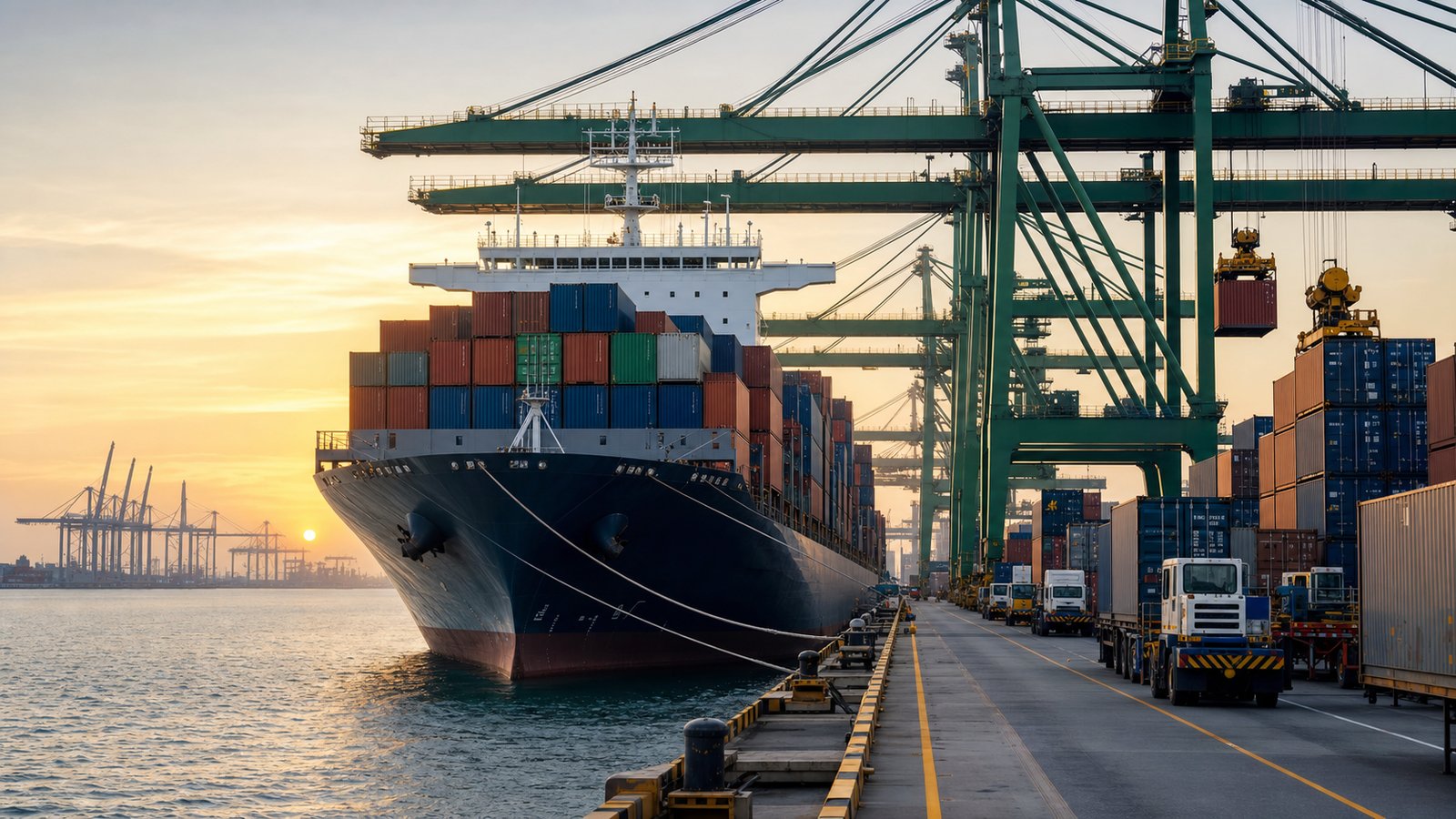
Tanjung Pelepas Cargo Insurance for Singapore Re-Exporters
Your Singapore sale is booked, the buyer wants the container routed through Port of Tanjung Pelepas, and the freight saving looks sensible. The claim problem begins only later, when the container is damaged during the Malaysian transshipment leg and the paper trail points to a terminal contract your team has never read.
PTP is not a downgrade from PSA. It is a serious hub with scale, shipping-line connectivity, and cost logic. The insurance decision is whether your Singapore cargo programme follows the cargo cleanly into the Malaysian handling window.
The Routing Decision
Use PTP when the service pattern and cost case make sense, but write the Malaysian transshipment window into the cargo file before the shipment leaves Singapore.
Key Facts: Tanjung Pelepas Transshipment Cover
What is Tanjung Pelepas cargo insurance? It is marine cargo cover arranged to respond while Singapore re-export cargo moves through Port of Tanjung Pelepas in Johor before onward shipment. The relevant question is not only where the seller is based, but where the cargo is stored, handled, and transshipped.
What makes PTP different from a direct PSA routing? PTP is a Malaysian terminal, so terminal terms, claim procedures, and local handling records may be Malaysian even when the shipper, buyer, and invoice chain are Singapore-based. PTP reported 14,028,375 TEUs in 2025 and PSA Singapore reported 44.5 million TEUs in 2025, so the choice is between two large hubs, not between a main hub and a fringe port.
What does a cargo policy need to check? It needs to name the full transit, including Singapore origin or warehouse, truck or feeder movement, PTP dwell, transshipment handling, and the onward vessel. A regular programme normally sits under marine cargo open cover, while ad hoc shipments may sit under single-shipment placement.
What is the claim evidence standard? The exporter needs interchange records, container damage reports, terminal notification, survey appointment evidence, photos, seal records, and vessel or feeder timelines. PTP terms refer to written claim notification within 72 hours for direct negligence claims, which makes early incident reporting material.
Why Singapore Re-Exporters Use PTP
Singapore re-exporters use PTP because the Johor hub can fit certain carrier networks, cost profiles, and vessel rotations better than a direct PSA move. This is common for regional consolidation, Johor-Singapore logistics chains, and cargo that already sits near the Second Link.
The scale is not marginal. PTP announced 14.03 million TEUs for 2025, after 12.3 million TEUs in 2024. PSA Singapore announced 44.5 million TEUs for 2025. In practical terms, a Singapore exporter choosing PTP is not choosing a small feeder port. They are choosing a Malaysian transshipment hub with different terms and evidence points.
The decision also overlaps with the wider Singapore re-export risk profile. For the Singapore-side programme view, see Singapore re-exporter cargo insurance. For forwarders moving cargo through both countries, the relevant industry page is freight forwarder and logistics insurance.
PTP vs PSA: Cost, Time, and Claim Forum
The cost comparison is not universal. PTP can be cheaper where cargo starts in Johor, uses a carrier string that already hubs at PTP, or avoids an extra Singapore terminal move. PSA can be cleaner where the cargo starts in Singapore, the buyer needs the fastest Singapore cut-off, or the documentation chain is built around Singapore free trade zone handling.
| Decision point | PTP routing | PSA routing |
|---|---|---|
| Cost logic | Often strongest for Johor-linked cargo, PTP hub services, and carrier-led transshipment | Often strongest for Singapore-origin cargo where avoiding cross-border movement matters |
| Time logic | Can win when the booked carrier connects cleanly through PTP | Can win when Singapore cut-off, documentation, and last-mile control are decisive |
| Claim forum | Terminal handling evidence and port terms sit in Malaysia | Terminal handling evidence and port procedures sit in Singapore |
| Carrier pattern | Maersk public network material describes Tanjung Pelepas as a hub, and APM Terminals lists Evergreen among PTP carrier users | PSA remains the larger Singapore transshipment hub by TEU volume |
That final row matters. If the shipping line's hub pattern points to PTP, a Singapore exporter may accept the Malaysian handling window for schedule or cost reasons. The insurance file should then follow the actual route rather than the exporter address.
The Risk Window at PTP
The risk window is the period when the container is no longer in the Singapore warehouse or on the first conveyance, but not yet under the final ocean leg. That window can include truck movement into Malaysia, gate-in inspection, yard storage, crane handling, reefer plug-in, customs examination, transshipment loading, and short dwell before the next vessel.
| PTP stage | Claim issue | Evidence to keep |
|---|---|---|
| Truck or feeder arrival | Container already damaged before gate-in | Interchange, photos, seal number, driver report |
| Yard dwell | Water ingress, reefer failure, theft allegation, delayed connection | Yard event log, plug-in record, temperature printout, seal check |
| Customs or examination hold | Shortage, repacking damage, contamination | Examination notice, tally, reseal record, photos |
| Transshipment lift | Handling damage, twist-lock damage, container sidewall impact | Terminal damage report, crane event timing, survey appointment |
PTP terms state that receipts relate to the outward appearance of the container, not the condition of the contents. That matters for electronics, food, medical cargo, and retail goods where the container can look intact while the cargo inside is damaged.
Terminal Liability Is Not Cargo Insurance
A common mistake is to assume the terminal will pay because the cargo was in the terminal when the loss was discovered. PTP terms are restrictive. They state that the port operator is not liable for loss of or damage to cargo or containers while in custody, and that a claim for direct negligence has specific notification and document timelines.
That is why the cargo owner's policy needs to be primary for the goods. A terminal claim may still be pursued where evidence supports it, but it should not be the buyer's only recovery path. The broader legal point is similar to the gap explained in carrier liability limits: liability recovery and cargo insurance solve different problems.
The same logic applies when the cargo moves through congested or high-volume hubs. For another port-led corridor example, see Port Klang and PSA congestion delays.
How to Structure Cover for the PTP Routing
For repeat Singapore re-exporters, the clean structure is an open cover that declares PTP as an accepted transshipment and storage point. The policy schedule should not describe only "Singapore to overseas destination" if the actual route includes a Malaysian terminal, Malaysian trucking, or Malaysian feeder handoff.
For one-off shipments, the shipment declaration should name the route with enough precision: Singapore warehouse or free trade zone to Port of Tanjung Pelepas by truck or feeder, transshipment at PTP, then onward sea carriage to the buyer's port. If the cargo is high value, fragile, temperature controlled, or easily pilfered, ask whether specialist high-value transit insurance is the better product.
War and strikes are separate from ordinary handling risk. If the onward voyage touches a listed or sensitive corridor, keep that discussion inside the war-risk cluster, starting with Singapore transshipment war risk.
Documentation Pattern for Singapore Sellers
Most problems arise because the commercial document says one route while the cargo moves another. The proforma invoice, packing list, insurance certificate, booking confirmation, and bill of lading should not tell conflicting stories.
- Use the real route in the declaration, including PTP if it is known at booking.
- Keep truck consignment notes or feeder documents for the Singapore-to-PTP leg.
- Ask the forwarder for terminal event records immediately after a damage notice.
- Book a survey before cargo is moved, repaired, sold, or unpacked.
- Preserve the container, seal, cartons, pallets, temperature recorders, and damaged packing.
Where the shipment is a regular flow rather than a one-off move, compare PTP routing against the programme structure described in open cover vs single shipment.
Common Claims on the Singapore-PTP Corridor
The first common claim is concealed damage. The container looks sound at gate-out, but goods are crushed, wet, or contaminated when unpacked. The claim turns on whether the survey can place the damage before or during the PTP window.
The second is reefer cargo temperature deviation. The exporter needs the reefer download, plug-in record, set point history, and any terminal exception notice. A temperature claim without a timestamped temperature record is weak.
The third is handling damage at lift. If the container is dented, twisted, holed, or dropped, the cargo owner needs the terminal damage report and survey appointment fast. The insurer can pursue recovery later, but the cargo owner must first prove physical loss to the goods.
Request the SG vs MY claims recourse comparison sheet.
Send Voyage your planned PTP route, cargo type, Incoterms basis, and annual shipment count. We will map the Singapore and Malaysia evidence points so your finance team can see where the claim file would be built.
WhatsApp Kevin at +60 14 925 5243 or request a callback.
Frequently Asked Questions
Does Singapore marine cargo insurance cover PTP transshipment?
Yes, if the policy or shipment declaration describes the actual transit and does not exclude the Malaysian leg. Do not rely on a Singapore-only route description when the cargo will dwell or transship at PTP.
Is PTP cheaper than PSA for every re-exporter?
No. PTP may fit certain carrier networks, trucking patterns, and Johor-Singapore flows, but PSA may still be faster or cleaner for other cargo. The freight quote should be compared with claim evidence, dwell, and routing control.
Who pays if cargo is damaged while at PTP?
The answer depends on cause and evidence. The cargo policy should respond first to insured physical loss, while any recovery against the terminal, carrier, or forwarder depends on the relevant contract and proof of fault.
Do I need to tell my insurer if PTP is added after booking?
Yes. A material route change should be declared before the cargo enters the new leg. Late declaration makes claim handling harder because the insurer may ask whether the changed route was accepted.
What documents should I ask my forwarder for after a PTP incident?
Ask for gate records, interchange, booking confirmation, container event history, terminal damage report, seal record, survey access details, and any customs or examination notice.
Can I claim against the terminal instead of my cargo policy?
You can pursue a terminal claim where the facts support it, but terminal terms are restrictive and deadlines are short. Cargo insurance is the cleaner first recovery route for the cargo owner.
Insuring Singapore-PTP Re-Export Cargo with Voyage
PTP is a routing decision, not a coverage shortcut. Voyage can help Singapore re-exporters place marine cargo open cover that names the Malaysian transshipment window, tracks the correct claim evidence, and keeps the PTP leg from becoming a recovery argument.
Get a tailored quote. WhatsApp Kevin at +60 14 925 5243 or request a callback. Quotes turn around in 24-48 hours where the underlying cover is in place.
Disclaimer: This article provides general guidance on Tanjung Pelepas cargo insurance for Singapore re-exporters as of May 2026. Coverage terms, conditions, and availability vary by insurer, policy, and jurisdiction. Always review your specific policy wording and consult a qualified insurance professional before making coverage decisions.
Why Voyage
Marine Insurance Specialists
International Underwriter Access
Both Sides of the Supply Chain
Malaysia and Singapore Expertise
Other industries
Explore other industries we cover


Get Best Rates / Quotation

Voyage is a specialist marine insurance intermediary arranging marine cargo and marine liability coverage for businesses in Malaysia, Singapore, and internationally. All insurance is placed through licensed broking partners.
Riskflow Sdn Bhd (202101001225):
Suite 3.19 (North Block), The Ampwalk, 218 Jalan Ampang, 50450 Kuala Lumpur, Wilayah Persekutuan Kuala Lumpur
t: +60149255243 (Kevin H.)
email: kevin@voyagecover.com