Intra-ASEAN Cargo Insurance: Short-Sea Shipping Between Malaysia, Thailand, and Indonesia
Cargo insurance for intra-ASEAN short-sea and cross-border trucking between Malaysia, Thailand, and Indonesia. Mixed-mode transit and ATIGA.
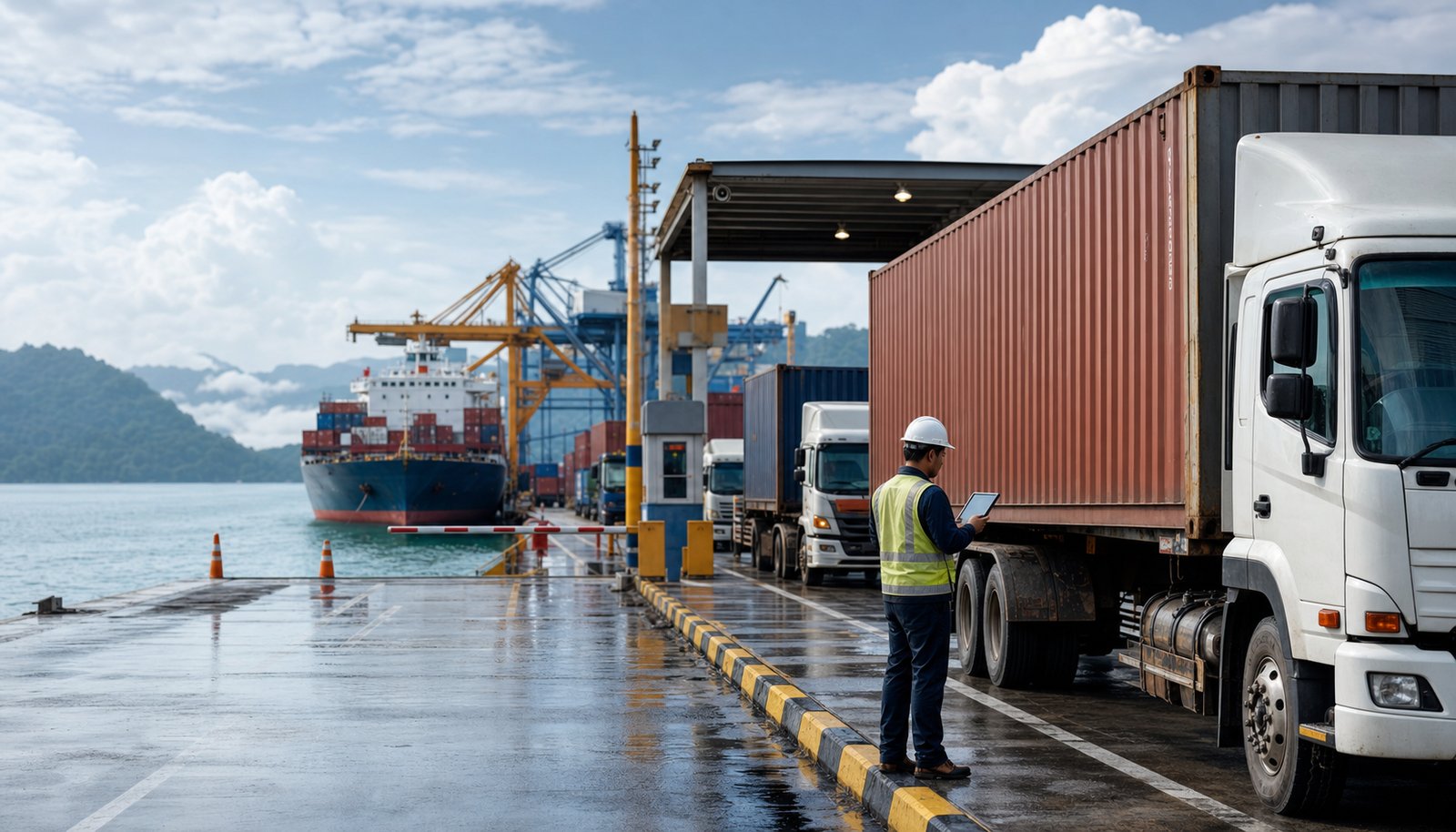
A truck loaded with auto parts crosses the Malaysia-Thailand border at Padang Besar, clears Thai customs at Sadao, and delivers to a factory in Hat Yai. The transit took eleven hours. The cargo insurance policy, written for ocean shipments from Port Klang, does not cover overland trucking in Thailand. Nobody checked.
This gap sits at the centre of intra-ASEAN trade. Malaysian businesses ship massive volumes to Thailand, Indonesia, Vietnam, and the Philippines every week, but the insurance programmes most of them carry were designed for deep-sea voyages to Europe, China, or the United States. Short-sea feeder runs between Port Klang and Jakarta, cross-border trucking from Johor Bahru to Singapore to Batam, and mixed-mode shipments that combine a truck leg with a feeder vessel leg are a different category of transit. The distances are short. The border crossings are frequent. The legal jurisdictions change at every stop. And the insurance that covers one leg may not cover the next.
Key Facts: Intra-ASEAN Cargo Insurance
What is intra-ASEAN cargo insurance? It is marine cargo insurance structured to cover goods moving between ASEAN member states by short-sea vessel, cross-border truck, rail, or a combination of these modes. Standard ocean cargo policies may not automatically extend to overland legs in neighbouring countries, making specific policy structuring necessary for these corridors.
Which corridors carry the highest Malaysia-ASEAN trade volumes? Malaysia-Thailand (bilateral trade of approximately RM119 billion in 2024, MITI, 2024) and Malaysia-Indonesia (bilateral trade of approximately RM116 billion in 2024, MITI, 2024) are the two largest. Malaysia-Singapore is the highest-frequency corridor but is typically covered under standard transit clauses due to the short distance and single mode.
What liability convention applies to cross-border trucking between Malaysia and Thailand? Malaysia and Thailand are not parties to the CMR Convention that governs international road carriage in Europe. Carrier liability for cross-border trucking in ASEAN is governed by the domestic transport law of each country the truck passes through, which creates fragmented liability limits and inconsistent recovery prospects for cargo owners.
Does an ocean cargo policy automatically cover the truck leg from a Malaysian factory to the port? It depends on the policy wording. Under the Institute Cargo Clauses (A) transit clause (IUA/LMA, 2009 edition), cover attaches from the warehouse of origin and continues during ordinary transit to the final warehouse at destination. If the policy specifically names warehouse-to-warehouse cover and the overland legs are part of the ordinary course of transit, they are typically included. If the policy was written for port-to-port cover only, the truck legs are excluded.
What is ATIGA and does it affect cargo insurance? The ASEAN Trade in Goods Agreement (ATIGA) provides for preferential tariff rates between ASEAN member states. It does not directly govern insurance, but a Certificate of Origin under ATIGA (typically Form D) is part of the documentary set that determines the landed cost and, by extension, the insured value of the shipment.
The Corridors: Where Malaysia-ASEAN Cargo Moves
Intra-ASEAN trade from Malaysia runs on five primary corridors, each with distinct transport modes, border crossing points, and risk profiles. Understanding which corridor your cargo travels is the starting point for structuring the right insurance programme.
| Corridor | Primary Mode | Key Border/Port Points | Typical Transit Time | Typical Commodities |
|---|---|---|---|---|
| Malaysia to Thailand (overland) | Cross-border truck | Padang Besar/Sadao, Bukit Kayu Hitam/Sadao, Rantau Panjang/Sungai Golok | 1 to 3 days | Auto parts, electronics components, food products, rubber |
| Malaysia to Thailand (sea-land) | Feeder vessel + truck | Penang to Songkhla or Laem Chabang | 3 to 7 days | Manufactured goods, palm oil products, machinery |
| Malaysia to Indonesia (short-sea) | Feeder vessel | Port Klang to Tanjung Priok (Jakarta), Pasir Gudang to Batam/Tanjung Priok | 2 to 5 days | Electronics, palm oil, chemicals, consumer goods |
| Malaysia to Vietnam | Feeder vessel (growing corridor) | Port Klang to Ho Chi Minh City (Cat Lai), Penang to Hai Phong | 4 to 8 days | Electronics, machinery, steel, food ingredients |
| Malaysia-Singapore-Indonesia (tri-border) | Truck + ferry or truck + feeder | Johor Bahru to Singapore (Tuas/Woodlands), Singapore to Batam (ferry), Singapore to Tanjung Priok (feeder) | 1 to 4 days | Electronics, semiconductor materials, processed food |
The Malaysia-Thailand overland corridor is the one most likely to fall through the gaps in a standard marine cargo policy. The word "marine" in marine cargo insurance is misleading: properly structured policies cover all modes of transit, including trucking and rail. But a policy written specifically for ocean shipments with port-to-port coverage will not extend to a truck crossing the Padang Besar checkpoint unless the wording says it does.
Risk Profile: What Goes Wrong on Short-Sea and Cross-Border Routes
The risk profile for intra-ASEAN transit is different from deep-sea shipping. The voyage is shorter, which reduces exposure to heavy weather and piracy. But the frequency of handling events is higher: goods are loaded and unloaded more often, pass through more checkpoints, and spend more time in port and border zones where theft and delay risks concentrate.
Mixed-mode transit gaps
A shipment from a factory in Penang to a buyer in Bangkok might travel by truck to Penang Port, by feeder vessel to Laem Chabang, and by truck again to the buyer's warehouse. That is three legs under three different transport contracts with three different carriers. If the cargo is damaged during the Thai trucking leg and the insurance policy only covers the sea leg, the exporter discovers the gap at the worst possible moment.
The fix is warehouse-to-warehouse cover under Institute Cargo Clauses (A) (IUA/LMA, 2009 edition), which attaches from the point the goods leave the origin warehouse and continues through all ordinary stages of transit, including overland legs, transshipment, and intermediate storage, until the goods reach the final warehouse at destination. Whether a specific loss is covered depends on the policy wording and the circumstances of the transit. The key word is "ordinary": if the goods are diverted to an unplanned storage location or held in customs for an extended period, the transit clause may need to be extended.
Multiple legal jurisdictions per shipment
A cargo crossing from Malaysia to Thailand to Laos passes through three legal jurisdictions. Carrier liability in Malaysia is governed by the Carriage of Goods by Sea Act 1950 (as amended 2021, now incorporating the Hague-Visby Rules in Peninsular Malaysia) for the sea leg and domestic road transport legislation for the truck leg. In Thailand, a different domestic regime applies. Neither Malaysia nor Thailand is party to the CMR Convention, so there is no unified international framework for the road portion of the transit.
This matters for recovery. If the carrier damages the goods on the Thai truck leg, the cargo owner's recovery rights depend on Thai domestic law, which may impose different limits and procedures than the Malaysian regime. The carrier liability limits under the Hague and Hague-Visby frameworks cover sea carriage, but for intra-ASEAN overland legs, the picture is fragmented. Cargo insurance fills this gap because it pays the cargo owner directly, regardless of which jurisdiction the loss occurred in, and then the insurer pursues subrogation against the carrier under whichever law applies.
Theft and pilferage at border crossings
Border crossings at Padang Besar, Bukit Kayu Hitam, and the Johor-Singapore causeways involve stops where containers and trucks sit in queues, sometimes overnight. Open trucks carrying palletised goods are particularly exposed. Pilferage from unsealed vehicles during customs processing is a known risk pattern on the Malaysia-Thailand overland route.
ICC (A) covers theft and pilferage. ICC (C) does not. For cross-border trucking, ICC (A) is the minimum recommendation.
Feeder vessel risks in the Malacca Strait and Java Sea
Short-sea feeder vessels operating between Port Klang and Jakarta, or Penang and Songkhla, tend to be smaller than the deep-sea container ships on the Asia-Europe or transpacific trades. Smaller vessels are more susceptible to heavy weather damage in the monsoon season (November to March in the Malacca Strait), and feeder operators may have less rigorous container stowage standards than the major deep-sea lines. Container collapses, wet damage from deck stowage on small feeders, and delays from feeder schedule disruptions are more common on these routes than on mainline services.
Customs detention and delay
Indonesian customs at Tanjung Priok and Thai customs at Laem Chabang can hold cargo for inspection, valuation disputes, or documentation discrepancies. Extended customs detention increases the risk of damage (particularly for temperature-sensitive goods) and can push the cargo beyond the standard transit clause duration. Standard ICC clauses include a "delay" exclusion for loss caused by delay, but physical damage that occurs during the delay (condensation, heat damage) may still be covered. If your shipments regularly face customs holds at Indonesian or Thai ports, discuss transit clause extensions with your underwriter.
The cost side of these delays (demurrage and detention charges from the shipping line) is a separate problem. The insurance side is about making sure the goods are still covered while they sit in a customs yard.
Insurance Programme for Intra-ASEAN Corridors
The right policy structure depends on how often you ship and how many corridors you use. Most Malaysian businesses trading regularly within ASEAN need an open cover policy rather than arranging insurance per shipment.
| Programme Element | Recommendation for Intra-ASEAN | Why |
|---|---|---|
| Clause set | ICC (A), warehouse to warehouse | Covers all modes (sea, road, rail) and all risks including theft, which ICC (C) excludes |
| Transit scope | Warehouse to warehouse, including overland legs in all transit countries | Closes the mixed-mode gap; covers truck legs in Thailand, Indonesia, and Vietnam |
| War and strikes | CL385 (war) + CL386 (strikes) | Feeder routes in the Malacca Strait and southern Sulu Sea may carry elevated risk profiles |
| Transit clause duration | Extended to 30 or 60 days from discharge, depending on corridor | Indonesian and Thai customs can hold cargo beyond the standard 60-day transit clause |
| Transshipment | Permitted, including at Singapore as a hub port | Most MY-ID and some MY-TH shipments transship through Singapore |
| Policy structure | Open cover for regular shippers; single shipment for one-off projects | Open cover avoids per-shipment arrangement and locks in terms for the policy year |
The critical item in this table is transit scope. If the policy says "port to port" or names only sea transit, the truck from the factory to the Malaysian port and the truck from the Thai or Indonesian port to the buyer's warehouse are not covered. Warehouse-to-warehouse wording closes this gap. Confirm the wording explicitly with your underwriter before declaring shipments.
Documentation and Incoterms Patterns on Intra-ASEAN Corridors
Intra-ASEAN trade has its own documentation rhythm, shaped by ATIGA preferential tariffs, ASEAN customs harmonisation, and the Incoterms rules that Malaysian exporters and their ASEAN buyers commonly use.
Incoterms patterns
The most common Incoterms rules on intra-ASEAN corridors are FOB and CIF for sea shipments, and FCA and CIP for cross-border trucking (ICC Paris, Incoterms 2020). Under FOB and FCA, the buyer arranges and pays for insurance. Under CIF, the seller must arrange insurance at a minimum of ICC (C). Under CIP, the seller must arrange insurance at a minimum of ICC (A).
For Malaysian exporters selling FOB to Thai or Indonesian buyers, the insurance responsibility sits with the buyer. That does not mean the exporter has no exposure: if the buyer's insurance is inadequate and the goods are damaged, the buyer may refuse to pay, dispute the invoice, or demand a replacement shipment. Exporters selling on FOB terms should consider arranging their own contingency cargo insurance to cover the gap between the buyer's obligation to insure and the reality of whether they actually did.
ATIGA Certificate of Origin (Form D)
ATIGA (ASEAN Trade in Goods Agreement) provides preferential or zero tariff rates for goods that meet the Rules of Origin criteria. The Certificate of Origin Form D is the documentary proof. For insurance purposes, the relevant point is that the insured value should reflect the actual landed cost. If the goods attract zero tariff under ATIGA, the insured value calculation is CIF (or CIP) plus 10%. If the goods do not qualify for ATIGA preference and attract a higher duty rate, the insured value should reflect the duty-inclusive landed cost to avoid under-insurance.
Bill of lading variations
Short-sea feeder shipments between Malaysian and Indonesian ports may use a through bill of lading (if a single carrier operates the entire route), a feeder bill of lading (covering only the feeder leg, with a separate master bill for any transshipment through Singapore), or a combined transport bill of lading for mixed-mode shipments. For cross-border trucking, a consignment note or CMR-equivalent waybill replaces the bill of lading. Each document type creates different carrier liability triggers and different insurance documentation requirements.
If the transaction is backed by a letter of credit, the LC will specify which transport document is acceptable. A mismatch between the LC requirement and the document the carrier issues is a common discrepancy on intra-ASEAN trades.
Common Claims on Intra-ASEAN Corridors
The claim patterns on short-sea and cross-border routes differ from deep-sea trades. The losses tend to be smaller per event but more frequent, driven by handling at multiple touchpoints rather than catastrophic vessel incidents.
| Claim Type | Corridor | Typical Trigger | ICC (A) Cover |
|---|---|---|---|
| Theft or pilferage | MY-TH overland, MY-ID via Batam | Goods removed from open truck at border, pilferage during transshipment at Batam | Covered |
| Handling damage at transshipment | All corridors via Singapore hub | Container dropped or mishandled during crane transfer between feeder and mother vessel | Covered |
| Water damage on feeder | MY-ID (Java Sea), MY-VN (South China Sea) | Deck-stowed container on small feeder takes sea spray or rainwater through damaged door seal | Covered |
| Road accident | MY-TH overland, MY-SG-ID tri-border | Truck collision or overturn on Thai or Indonesian roads | Covered (if warehouse-to-warehouse wording in place) |
| Customs-related damage | MY-ID (Tanjung Priok), MY-TH (Laem Chabang) | Goods opened for inspection, not repacked properly, exposed to rain in customs yard | Physical damage covered; delay loss excluded |
| Temperature excursion | MY-TH (food, chemicals), MY-ID (pharmaceuticals) | Reefer unit fails or is disconnected during border wait or transshipment | Covered (if reefer breakdown clause included) |
The recurring pattern across all these claim types is that the loss happens at a transition point: a border crossing, a transshipment port, a mode change from truck to vessel. These are the moments when goods are most exposed, and they occur more frequently on intra-ASEAN routes than on a single deep-sea leg from Port Klang to Rotterdam.
Carrier Liability on Intra-ASEAN Routes: The Recovery Gap
On deep-sea routes, carrier liability frameworks are well established. The Hague-Visby Rules limit carrier liability to 666.67 SDR per package or 2 SDR per kilogram, whichever is higher (Hague-Visby Rules, Article IV.5(a)). The limits are low relative to cargo values, but they are at least predictable and internationally recognised.
On intra-ASEAN overland and short-sea routes, the picture is less clear.
| Transit Leg | Liability Regime | Carrier Liability Limit | Recovery Prospect for Cargo Owner |
|---|---|---|---|
| Sea leg (MY to TH/ID) | Hague-Visby Rules (Peninsular Malaysia, post-2021 amendment); Hague Rules (Sabah and Sarawak) | 666.67 SDR/pkg or 2 SDR/kg | Limited but predictable |
| Truck leg in Malaysia | Malaysian domestic road transport legislation | Subject to carrier terms and conditions | Variable; depends on carrier's standard terms |
| Truck leg in Thailand | Thai domestic transport law | Subject to carrier terms; typically low limits | Difficult; Thai legal proceedings from Malaysia are costly |
| Truck leg in Indonesia | Indonesian domestic transport law | Subject to carrier terms; typically low limits | Difficult; Indonesian legal proceedings from Malaysia are costly |
| Feeder vessel (intra-ASEAN) | Bill of lading terms; Hague or Hague-Visby if incorporated | 666.67 SDR/pkg or 2 SDR/kg (if Hague-Visby applies) | Limited; feeder operators may have weaker balance sheets than mainline carriers |
The practical conclusion: recovering from a carrier for cargo damage on an intra-ASEAN overland leg is expensive, slow, and uncertain. Cargo insurance pays the cargo owner first, then handles subrogation against the carrier. That is the commercial reason to carry your own cover on these routes, even when the shipment values are smaller than your deep-sea trades.
The Singapore Transshipment Factor
Many Malaysia-Indonesia shipments and some Malaysia-Vietnam shipments route through Singapore as a transshipment hub. A container from Port Klang to Tanjung Priok may discharge at PSA Singapore, sit in the yard for one to five days, and then load onto a different feeder for the Jakarta leg.
Transshipment adds a handling event and a period of intermediate storage. Under ICC (A), transshipment in the ordinary course of transit is covered, including the period the container sits in the Singapore port yard. But "ordinary course" has limits: if the cargo is deliberately stored in Singapore for commercial reasons (to hold inventory closer to the Indonesian buyer, for example), that ceases to be transit and starts being warehousing, which the transit clause does not cover.
Singapore's role as an ASEAN transshipment hub also means that Singapore-based re-exporters frequently handle goods that originate in Malaysia and are destined for Indonesia or Vietnam. The insurance programme for a Singapore re-exporter shipping intra-ASEAN is a distinct structure, covered in Voyage's Singapore re-exporter guide.
Structuring Cover for Multi-Corridor ASEAN Operations
A Malaysian manufacturer or trading house that ships to Thailand, Indonesia, and Vietnam simultaneously needs an open cover policy that names all corridors, all modes, and all transit countries. The alternative, arranging separate cover for each corridor, is administratively burdensome and risks gaps at the junctions.
The open cover declaration process works the same way for intra-ASEAN as it does for deep-sea: each shipment is declared to the policy with the origin warehouse, destination warehouse, mode of transport, commodity, and insured value. The policy responds regardless of whether the shipment goes by feeder to Jakarta or by truck to Hat Yai, provided the corridor and mode are within the policy scope.
For businesses that also ship deep-sea (to Europe, China, the Middle East), the intra-ASEAN corridors can be included in the same open cover. One policy, one set of terms, one declaration process. This is simpler and typically results in better terms than splitting the programme across multiple policies.
Frequently Asked Questions
Does my ocean cargo insurance cover trucking from my factory to the port in Malaysia?
If the policy includes warehouse-to-warehouse cover under the Institute Cargo Clauses transit clause, the domestic truck leg from your factory to the Malaysian port is covered as part of the ordinary course of transit. If the policy is written for port-to-port cover, it is not. Check the transit clause wording in your policy schedule.
Is cargo insurance more expensive for intra-ASEAN short-sea routes than for deep-sea?
Not necessarily. Intra-ASEAN routes are shorter, which reduces the exposure period. However, the frequency of handling events and border crossings can increase the overall risk profile. Pricing depends on the commodity, the corridors used, the claims history, and the sum insured. An open cover that includes both deep-sea and intra-ASEAN routes will be priced on the overall programme, not on individual legs.
What happens if my cargo is stolen from a truck at the Thailand border?
Under ICC (A), theft is a covered peril regardless of where it occurs during the insured transit. You would file a claim with the police in the jurisdiction where the theft occurred, notify the insurer immediately, and provide all supporting documents including the police report, transport documents, and commercial invoice. The insurer pays the claim and pursues recovery from the carrier or third party.
Do I need separate insurance for each ASEAN country I ship to?
No. An open cover policy can be structured to cover all your intra-ASEAN corridors under a single programme. The policy names the permitted origins, destinations, modes, and commodities. Each shipment is declared to the policy as it ships. This is more efficient and avoids coverage gaps between separate policies.
Can my Thai or Indonesian buyer arrange the cargo insurance instead?
Under FOB or FCA terms, the buyer is responsible for arranging cargo insurance. Whether they actually do, and whether their cover is adequate, is a question you cannot verify from Malaysia. If the buyer's cover is inadequate and the goods are damaged, you may face non-payment or a demand for replacement. Seller's contingency cargo insurance covers this exposure.
What is the ATIGA Certificate of Origin and does it affect my insured value?
ATIGA (ASEAN Trade in Goods Agreement) Form D certificates allow goods to qualify for preferential tariff rates between ASEAN member states. The insured value should reflect the actual landed cost. If the goods attract zero tariff under ATIGA, the insured value is CIF or CIP plus 10%. If they attract a higher duty rate, the insured value should include the duty amount to avoid under-insurance.
How do I claim against a carrier for damage on a Thai or Indonesian trucking leg?
You would need to pursue the claim under the domestic transport law of the country where the damage occurred. This typically requires engaging local counsel, which is costly relative to the claim value. This is one of the primary commercial reasons for carrying cargo insurance on intra-ASEAN routes: the insurer pays you directly and handles the carrier recovery.
Does transshipment through Singapore affect my cargo insurance cover?
Under ICC (A) with warehouse-to-warehouse cover, transshipment in the ordinary course of transit is covered, including the period the container sits in the Singapore port yard. Deliberate storage in Singapore for commercial purposes (beyond what is needed for transshipment) is not ordinary transit and is typically not covered without a specific storage extension.
Insuring Intra-ASEAN Cargo with Voyage
Voyage arranges marine cargo insurance for freight forwarders and logistics companies as well as direct exporters shipping across ASEAN by short-sea feeder, cross-border truck, and mixed-mode combinations. Whether you need an open cover for regular shipments to Thailand and Indonesia or a single policy for a one-off project cargo to Vietnam, Voyage places directly with the underwriters who write intra-ASEAN risks and structures the warehouse-to-warehouse cover that closes the mixed-mode gap.
Get a tailored quote. WhatsApp Kevin at +60 14 925 5243 or request a callback. Quotes turn around in 24-48 hours where the underlying cover is in place.
Disclaimer: This article provides general guidance on cargo insurance for intra-ASEAN short-sea and cross-border transit as of May 2026. Coverage terms, conditions, and availability vary by insurer, policy, and jurisdiction. Always review your specific policy wording and consult a qualified insurance professional before making coverage decisions.
Why Voyage
Marine Insurance Specialists
International Underwriter Access
Both Sides of the Supply Chain
Malaysia and Singapore Expertise
Other industries
Explore other industries we cover


Get Best Rates / Quotation

Voyage is a specialist marine insurance intermediary arranging marine cargo and marine liability coverage for businesses in Malaysia, Singapore, and internationally. All insurance is placed through licensed broking partners.
Riskflow Sdn Bhd (202101001225):
Suite 3.19 (North Block), The Ampwalk, 218 Jalan Ampang, 50450 Kuala Lumpur, Wilayah Persekutuan Kuala Lumpur
t: +60149255243 (Kevin H.)
email: kevin@voyagecover.com