FMFF Standard Trading Conditions Explained for Malaysian Freight Forwarders
The FMFF STC governs liability limits and time bars for Malaysian freight forwarders. Clause-by-clause guide to coverage and gaps.
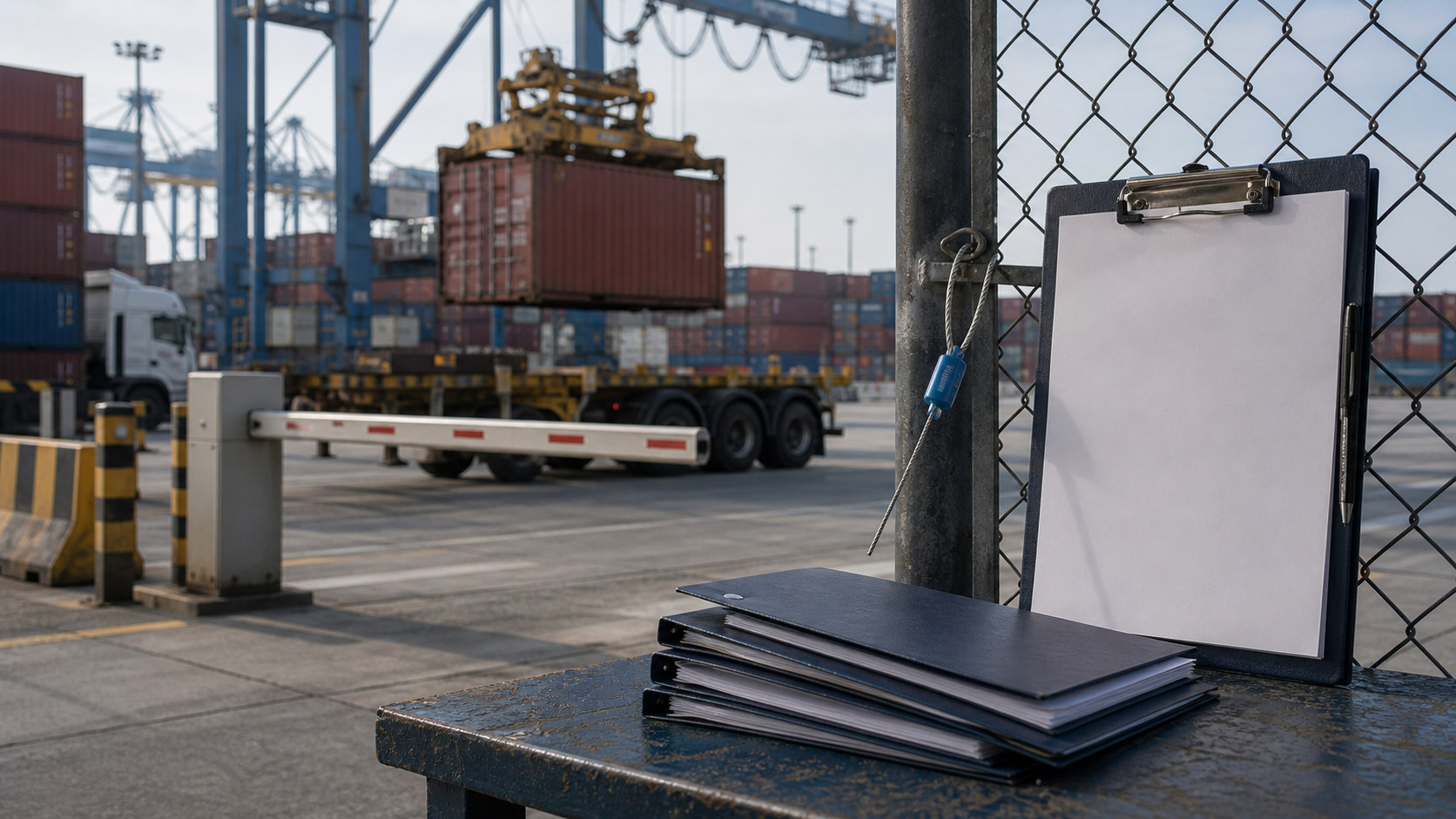
The FMFF Standard Trading Conditions are the set of contractual terms that govern all transactions between accredited FMFF member freight forwarders and their customers in Malaysia. FMFF STC Version 3/2010 is the current edition, applicable across all seven FMFF state chapters and their collective 1,564 members (FMFF, 2026). If the forwarder's contract does not specify other terms, the STC is deemed incorporated by reference.
Most Malaysian forwarders know the STC exists. Fewer have read it clause by clause. This guide breaks down the provisions that matter most for day-to-day operations, liability management, and insurance planning.
Key Facts: FMFF Standard Trading Conditions
What are the FMFF Standard Trading Conditions? The FMFF STC is a set of standard contractual terms published by the Federation of Malaysian Freight Forwarders, governing the rights, obligations, and liability limits between FMFF member forwarders and their customers. The current edition is Version 3/2010 (dated 15 October 2013).
What is the maximum liability under the FMFF STC? Under Clause 7.8, the forwarder's liability is limited to RM2,800 per shipping unit or RM5.00 per gross kilogram of goods lost or damaged, with an absolute maximum of RM100,000 per claim regardless of the actual cargo value.
Does the STC apply automatically? The STC applies when incorporated into the contract between the forwarder and the customer. Under Clause 1.3, customers who receive transactional advices are deemed to have agreed that the STC is incorporated. If a client's own contract terms override the STC, the STC provisions may not apply.
What law governs the STC? Under Clause 1.1, the STC is interpreted and governed by Malaysian law, including any legislations and conventions adopted or ratified into Malaysian law. Under Clause 9.1, any action against the forwarder must be commenced in Malaysia.
The Forwarder's Role Under the STC
The STC defines the FMFF member forwarder as an agent, not a principal. Under Clause 1.4, "the member performs the role of an agent of principals, which shall be deemed to include the carriers and such other performing parties operating and contracting as carriers."
This agent designation matters for liability. When the forwarder acts as agent, their liability is limited to their own performance: selecting, instructing, and supervising the carriers and other parties involved in the carriage. Under Clause 7.3, the forwarder "is not liable for acts of error and omission by any third parties involved with the carriage of the goods, such as, but not limited to, carriers, warehousemen, stevedores, port authorities and other performing party, unless there are evidence to prove that the company failed to exercise due diligence in selecting, instructing or supervising such third parties."
When the forwarder acts as principal, typically by issuing their own bill of lading or FIATA document, the liability framework shifts. Under Clause 7.4, the customer must provide evidence of the forwarder's negligence as principal within 21 calendar days of the goods' arrival at destination. The convention liability limits (Hague-Visby for sea, Montreal for air, CMR for road) then apply in addition to the STC caps.
Liability Limits: The Numbers That Matter
Clause 7.8 sets the forwarder's maximum liability:
| Limitation Basis | Amount | Application |
|---|---|---|
| Per shipping unit | RM2,800 | Applied per container, pallet, or other shipping unit |
| Per kilogram | RM5.00 per gross kg | Applied to the weight of goods lost or damaged |
| Absolute maximum | RM100,000 | Regardless of calculation method or actual cargo value |
For context: a 20-foot container of electronics worth RM2 million generates a maximum STC liability of RM100,000. The cargo owner bears RM1.9 million of unrecoverable loss from the forwarder. This is why marine cargo insurance is not optional even when the forwarder has liability cover.
The STC also limits delay-related liability. Under Clause 7.5, the forwarder's liability for loss following delay or deviation "shall only be limited to an amount not exceeding the remuneration relating to the service giving rise to the delay or deviation." If the forwarder's handling fee for the shipment was RM500, that is the maximum recovery for delay losses.
Under Clause 8.1, the forwarder is not liable for loss of profit, loss of market, or loss of opportunities caused by delay.
Customer Obligations: What the Shipper Must Do
The STC places significant obligations on the customer (shipper). These clauses shift risk from the forwarder to the customer for information accuracy.
Accurate declaration (Clause 6.1): The customer "shall be deemed to have truthfully and accurately declared all particulars relating to the general nature and description of the goods, their marks, numbers, weights, volume and quantity and, if applicable, the dangerous character of the goods."
Liability for inaccurate information (Clause 6.2): The customer "shall be liable for all loss or damage, costs, expenses and any fines or charges imposed by the authority resulting from the inaccurate, fraudulent or incomplete information or instructions."
Indemnification of the forwarder (Clause 6.3): If the forwarder becomes liable to a third party due to inaccurate customer information, "the customer shall indemnify and hold harmless the company accordingly."
These provisions are the forwarder's primary contractual defence against cargo, documentation, and declaration claims. But the indemnity is only as good as the customer's financial capacity and willingness to honour it. A customer who misdeclares dangerous goods and then goes bankrupt leaves the forwarder holding the liability with no indemnification.
Cargo Insurance Under the STC
Clause 3.1 is clear: the forwarder is "not obliged to advise, procure or effect marine cargo insurance cover on the goods unless the customer has given specific instructions." This means the forwarder has no default duty to insure.
Under Clause 3.2, when insurance is procured on behalf of the customer, the forwarder collects the premium as part of handling charges but "does not undertake any professional liability or responsibility to verify that the coverage so acquired is sufficient or provides comprehensive indemnity." The forwarder arranges the marine open cover certificate but does not warrant its adequacy.
Clause 3.3 addresses general average: where no insurance cover is procured, the customer must provide a banker's guarantee or cash deposit for GA release. This is a real operational risk. A GA declaration on an uninsured shipment can immobilise cargo for months while the customer scrambles for a bank guarantee. Marine cargo insurance covers the GA contribution, making this a non-issue for insured shippers.
Dangerous Goods and Valuables
The STC treats dangerous goods and valuables as special categories with additional requirements and exclusions.
Clause 7.7 excludes liability for valuables and dangerous goods "unless the value and/or nature of the goods has been declared and expressly agreed by the company in writing and noted accordingly in the Bill of Lading or Waybill." Valuables include negotiable instruments, bullion, precious stones, jewellery, antiques, and works of art. Dangerous goods are defined by reference to the IMDG Code (Clause 2.9).
A forwarder who unknowingly accepts dangerous goods because the shipper failed to declare them is protected under Clauses 6.1-6.3: the customer is liable for the misdeclaration. But the forwarder still faces the practical consequence of the incident: a fire, explosion, or contamination event affects the forwarder's operations, reputation, and relationships with carriers and port authorities.
For Malaysian forwarders handling DG shipments, the insurance implication is direct. FFL insurance covers cargo liability but may not cover the professional negligence of accepting obviously misdeclared goods. The STC provides contractual protection; FFL with an E&O extension provides insurance protection. Both are needed.
Time Bars and Notice Requirements
The STC imposes strict time limits on claims that are shorter than most cargo owners expect.
| Requirement | Clause | Time Limit |
|---|---|---|
| Written notice of apparent loss or damage | 7.2 | At delivery (or within 6 calendar days for non-apparent damage) |
| Evidence of negligence (where forwarder acts as principal) | 7.4 | 21 calendar days from arrival at destination |
| Written notice of non-apparent damage | 8.2 | 14 calendar days from arrival |
| Action for loss or damage | 8.3 | 9 calendar months from delivery or date goods should have been delivered |
| Goods deemed lost (no delivery) | 7.6 | 90 calendar days after the date goods should have been delivered |
The 9-month time bar for legal action under Clause 8.3 is significantly shorter than the 12-month time bar under the Hague-Visby Rules. A cargo owner who misses the STC time bar loses the right to claim against the forwarder even if the forwarder was clearly at fault. This time bar applies "unless the customer can show that it was impossible to comply within the time limit stipulated."
Get a tailored quote. WhatsApp Kevin at +60 19 990 2450 or request a callback.
Dispute Resolution and Jurisdiction
Under Clause 9.1, any action against the forwarder "may only be commenced in Malaysia where the company has its principal place of business and shall be decided according to the applicable legislations and/or conventions." This is a mandatory jurisdiction clause: even if the cargo owner is based overseas, the claim must be brought in Malaysia under Malaysian law.
Under Clause 9.2, commercial disputes must first be resolved by negotiation and/or arbitration under the Arbitration Act 2005 before proceeding to court.
For international shippers using Malaysian FMFF member forwarders, this means any cargo claim against the forwarder will be litigated in Malaysia. This has practical implications for evidence gathering, legal representation, and enforcement of judgments.
Where the STC Leaves Gaps
The STC provides strong contractual protection for the forwarder, but it does not address every liability scenario.
Client contract overrides. If a client's service agreement overrides the STC, the liability caps and time bars may not apply. Large shippers and multinational companies routinely insist on their own terms. The forwarder who signs a client contract without checking whether it overrides the STC may find themselves exposed to unlimited liability. For a deeper look at this risk, see our article on why your freight forwarder is not your insurer.
E&O exposure. The STC addresses cargo handling liability but does not specifically carve out or address professional errors in documentation, classification, or advisory services. A forwarder who gives incorrect routing advice, files a wrong customs declaration, or fails to arrange insurance when instructed faces E&O liability that the STC does not specifically cap.
Multiple claims exhausting the cap. The RM100,000 maximum under Clause 7.8 applies per claim, not per incident. But a single event causing multiple claims from multiple customers could exhaust the forwarder's FFL aggregate limit. The STC does not address aggregate exposure.
Warehouse storage beyond transit. The STC addresses delivery and storage in the context of transit (Clauses 4 and 5) but does not specifically address the forwarder's liability for extended warehousing operations. A forwarder operating a consolidation warehouse needs to understand whether the STC extends to goods stored beyond the transit period.
Frequently Asked Questions
What is the maximum a forwarder will pay under the FMFF STC?
RM2,800 per shipping unit or RM5.00 per gross kilogram, with an absolute ceiling of RM100,000 per claim (Clause 7.8), subject to policy terms and conditions.
Does the FMFF STC apply automatically to all freight forwarding transactions in Malaysia?
The STC applies when incorporated into the contract. Under Clause 1.3, customers receiving transactional advices are deemed to have agreed. Client terms that override the STC may remove the forwarder's protections.
How long does a cargo owner have to bring a claim against the forwarder under the FMFF STC?
Nine calendar months from delivery or the date the goods should have been delivered (Clause 8.3). This is shorter than the Hague-Visby 12-month time bar.
Does the FMFF STC require the forwarder to arrange cargo insurance?
No. Under Clause 3.1, the forwarder has no obligation to arrange insurance unless specifically instructed by the customer.
Can a client's contract override the FMFF STC liability limits?
Yes. The STC applies only when incorporated and not superseded. A client's own terms can remove the forwarder's STC protections entirely.
What version of the FMFF STC is currently in force?
Version 3/2010, dated 15 October 2013.
Does the STC cover the forwarder's liability for delay?
Partially. Delay liability is capped at the service fee under Clause 7.5. Loss of profit and market loss from delay are excluded under Clause 8.1.
Where must legal action against an FMFF member forwarder be brought?
In Malaysia, under Malaysian law (Clause 9.1). This is mandatory even for overseas cargo owners.
Cover the STC Gaps with Voyage
Voyage is a specialist marine insurance intermediary arranging freight forwarder's liability insurance for Malaysian logistics operators. The FMFF STC provides contractual protection, but contractual protection is not insurance protection. When a client overrides the STC, when E&O exposure sits outside the STC framework, or when the RM100,000 cap does not match the forwarder's actual exposure, FFL insurance is the backstop. Voyage places FFL directly with the underwriters who write these risks.
Get a tailored quote. WhatsApp Kevin at +60 19 990 2450 or request a callback. Quotes turn around in 24-48 hours where the underlying cover is in place.
Disclaimer: This article provides general guidance on the FMFF Standard Trading Conditions as of June 2026. Coverage terms, conditions, and availability vary by insurer, policy, and jurisdiction. Always review your specific policy wording and consult a qualified insurance professional before making coverage decisions.
Why Voyage
Marine Insurance Specialists
International Underwriter Access
Both Sides of the Supply Chain
Malaysia and Singapore Expertise
Other industries
Explore other industries we cover


Get Best Rates / Quotation

Voyage is a specialist marine insurance intermediary arranging marine cargo and marine liability coverage for businesses in Malaysia, Singapore, and internationally. All insurance is placed through licensed broking partners.
Riskflow Sdn Bhd (202101001225):
Suite 3.19 (North Block), The Ampwalk, 218 Jalan Ampang, 50450 Kuala Lumpur, Wilayah Persekutuan Kuala Lumpur
t: +60149255243 (Kevin H.)
email: kevin@voyagecover.com