LCL & Consolidation Liability: When One Shipper's Box Wrecks Another's
In an LCL consol you mix shippers in one container, so one bad pallet can damage everyone's cargo and the claims come to you. How forwarder liability cover
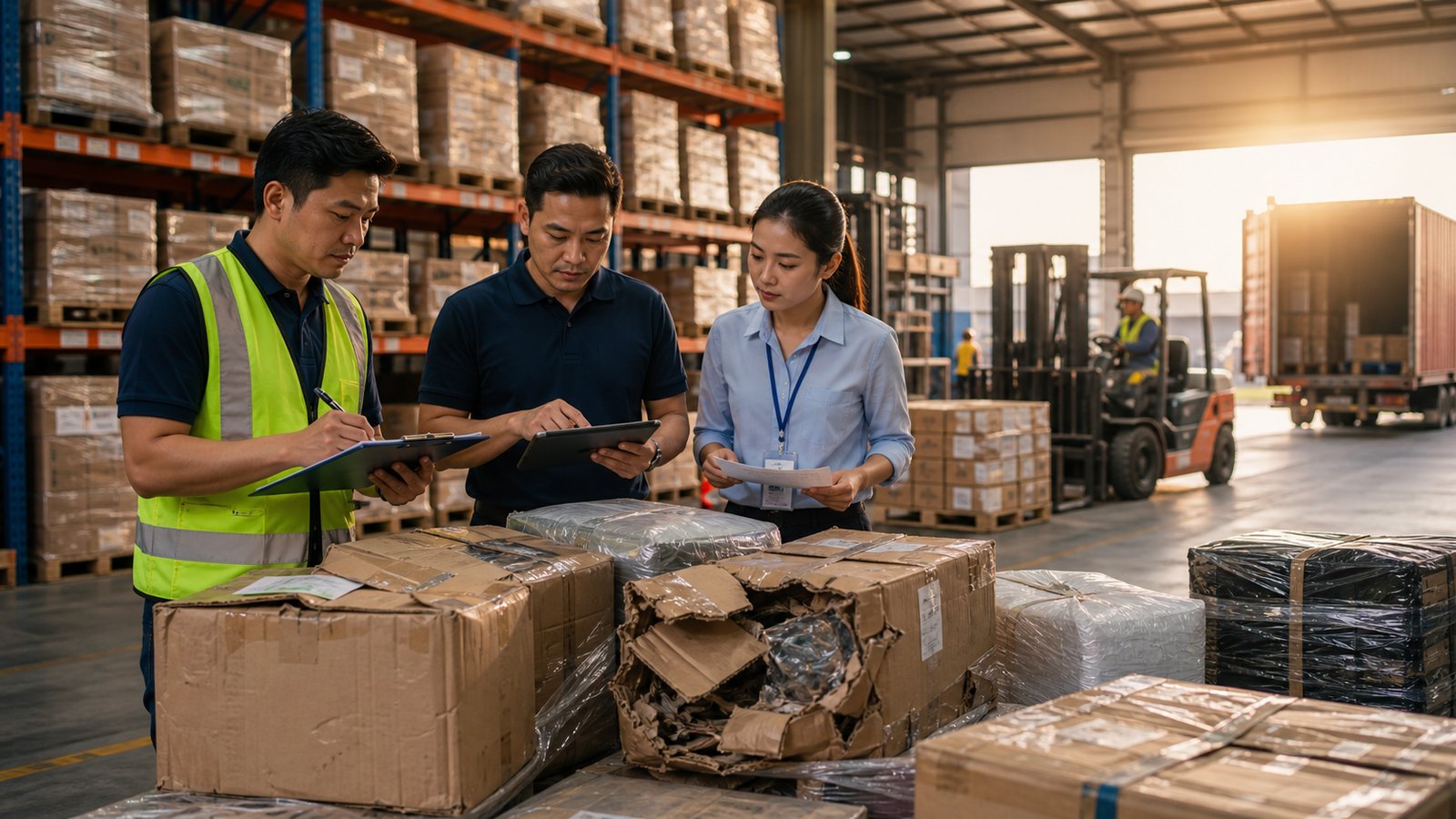
Most forwarders file LCL consolidation under low-risk work: small parcels, modest values, nothing like the exposure of a full container of electronics or a heavy project lift. The reality is closer to the opposite, and it is worth understanding why before a claim teaches you the hard way.
In a full container load you handle one shipper's goods and one shipper's risk, but in a less-than-container-load consol you put six, ten, or fifteen unrelated shippers into a single box, which makes you the party who mixed them. When one of those pallets leaks, shifts, or turns out to be something it should not be, the damage does not stay with its own cargo, and every shipper in the box comes back to the consolidator who loaded it.
This guide is for Malaysian forwarders who co-load and consolidate at Port Klang, PTP, or Penang. It sets out where consolidation liability actually sits, why your clients' own cargo cover does not get you off the hook, and how freight forwarder's liability insurance responds when one shipper's box wrecks another's.
Key Facts: LCL Consolidation Liability
What is LCL consolidation? It is the practice of combining cargo from multiple unrelated shippers into one container, also called groupage or co-loading, with the forwarder issuing a house bill of lading to each shipper. The forwarder, not the carrier, decides what goes into the box together.
Where does the liability sit? With the consolidating forwarder, because selecting, stowing, and securing mixed cargo in one container is the forwarder's operation, and damage caused by a poor stow or incompatible cargo is the forwarder's responsibility to the other shippers.
What is the classic loss? One shipper's pallet leaks, sweats, shifts, or is overweight or misdeclared, and it damages the surrounding cargo of unrelated shippers in the same container, after which every affected shipper claims against the consolidator.
Does the client's cargo insurance protect the forwarder? No, because the client's marine cargo policy pays the client and then the cargo insurer pursues the party at fault through subrogation, which is the insurer stepping into the client's shoes to recover from whoever caused the loss, and that party is often the consolidator.
How does freight forwarder's liability cover respond? Through the cargo legal liability section for the physical damage, and the errors and omissions section for poor stowage or planning decisions, subject to policy terms and conditions.
For the cover, see freight forwarder's liability insurance, and for why a client's own cover does not shield you, see why your forwarder is not your insurer.
The Risk You Created by Loading the Box
The difference between FCL and LCL liability comes down to the act of consolidation itself. In FCL the shipper packs the container and you arrange its movement, so if the goods are badly packed that is largely the shipper's problem, but in LCL you choose which cargoes share a container, you decide the stow, and you secure the load, which makes the condition of that consol your professional output.
So when a drum of liquid in one shipper's parcel leaks onto cartons of textiles below it, the textile shipper does not go looking for the drum's owner they have never heard of, they pursue you, the forwarder whose house bill they hold and whose decision put their cartons under a drum. You are then left to chase the drum's shipper up the chain, with the same recovery problem that runs through all forwarder liability.
That is why a consol with ten shippers is ten potential claimants from a single incident. The values per parcel may be modest, but they stack, and one contaminated or crushed consol can produce a claim total well beyond anything the consolidation fees ever earned.
The Five Ways a Consol Turns Into a Claim
Groupage losses are not exotic. They come from a short list of recurring failures, and a consolidator who knows the list can design around it.
Leakage and contamination
Liquids, chemicals, foodstuffs, or anything that can leak, sweat, or give off odour contaminates the dry cargo stowed nearby. This is the most common consol claim and the easiest to prevent, since a compatibility check before loading catches most of it.
Crushing and poor stow
Heavy cargo loaded over light, inadequate dunnage, or a stow that shifts in transit crushes the parcels beneath. The damage is physical, but the cause is the stow plan, which is squarely the consolidator's responsibility.
Weight and balance failure
The container is overweight, badly balanced, or breaches the verified gross mass declaration, which leads to handling damage, a refused box, or liability up the chain to the carrier and the terminal.
One misdeclared parcel
A single shipper's parcel is misdeclared, including hidden dangerous goods, and it damages the whole consol or causes a casualty. This connects directly to the dangerous goods exposure in misdeclared dangerous goods forwarder liability.
Documentation and release errors
The house bills, manifest, or release instructions for one shipper are wrong, and cargo is delayed, misdelivered, or released against the wrong document. This is an errors and omissions exposure rather than a physical one, but it lands on the same consolidator.
Running consols without checking your liability cover fits?
Voyage places freight forwarder's liability insurance for Malaysian consolidators directly with the underwriters who write these risks, and can check your wording carries the cargo legal liability and errors and omissions sections a groupage claim needs. Send the details through the quote form for a 48-hour indication, or WhatsApp +60 14 925 5243.
Why Your Client's Cargo Cover Does Not Save You
A forwarder facing a consol claim often assumes that because the damaged shipper carried marine cargo insurance, the matter is closed, but it is not. The cargo policy pays the shipper, and then the cargo insurer exercises subrogation, stepping into the shipper's position to recover its outlay from whoever caused the damage.
If your stow or your loading caused the loss, the cargo insurer's recovery target is you, so the existence of the client's cargo cover does not remove your liability, it simply changes who comes after you, swapping an individual shipper for a professional insurer with a claims team. That is frequently a harder opponent rather than an easier one.
This is the point clients themselves tend to misunderstand, which is why pointing them to proper cover protects you indirectly while never removing the consolidator's own exposure. The mechanics for clients are set out in why your freight forwarder is not your insurer, and the recovery shortfall in why a damaged shipment recovers less than invoice value.
How the Cover Maps to the Claim
A consol claim usually arrives as several smaller claims at once, some physical and some procedural, so a freight forwarder's liability policy built for the Malaysian market needs the sections that meet both, together with defence costs that can handle multiple claimants from a single event.
| Consol loss | Who claims | FFL section |
|---|---|---|
| Leakage or contamination of other parcels | Affected shippers and their cargo insurers | Cargo legal liability |
| Crushing from poor stow | Shippers of the cargo beneath | Cargo legal liability and errors and omissions |
| Overweight or balance failure | Carrier, terminal, hauliers | Third-party liability |
| Misdelivery or documentation error | Affected shipper or consignee | Errors and omissions |
The danger in a thin policy is that it covers the simple cargo-damage claim but not the stowage-decision or documentation claim, or that its single-event limit is too low for a multi-shipper consol, so sizing the limit to a worst-case box rather than an average parcel is the protection that matters most. For the product and sector, see freight forwarder's liability insurance and freight forwarders and logistics.
Building a Consol That Does Not Bite
Most consol claims are designed in at the loading bay, which is also where four routines remove the bulk of the risk. The first is a compatibility check before loading, keeping liquids off the top of dry goods, keeping odour-giving cargo away from foodstuffs or textiles, and flagging anything that could be hidden dangerous goods, because a short checklist at the loading point catches most contamination claims.
The second is to plan and record the stow, loading heavy low and light high, using proper dunnage, and keeping a photo record of the loaded container, since that photo is both a quality step and your evidence if a claim later disputes how the box was packed. The third is to control documentation per shipper, matching each house bill, manifest line, and release instruction to the right parcel, because a release or delivery error is as expensive as physical damage and lands the same way.
The fourth is to size the FFL to the box rather than the parcel. The exposure on a consol is the sum of every shipper's cargo in it, so the per-event limit has to anticipate a full container of mixed claimants, not the value of one parcel.
Frequently Asked Questions
Who is liable if one shipper's cargo damages another in my consol?
Usually the consolidating forwarder, because choosing which cargoes share a container and how they are stowed is your operation, and the damaged shippers hold your house bill. They claim against you, and you are left to recover from the shipper whose cargo caused the damage, so documented compatibility checks and stow records strengthen your defence considerably.
If the damaged shipper had cargo insurance, am I off the hook?
No, because the cargo insurer pays the shipper and then pursues you through subrogation, recovering its outlay from the party that caused the loss. The client's cover changes who sues you, from an individual shipper to a professional insurer, but it does not remove your liability as the consolidator.
Is LCL really riskier than FCL for a forwarder?
In liability terms it often is, because you actively combine and stow unrelated cargoes, so one bad parcel can generate claims from every other shipper in the box, whereas in FCL the shipper packs the container and carries more of the packing risk. The per-parcel values in LCL are smaller, but they stack across the whole consol until the total is anything but small.
What does the cargo legal liability section cover in a consol claim?
It responds to your legal liability for physical loss or damage to the cargo of others while in your care, custody, or control, subject to policy terms and conditions, which in a consol means the contaminated, crushed, or wetted parcels of shippers other than the one at fault. Stowage-decision and documentation claims usually need the errors and omissions section as well.
How do I size my cover for consolidation work?
Size the per-event limit against a full container of mixed, valuable cargo, since that is the realistic worst case when one parcel damages the rest, and a limit set to an average parcel value will not meet a multi-shipper claim. A specialist placement can model this against the consols you actually run.
Voyage Conclusion
Consolidation is where forwarding stops being a forwarding-on service and becomes a handling operation you are answerable for, because the moment you choose what shares a box and how it is stowed, the condition of that box becomes your professional output. One leaking drum can produce a claim from every other shipper in the container, and the client's own cargo cover only changes who comes after you for it.
Voyage places freight forwarder's liability cover for Malaysian consolidators directly with the underwriters who write these risks, sized to the box rather than the parcel. See freight forwarder's liability insurance, the freight forwarders and logistics view, and the related exposure in the house bill and subcontractor chain. For a quote, use the contact form or WhatsApp +60 14 925 5243 for a 48-hour indication.
Disclaimer: This article provides general guidance on LCL consolidation and freight forwarder liability as of June 2026. Coverage terms, conditions, and availability vary by insurer, policy, and jurisdiction. Regulatory requirements differ between countries and may change.
Always review your specific policy wording and consult a qualified insurance or legal professional before making coverage decisions.
Why Voyage
Marine Insurance Specialists
International Underwriter Access
Both Sides of the Supply Chain
Malaysia and Singapore Expertise
Other industries
Explore other industries we cover


Get Best Rates / Quotation

Voyage is a specialist marine insurance intermediary arranging marine cargo and marine liability coverage for businesses in Malaysia, Singapore, and internationally. All insurance is placed through licensed broking partners.
Riskflow Sdn Bhd (202101001225):
Suite 3.19 (North Block), The Ampwalk, 218 Jalan Ampang, 50450 Kuala Lumpur, Wilayah Persekutuan Kuala Lumpur
t: +60149255243 (Kevin H.)
email: kevin@voyagecover.com