The First 24 Hours After Cargo Damage: What to Do, In Order
Cargo arrived damaged? The first 24 hours decide whether your claim gets paid. Notice, evidence, mitigation, and the time bars that quietly kill recoveries
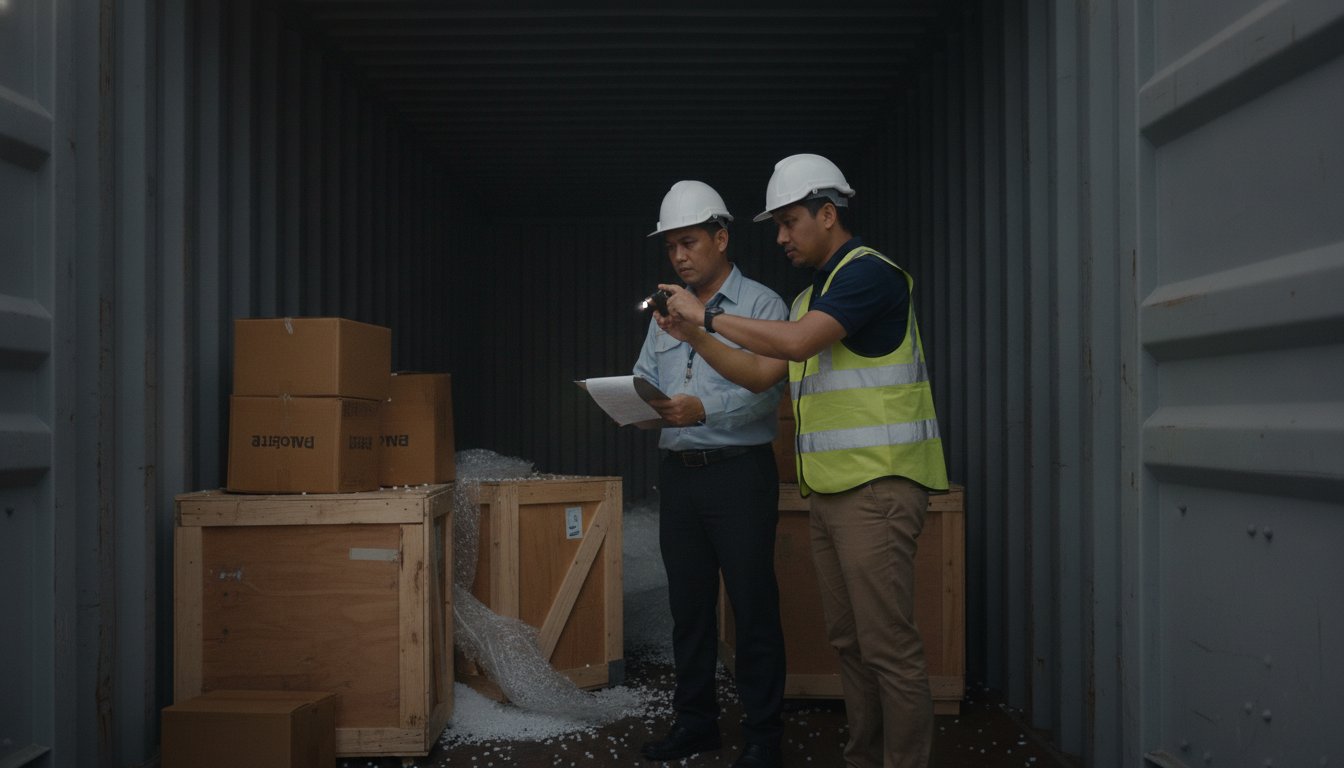
The container is open, the cargo is damaged, and the clock you cannot see has already started.
What happens in the first 24 hours decides far more than most cargo owners realise. Sign the wrong piece of paper, move the goods before they are recorded, or let a quiet notice deadline pass, and a claim that should have been paid in full gets reduced or refused. None of it requires bad faith from the insurer or the carrier. It just requires the cargo owner to miss a step.
This is the order of operations for a Malaysian or Singaporean cargo owner the day damage is discovered. Work it top to bottom. If you forward shipments for clients, this is the page to send them before the next container moves.
Key Facts: The First 24 Hours
What is the single most important first step? Give written notice of loss or damage to the carrier and stop the clock; under the Hague-Visby Rules, apparent damage must be noted before or at the time of removal, and non-apparent damage within 3 days of delivery.
Should you sign the delivery receipt as clean? No. Note the damage on the delivery order, the equipment interchange receipt, and any proof of delivery before signing; a clean receipt undermines both the carrier claim and the cargo insurance claim.
What does the cargo policy require you to do? Institute Cargo Clauses (A) 2009 Clause 16 places a duty on the assured to take reasonable steps to minimise the loss and to preserve rights of recovery against carriers and others, subject to policy terms and conditions.
What is the time bar to sue the carrier? One year from delivery (or the date the goods should have been delivered) under the Hague-Visby Rules, which Malaysia and Singapore give effect to through their Carriage of Goods by Sea Acts.
Who appoints the surveyor? The cargo insurer or its claims agent usually appoints or approves the surveyor; notify the insurer immediately so the survey happens before the cargo is moved or repaired.
For what cargo insurance covers, see what marine cargo insurance covers. For how the certificate reads, see how to read a marine cargo insurance certificate.
Step 1: Do Not Sign a Clean Receipt
The first document anyone pushes at you is the delivery receipt, the equipment interchange receipt, or the proof of delivery. If you sign it clean while the cargo is visibly damaged, you have created a record that the goods arrived in good order, and that record works against you in both the carrier claim and the insurance claim.
Note the damage on the document before signing. Write what you can see: crushed cartons, water staining, a breached seal, a reefer reading out of range, a leaning or collapsed load. Photograph the noted document. If the driver or terminal refuses to let you annotate, record that refusal in writing and send it the same day.
This is the cheapest protective step in the whole process, and it takes two minutes. A clean receipt is the most common self-inflicted wound on a cargo claim.
Step 2: Give Written Notice to the Carrier
Carrier liability runs on notice and time bars, and they are unforgiving. Under the Hague-Visby Rules, which Malaysia gives effect to through the Carriage of Goods by Sea Act 1950 and Singapore through the Carriage of Goods by Sea Act 1972, notice of apparent loss or damage must be given in writing before or at the time of removal of the goods. Where the damage is not apparent, the notice must be given within 3 days of delivery.
Send the written notice to the carrier and, where relevant, the terminal and the forwarder, identifying the shipment, the bill of lading, and the damage. Notice does not prove your claim, but missing it hands the carrier a defence before the facts are even argued. The separate one-year deadline to actually commence suit against the carrier also starts at delivery; diarise it now. For the limits that cap any carrier recovery, see carrier liability limits and what your shipping line owes.
Step 3: Notify Your Cargo Insurer
Tell your insurer or their claims agent the same day. Two things follow from prompt notice. The insurer can appoint or approve a surveyor to inspect the cargo before it is moved or repaired, and the claim file opens on a clean timeline rather than one with an unexplained gap.
Have the certificate or policy reference ready. The certificate names the insurer, the claims agent, and often a 24-hour notification contact; this is why knowing how to read it before a loss matters. If you are not sure who to call, the broker who placed the cover is the fastest route. Do not wait for the survey to be arranged before taking the protective steps below.
Not sure your cargo cover responds to this loss?
Voyage arranges marine cargo cover for Malaysian and Singaporean shippers and can talk you through a live damage situation. Use the contact form or WhatsApp +60 14 925 5243 for an urgent response.
Step 4: Preserve the Evidence
The cargo, the packaging, and the container are the evidence. Until the surveyor has seen them, they should stay as close to the as-discovered state as is safe and practical.
Photograph everything: the container exterior and seal, the load as opened, the damage in close-up and in context, the packaging, and any water line, impact mark, or shifting inside the box. Keep the damaged packaging; it is central to any argument about whether packing was adequate, which matters because Institute Cargo Clauses (A) 2009 Clause 4.3 excludes loss caused by insufficient or unsuitable packing. Note the container number and seal number against the bill of lading. If the cargo is perishable or hazardous, prioritise safety, but record the state before any disposal.
Step 5: Mitigate the Loss
Your policy does not let you stand back and let a recoverable loss become a total one. Institute Cargo Clauses (A) 2009 Clause 16 puts a positive duty on the assured to take reasonable measures to minimise the loss and to preserve recovery rights against carriers, bailees, and other third parties. Clause 17 confirms that taking those steps is not treated as a waiver or acceptance of abandonment.
In practice, mitigation means separating sound cargo from damaged, moving goods to dry or controlled storage if water or temperature is the threat, and arranging emergency measures where delay would worsen the loss. Keep receipts for everything you spend mitigating; reasonable sue-and-labour costs are commonly recoverable under the policy, subject to policy terms and conditions. Do not repair, dispose of, or sell damaged goods before the surveyor has inspected them unless safety demands it.
Step 6: Assemble the Documents
A cargo claim is a documentary exercise. Start the file in the first 24 hours while everything is to hand, rather than reconstructing it weeks later.
| Document | Why it matters |
|---|---|
| Insurance certificate or policy | Establishes cover, insurer, claims agent, and sum insured |
| Bill of lading or air waybill | Proves the contract of carriage and the condition on shipment |
| Commercial invoice and packing list | Establishes value and the number and contents of packages |
| Annotated delivery receipt or POD | Records the damage at the point of delivery |
| Notice of claim to the carrier | Preserves the recovery right and meets the notice deadline |
| Photographs and survey report | Evidences the nature, cause, and extent of the damage |
For the deeper view on how a claim can be refused, see when cargo insurance coverage ends and the reference clauses on Institute Cargo Clauses (A), (B), and (C).
What Not to Do
Three actions in the first day do real damage to a claim. Do not sign a clean receipt when the cargo is visibly damaged. Do not throw away packaging or damaged goods before the survey, because the packaging is evidence and disposal can be read as failure to preserve the loss. And do not assume the carrier or the forwarder will pay you in full; their liability is capped and fault-based, and your own cargo policy is the route to full value. For why the forwarder's cover is not a substitute, see why your freight forwarder is not your insurer.
Frequently Asked Questions
What is the very first thing to do when cargo arrives damaged?
Note the damage on the delivery receipt before you sign it, and do not sign a clean receipt. A clean record of good-order delivery works against both your carrier claim and your insurance claim, and annotating the document takes only a moment.
How long do I have to notify the carrier of damage?
Under the Hague-Visby Rules, apparent damage must be noted before or at the time of removing the goods, and non-apparent damage within 3 days of delivery. A separate one-year time bar applies to actually commencing suit against the carrier, running from the date of delivery.
Do I have to wait for a surveyor before moving the cargo?
Where practical and safe, yes; let the surveyor inspect before the cargo is moved, repaired, or disposed of. If safety, perishability, or worsening loss forces you to act sooner, record the state thoroughly with photographs first and keep all evidence.
What is my duty to minimise the loss?
Institute Cargo Clauses (A) 2009 Clause 16 requires you to take reasonable steps to reduce the loss and to preserve recovery rights against carriers and others. Reasonable costs of doing so are commonly recoverable as sue-and-labour, subject to policy terms and conditions, so keep the receipts.
Can I claim from both the carrier and my cargo insurer?
Your cargo insurer pays you for the covered loss, then exercises subrogation to recover from the carrier on your behalf up to the carrier's capped liability. You do not recover twice; the insurance route gets you paid in full and fast, while the capped carrier recovery is handled by the insurer.
What if the packaging caused the damage?
Insufficient or unsuitable packing is excluded under Institute Cargo Clauses (A) 2009 Clause 4.3, so the packaging is critical evidence. Keep it for the surveyor rather than discarding it, because the question of whether packing was adequate often decides the claim.
Voyage Conclusion
A cargo claim is usually won or lost in the first day, on notice, evidence, and mitigation, long before the insurer assesses the value. Note the damage before signing, give written notice to the carrier, call your insurer, preserve the cargo and packaging, and start the document file the same day.
Voyage arranges Marine Cargo Insurance and Marine Cargo Open Cover for Malaysian and Singaporean shippers, and supports clients through live claims. WhatsApp +60 14 925 5243 or use the contact form.
Related guides: what marine cargo insurance covers, how to read a cargo insurance certificate, carrier liability limits, when cargo coverage ends, Institute Cargo Clauses.
Disclaimer: This article provides general guidance on the steps to take after discovering cargo damage as of June 2026. Coverage terms, conditions, time bars, and availability vary by insurer, policy, carriage contract, and jurisdiction, and may change.
Always review your specific policy wording and carriage contract, and consult a qualified insurance or legal professional before making claim or coverage decisions.
Why Voyage
Marine Insurance Specialists
International Underwriter Access
Both Sides of the Supply Chain
Malaysia and Singapore Expertise
Other industries
Explore other industries we cover


Get Best Rates / Quotation

Voyage is a specialist marine insurance intermediary arranging marine cargo and marine liability coverage for businesses in Malaysia, Singapore, and internationally. All insurance is placed through licensed broking partners.
Riskflow Sdn Bhd (202101001225):
Suite 3.19 (North Block), The Ampwalk, 218 Jalan Ampang, 50450 Kuala Lumpur, Wilayah Persekutuan Kuala Lumpur
t: +60149255243 (Kevin H.)
email: kevin@voyagecover.com