Insuring Coal Shipments: The Rejected Risk
Coal cargo insurance is a rejected risk in most markets. What Voyage can place, what underwriters need, and how to quote coal shipments from MY and SG.
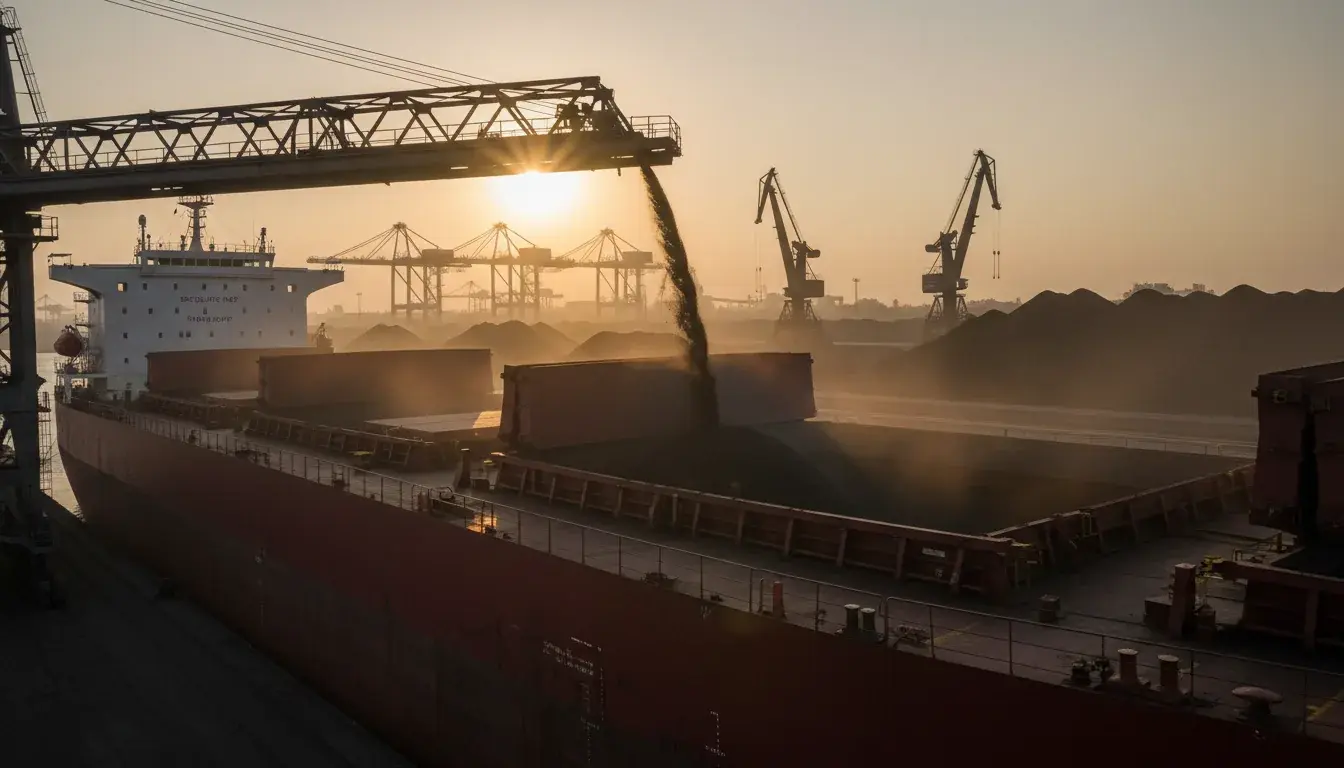
Most marine cargo underwriters do not want to write coal. The ones who do, write it on specific terms.
That single line explains why Malaysian and Singaporean coal traders, Indonesian exporters routing through offtake structures in the region, and power-station offtakers regularly find that their broker cannot get a firm quote back. The broker is not being difficult; the market has moved, and mainstream markets have pulled capacity from thermal coal over the past five years for a mix of reinsurance appetite, ESG capacity withdrawal, and commodity-specific loss experience.
Voyage's position on coal is that it remains an insurable commodity, subject to policy terms and conditions, on terms that reflect the specific risks the cargo presents. This article sets out what those risks are, what information an underwriter needs to quote, and where mainstream declines versus specialist placement sit in 2026.
Key Facts: Insuring Coal Cargo
Can coal cargo still be insured in 2026? Yes, on specific terms. Mainstream markets have tightened or exited, primarily on thermal coal, but specialist markets continue to write coal cargo on ICC (B) 2009 named perils, with self-heating commonly carved out or written as a specific extension subject to warranties, subject to policy terms and conditions.
Why have many underwriters exited coal? A combination of reinsurance treaty tightening, corporate ESG policies restricting thermal coal exposure, and coal-specific loss experience around self-heating and moisture-related bulker incidents.
What IMSBC Code classification applies to coal? The IMO's International Maritime Solid Bulk Cargoes Code classifies coal as a dual Group A and B cargo: Group A for liquefaction risk where moisture exceeds the Transportable Moisture Limit, and Group B for chemical hazards including self-heating and methane emission.
What information does a coal submission need? Coal type (thermal or coking) and rank, moisture content at loading, self-heating test results (UN test N.4), sulphur and calorific value, loading and discharge ports, vessel flag and age, intended stowage, voyage duration, sum insured basis, deductible willingness, and three to five years of loss history.
What clause set typically applies to coal? Institute Cargo Clauses (B) 2009 named perils is the market default, with self-heating extension subject to warranties on moisture, loading temperature, and voyage duration. ICC (A) 2009 is placeable in specific circumstances. For the clause reference, see the Institute Cargo Clauses (A), (B), and (C), and the war layer references at Institute War Clauses and Institute Strikes Clauses. For the general average mechanic that commonly fires after a vessel fire event, see our reference on the York-Antwerp Rules 2016.
Resource: Cargo Insurance Coverage Audit
For non-rejected commodity scenarios, the Cargo Insurance Coverage Audit applies. For coal specifically, ask Voyage directly.
Why Coal Is a Harder Placement Than It Used to Be
Three structural shifts have narrowed the market for coal cargo cover over the past several years.
First, reinsurance appetite for coal has tightened. Large reinsurers with net-zero commitments have restricted new coal capacity in their treaties, which feeds down to the front-line cargo market: underwriters who would have written coal under a broad treaty are now writing it under a specific facultative placement or under a tighter treaty scope.
Second, ESG overlay on corporate underwriting policy has pulled some markets out of thermal coal entirely. Coking coal, used in steel production, sits differently in most policy frameworks and remains more widely placeable, but thermal coal for power generation has become a harder conversation.
Third, loss experience on coal cargo continues to be dominated by self-heating and spontaneous combustion events, plus moisture-related claims on bulk carriers. A market cycle of losses, combined with the other two factors, has left fewer underwriters competing for the business, and the ones who remain ask for more technical information at submission.
The Specific Physical Risks in Coal Cargo
Underwriters are not declining coal because it is a commodity they disapprove of; they are asking detailed questions because coal as a cargo has genuinely difficult physical risk characteristics. Four stand out.
Self-Heating and Spontaneous Combustion
Coal oxidises slowly at ambient temperatures, which releases heat. In a confined stow with poor ventilation, high-sulphur coal, or certain coal ranks, the heat can accumulate faster than it dissipates, eventually reaching ignition temperature. Self-heating events are the largest source of coal cargo total losses, and they happen on live voyages without warning.
The IMSBC (International Maritime Solid Bulk Cargoes) Code, published by the IMO, classifies coal as a dual Group A and B cargo in its individual schedule: Group A because certain coal types may liquefy if moisture exceeds the Transportable Moisture Limit (TML), and Group B because coal can present chemical hazards including self-heating and methane emission. Shipper declarations under IMSBC Appendix 1 must cover moisture content at loading, the TML where applicable, temperature at loading, and self-heating characteristics determined by UN test N.4 or equivalent.
Moisture Content and Liquefaction Risk
Some coal grades can liquefy under vibration and wave action if moisture content exceeds the Transportable Moisture Limit (TML). Liquefaction shifts cargo weight distribution on the vessel and has been a contributing factor in bulker capsizes. Shipper-declared moisture content and the TML determination at loading are therefore material pieces of information for the underwriter.
Calorific Value Variation
Coal is sold on its calorific value and sulphur content; off-spec cargo is a commercial loss even where no physical damage occurs. Cargo insurance generally does not respond to pure off-spec delivery claims where the goods have arrived in their loaded condition; what it does cover is physical loss or damage affecting the cargo in transit, subject to policy terms and conditions.
Containerised Versus Bulk Coal
Most coal moves in bulk on dedicated bulkers, but a growing share moves in containers for smaller lots, specific offtake destinations, or niche grades. Containerised coal has a different loss profile: self-heating risk is concentrated in a smaller unit, ventilation is zero inside a sealed box, and the thermal mass is lower than in a bulk hold. Underwriters typically apply higher loadings to containerised coal than to bulk.
What the Clause Set Looks Like for Coal
Coal cargo cover is rarely written on full ICC (A) 2009 all-risks terms. The market default for coal is ICC (B) 2009 with specific extensions, or a specified perils wording drafted for the shipment. ICC (A) is placeable in specific circumstances, subject to policy terms and conditions, but typically with deductibles that reflect self-heating exposure and with specific exclusions or warranties.
| Clause approach | Typical market availability for coal |
|---|---|
| ICC (A) 2009 all-risks | Rarely placed for coal, subject to specific warranties and higher deductibles |
| ICC (B) 2009 named perils | Most common default; fire, stranding, collision, jettison, water entry |
| Specified perils wording | Negotiated wording; typically excludes self-heating and inherent vice |
| War and strikes | Institute War Clauses (Cargo) CL385 and Strikes Clauses CL386, dated 01.01.2009, added where routing warrants |
For Malaysian and regional coal exporters running offtake programmes, Marine Cargo Insurance is the structure that holds where the underwriter will write the risk; for one-off coal transits placed outside an existing facility, Single Shipment Marine Cargo Insurance is the alternative. Read more on Metals & Minerals Cargo Insurance.
Self-heating is commonly carved out as an excluded peril even on (B) wordings for coal. Some markets will write self-heating extensions subject to specific warranties around moisture content, temperature at loading, and voyage duration. Other markets will not write self-heating at all; the cargo owner absorbs that exposure.
For the clause-by-clause reference see our guide on the Institute Cargo Clauses (A), (B), and (C).
What a Coal Submission Needs to Contain
Submissions that get firm terms back, rather than declines or stall responses, contain specific technical information that addresses the risks underwriters are actually concerned about. The following elements are near-universal requirements across the markets that still write coal.
| Submission element | Why it matters |
|---|---|
| Coal type (thermal or coking) and rank | Coking coal and thermal coal face different market appetites |
| Moisture content at loading | Primary input for liquefaction risk under IMSBC Code |
| Self-heating test results (UN N.4 or equivalent) | Quantifies self-heating risk for the specific coal origin |
| Sulphur content and calorific value | Higher sulphur correlates with higher self-heating risk |
| Loading and discharge ports | Route-specific risks, handling facilities, stowage patterns |
| Vessel details (flag, age, class) | Older vessels and certain flags carry different loss profiles |
| Intended stowage (in-hold, on deck, containerised) | Ventilation and thermal mass implications for self-heating |
| Voyage duration and laycan | Longer voyages accumulate more self-heating exposure time |
| Sum insured basis and deductible band | CIF plus 10% is standard; deductible levels shape rate |
| Three to five years of loss history | Loss ratio drives renewal; single-shipment submissions still benefit from shipper loss history |
Submissions missing the self-heating test results or moisture content figures are commonly returned for further information before any firm terms are offered. Submissions that include them in structured form, with a clean vessel and a credible voyage plan, typically get indicative terms back within 48 hours.
For the broader submission framework, see our guide on how marine cargo underwriters price your cover.
Where Mainstream Declines Meet Specialist Placement
Most coal traders have had the experience of a mainstream broker returning "no market" on a specific shipment or renewal. That answer is commonly narrower than it looks. The broker may have tested only two or three markets, all of whom have exited coal, without reaching the specialist facultative markets who still write it.
Specialist placement is structurally different. It typically involves direct contact with underwriters who have a mandate for this class, clear technical information at first submission, and realistic expectations about clause set, deductible, and rate. Voyage operates as a specialist marine insurance platform with direct relationships with underwriters who continue to write coal cargo, subject to policy terms and conditions and within their specific underwriting guidelines.
This is one of the practical uses of a specialist platform: where the mainstream market has said "no," specialist placement often returns firm terms within 48 hours, on the specific routing, vessel, and coal type you are shipping.
If your last broker said no market, we probably have one.
Send us the coal submission via the quote form with coal type, moisture content, self-heating results, vessel, and route, or WhatsApp us on +60 14 925 5243 for a shipment already loaded.
Why Broker Rate Markup Matters on Declined Risks
One specific issue that affects coal traders more than most: where a broker has finally found a market willing to quote, the markup applied on top of the underwriter rate can be material. On declined-risk placements the broker knows the trader has limited alternatives, and the rate that reaches the trader may be 20% to 30% above the underwriter's gross rate.
Specialist direct placement with the underwriter, where available, removes that intermediary layer. Voyage's rates on coal and other rejected-risk commodities are based on direct underwriter relationships, not on the retail-broker-plus-wholesale-broker stack that builds up in the traditional chain.
For the wider picture on broker markup and the misconception that forwarder-arranged MOC is a rate, see our guide on your freight forwarder is not your insurer. For the pricing mechanics, see how marine cargo insurance pricing works.
Transit Clause and Storage Considerations
Coal cargo moves in multiple stages: mine-side stockpile, road or rail to export terminal, export terminal stockpile, vessel loading, voyage, discharge, destination stockpile. Cargo insurance typically attaches from the moment goods first leave the origin warehouse or stockpile named in the policy for commencement of transit, and terminates at the earlier of several triggers including delivery at final destination or 60 days after discharge, as set out in ICC (B) 2009 Clause 8.
Storage at origin export terminal before loading is sometimes covered under the transit clause, sometimes not; the policy wording determines whether pre-loading storage is in or out. For coal traders with substantial stockpile exposure, specific storage extensions or separate stock throughput cover may be needed. See our guide on when cargo insurance coverage ends for the transit clause detail, and our stock throughput insurance guide for the stockpile-plus-transit combined structure.
Industry Context: Where Coal Cargo Insurance Fits
Coal sits inside the broader energy and petroleum cargo insurance category. Voyage covers the wider segment through the energy and petroleum cargo insurance industry page, and the adjacent bulk commodity segment through the metals and minerals cargo insurance page.
The industry pages describe Voyage's sector scope and appetite; this guide focuses on coal specifically because the market dynamic around coal is different from the rest of the energy and petroleum category. Oil and gas cargo, refined products, and LNG each have their own market appetite and underwriting considerations that warrant separate treatment.
Frequently Asked Questions
Why have so many underwriters stopped writing coal?
A combination of reinsurance appetite tightening, corporate ESG policies restricting thermal coal exposure, and coal-specific loss experience around self-heating and moisture events. Specialist markets with specific coal mandates continue to write it, subject to policy terms and conditions; mainstream markets often will not.
Is coking coal easier to place than thermal coal?
Generally yes. Coking coal is used in steel production and is often outside the ESG restrictions that apply to thermal coal. Market appetite for coking coal cargo cover remains broader, though the same self-heating and moisture risk factors still apply on the physical side.
What is the difference between ICC (A) and ICC (B) for coal?
ICC (A) 2009 is all-risks cover subject to exclusions; ICC (B) 2009 is named perils including fire, stranding, collision, and water entry. For coal, (A) is rarely written; (B) with self-heating carved out or written as a separate extension is the more common market default, subject to policy terms and conditions.
Does cargo insurance cover self-heating losses?
Sometimes, on specific terms. Self-heating is often carved out as an excluded peril on coal cargo wordings, but some markets will write self-heating extensions subject to warranties on moisture content, temperature at loading, and voyage duration. The specific wording and any warranty conditions determine what is covered.
What is the Transportable Moisture Limit (TML)?
The TML is the maximum moisture content at which a solid bulk cargo can be carried safely without risk of liquefaction under vibration and wave action at sea. Shippers of coal and other IMSBC Code Group A cargoes must demonstrate that moisture content at loading is below the TML.
Can containerised coal be insured?
Yes, subject to policy terms and conditions, though it typically attracts higher loadings than bulk coal because the ventilation and thermal mass in a container differ from a bulk hold. Containerised coal submissions need the same technical information as bulk: moisture, self-heating results, voyage detail, vessel and route.
How fast can Voyage return terms on a coal shipment?
For a complete submission with coal type, moisture content, self-heating results, vessel and route, indicative terms typically return within 48 hours. Single-shipment placements may be faster; annual open cover arrangements for regular coal traders may take a few days for full terms.
Does Voyage write coal annually or only on single shipments?
Both, depending on the trader's flow. Regular coal offtake traders with predictable voyage schedules benefit from open cover arrangements; single-shipment placements are available where the flow is occasional or where specific shipments fall outside an existing cover's scope.
Voyage Conclusion
Coal cargo remains insurable, subject to policy terms and conditions, for traders who present a clean technical submission and work with a specialist that has direct access to the underwriters who continue to write this class. Voyage places coal cargo cover on thermal and coking coal, on bulk and containerised movements, on single shipments and open covers, with 48-hour turnaround on complete submissions.
Talk to Voyage about Marine Cargo Insurance for Malaysian and regional coal exporters whose mainstream broker has returned "no market". For one-off coal transits placed outside an existing facility, see Single Shipment Marine Cargo Insurance. For the corridor-specific industry view, see Metals & Minerals Cargo Insurance. WhatsApp +60 14 925 5243 or use the contact form.
Download the Cargo Insurance Coverage Audit
A 9-question audit benchmarking cargo cover against industry baseline. For coal specifically, contact Voyage; for adjacent commodities the audit applies directly. Take the Cargo Insurance Coverage Audit. Free, no signup wall.
Related guides: Institute Cargo Clauses, when marine cargo coverage ends, stock throughput insurance Malaysia, Hague-Visby Cargo Recovery Card, how marine cargo insurance pricing works.
Disclaimer: This article provides general guidance on marine cargo insurance for coal shipments as of May 2026. Market appetite, clause availability, and pricing for coal cargo vary significantly between insurers and change with market conditions.
Always review your specific policy wording and consult a qualified marine insurance advisor before making coverage decisions on coal cargo.
Why Voyage
Marine Insurance Specialists
International Underwriter Access
Both Sides of the Supply Chain
Malaysia and Singapore Expertise
Other industries
Explore other industries we cover


Get Best Rates / Quotation

Voyage is a specialist marine insurance intermediary arranging marine cargo and marine liability coverage for businesses in Malaysia, Singapore, and internationally. All insurance is placed through licensed broking partners.
Riskflow Sdn Bhd (202101001225):
Suite 3.19 (North Block), The Ampwalk, 218 Jalan Ampang, 50450 Kuala Lumpur, Wilayah Persekutuan Kuala Lumpur
t: +60149255243 (Kevin H.)
email: kevin@voyagecover.com