Freight Forwarder Liability Insurance in Singapore
SLA Standard Trading Conditions, multimodal liability, subcontractor chain gaps, and Johor-SG cross-border cover for Singapore freight forwarders.
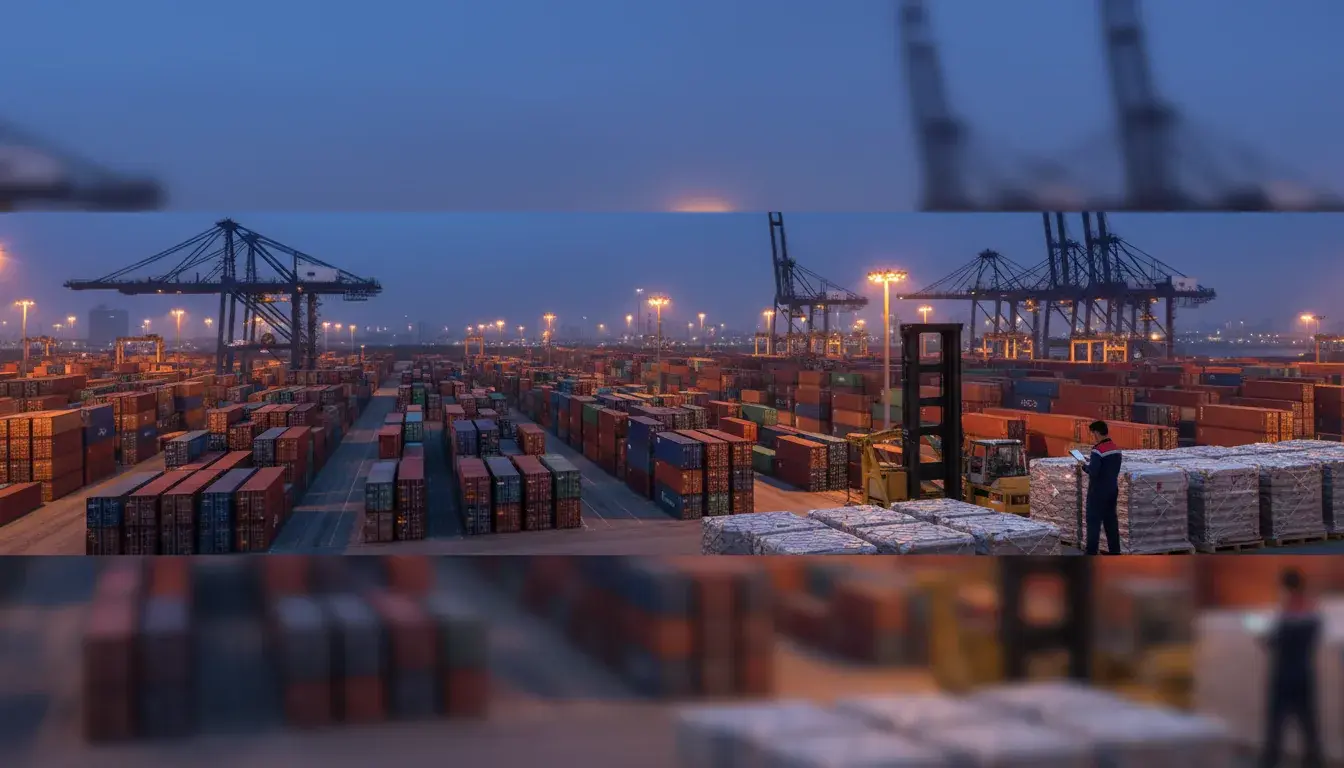
SLA Standard Trading Conditions protect you only if the client signed them. Most sub-contractor chains fail that test.
That contrarian line is the starting point for most Singapore freight forwarders who have had a claim go sideways. The SLA (Singapore Logistics Association, with over 650 member enterprises) Standard Trading Conditions are the industry default, and on paper they cap the forwarder's liability at levels most policies comfortably cover. In practice, half the time the conditions were not properly incorporated, or the client contract overrides them, or the subcontractor chain fails in a way the conditions did not contemplate.
This guide maps FFL cover for Singapore freight forwarders and 3PL operators across SLA STC provisions, multimodal liability, subcontractor chain exposure, Singapore-specific claim types, and the Johor-Singapore cross-border movements that sit at the intersection of two regulatory environments.
Key Facts: FFL Cover for Singapore Forwarders
What trading conditions apply to Singapore freight forwarders? The Singapore Logistics Association (SLA) Standard Trading Conditions, which bind when properly incorporated into the contract with the client. Liability is typically capped at 2 SDR per kilogramme of gross weight, aligned with the back-to-back Hague-Visby position for underlying sea carriage.
What is SLA? The Singapore Logistics Association, with more than 650 member enterprises, is the national industry body representing logistics and freight forwarding firms in Singapore.
What law governs FFL policies placed in Singapore? English law principles under the Marine Insurance Act 1906, as received into Singapore's legal framework and supplemented by Singapore's own Insurance Act and MAS regulations. See our reference on the Marine Insurance Act 1906.
What FFL limits are typical for Singapore forwarders? $500,000 to $5,000,000 per incident, sized against the largest single-shipment value and the highest negotiated client contract cap in the book.
What is the main gap between SLA STC and client contracts? Large shippers and multinational clients commonly require negotiated service agreements with liability caps materially higher than the SLA STC 2 SDR/kg position, leaving the forwarder exposed unless the FFL limit is sized against the contract and not against the STC.
What does FIATA membership require on insurance? Continuing liability cover appropriate to the member's activity and trading conditions, with FIATA, SLFFA, and SLA all expecting members to evidence current cover on tenders and client audits.
Resource: Forwarder Insurance Gap Audit
Take the Forwarder Insurance Gap Audit.
The SLA Trading Conditions in Practice
The SLA Standard Trading Conditions set out the default contractual framework for freight forwarding and logistics services in Singapore. They establish the forwarder's obligations, the client's obligations, the liability cap, and the governing law and jurisdiction. Where the forwarder provides a quotation, booking confirmation, or invoice that correctly incorporates the SLA STC, and the client accepts the service on those terms, the conditions bind both parties.
Incorporation is where the first gap commonly appears. For the STC to apply, the client must have reasonable notice of them: a reference on the quotation, an explicit statement on the booking confirmation, or a signed service agreement. A forwarder who merely prints "subject to SLA STC" on an invoice issued after the service has been provided may find that the conditions were not properly incorporated at the point of contract formation, and the default common-law contract applies instead, with no liability cap.
The second gap is client contract override. Large shippers, MNCs, and government-linked clients commonly require the forwarder to sign a negotiated service agreement with the client's terms and conditions. Those terms almost always displace the SLA STC on any point of conflict. The forwarder reviewing their FFL limits against the SLA STC may find they are exposed under the negotiated contract to liability they did not price for.
SLA STC Liability Cap and What It Covers
The SLA STC liability cap is typically aligned with the back-to-back position the forwarder can recover from the underlying carrier. For sea carriage this means SDR 2 per kilogramme of gross weight of goods affected, in line with the Hague-Visby Rules that apply to most containerised sea cargo from Singapore.
The cap applies to the forwarder's liability for loss or damage to goods while in the forwarder's charge. It does not automatically extend to all the forms of liability a forwarder can face, and specific carve-outs commonly apply for certain head of liability, for delay, and for consequential loss.
| Head of liability | SLA STC position (typical) | Negotiated contract position (typical) |
|---|---|---|
| Physical loss or damage to goods | Capped at 2 SDR per kilogramme | Commonly negotiated higher, sometimes unlimited |
| Delay | Limited; often capped at freight value | Negotiated; liquidated damages clauses common |
| Misdelivery | Often unlimited | Unlimited or capped at insured value |
| Consequential loss | Typically excluded | Often excluded, sometimes carved in for specific heads |
| Fines and duties | Often carved out | Negotiated; sometimes included |
For Singaporean freight forwarders carrying their own liability programme, Freight Forwarders Liability Insurance is the structure that holds; for NVOCC-style multimodal liability or umbrella protection, Marine Liability Insurance is the alternative. Read more on Freight Forwarders & Logistics Insurance.
The practical implication: FFL cover sized purely against the SLA STC is often inadequate for forwarders with a significant negotiated contract book. The policy limits should reflect the highest actual exposure across the client portfolio, not the default SLA STC position.
For the full product explainer on what FFL insurance covers, see our guide on freight forwarder's liability insurance, which walks through CLL, E&O, subcontractor chain, and FIATA and national trading conditions in detail.
Multimodal Liability and the Singapore Logistics Footprint
Many Singapore forwarders operate multimodal: warehousing and consolidation in Singapore, feeder or deep-sea ocean legs, air for time-sensitive cargo, and road haulage for cross-border movements to Malaysia. Multimodal liability is the forwarder's exposure across this chain of modes under a single contract with the client.
The FIATA Multimodal Transport Bill of Lading (FBL) and equivalent instruments make the forwarder the principal in the carriage contract. Under the FBL, the forwarder is liable to the client for the entire movement, and then separately pursues subcontractors under the relevant modal liability regime: Hague-Visby for sea, Montreal for air, CMR for international road in CMR states (primarily European), and domestic road law in Asia-Pacific.
For the sea carriage regimes, see our guides on the Hague-Visby Rules and Hamburg Rules. For the wider comparison across sea, air, road, and rail conventions, see our guide on carrier liability limits.
Multimodal liability can also overlap with carrier or charterer exposure. That is where freight forwarder liability cover should be separated from vessel-side P&I insurance; Voyage handles the placement side through P&I Insurance Malaysia & Singapore for vessel owners, operators, and charterers.
The practical liability gap on multimodal is the back-to-back mismatch. Under the client contract the forwarder may be liable at $2 million per incident; under the underlying sea carrier's Hague-Visby position, recovery is capped at a fraction of that. The forwarder's FFL cover needs to absorb that differential.
Subcontractor Chain Exposure
Subcontractors are where many Singapore forwarder losses crystallise. A subcontracted trucker has an accident on the AYE or the BKE and damages a full container of electronics; a subcontracted feeder vessel misdescribes a dangerous goods declaration and the container is detained at Port Klang; a subcontracted 3PL warehouseman releases cargo without checking the delivery order properly.
In each case the client's claim runs to the Singapore forwarder under the bill of lading or service contract, and the forwarder's FFL cover responds, subject to policy terms and conditions, to the extent of the forwarder's liability. Recovery against the subcontractor runs separately, typically through subrogation by the FFL insurer.
Three subcontractor failure modes come up most often:
| Failure mode | How it commonly arises in Singapore |
|---|---|
| Subcontractor insolvency | Trucker or feeder operator goes out of business mid-movement |
| Subcontractor liability cap mismatch | Forwarder's exposure to client exceeds what subcontractor regime permits recovery |
| Subcontractor uninsured or underinsured | Subcontractor's own liability cover is inadequate to meet subrogation claim |
Each of these leaves the forwarder on the hook for a larger share of the loss than the headline back-to-back position suggests. Vendor management, including proof of liability cover from subcontracted carriers and warehousemen, is a practical mitigation but does not remove the forwarder's contractual exposure to the client.
Singapore-Specific Claim Types
Claims experience across the Singapore forwarder book follows a handful of recurring patterns that reflect Singapore's specific role in regional trade.
Transhipment Handling Damage
Singapore handled approximately 44.66 million TEU in 2025, an 8.6% year-on-year increase per MPA and PSA International figures. With roughly 85% of that volume being transhipment cargo, the container drop and stack collapse events at PSA terminals are a recurring exposure for forwarders acting as principal on through-movements.
Bonded Warehouse Errors
Singapore's Zero-GST Warehouse and Licensed Warehouse schemes move cargo under bond. Errors in release documentation, duty calculation, or manifest reconciliation can create customs exposure for the forwarder. E&O cover inside FFL responds, subject to policy terms and conditions and subject to sub-limit, but the sub-limit often does not match the actual fines and duty exposure on high-value cargo.
Cross-Border Johor-SG Misdelivery
Cross-border road movements between Johor and Singapore, commonly through Tuas and Woodlands checkpoints, expose the forwarder to misdelivery risk where cargo is released at the wrong warehouse or to the wrong consignee on either side of the causeway. Johor-SG logistics operators running multimodal flows are a growing segment with a specific liability profile.
Dangerous Goods Misdeclaration
DG misdeclaration is one of the highest-consequence E&O exposures. Singapore's strict DG enforcement regime, combined with Hazmat requirements on the underlying carriers, means a misdeclared container can result in vessel fire, crew injury, and cargo detention. The claim amounts can exceed the typical FFL sub-limit rapidly.
FIATA Membership and Insurance Requirements
Singapore logistics providers who hold FIATA membership (through SLFFA or directly) operate under the FIATA Model Rules. FIATA membership typically expects members to hold continuing liability cover appropriate to their activity and trading conditions. The membership letter and the RFP responses that follow commonly require the forwarder to provide evidence of insurance, typically a Certificate of Currency or a broker letter confirming the policy details.
Newly accredited FIATA members should expect the FFL placement to be live at the point of membership, not arranged afterwards. A membership-pending forwarder who has not yet placed cover will find the first client tender difficult to respond to credibly.
Sizing the Limits for a Singapore Forwarder
The right FFL limit for a Singapore forwarder reflects the largest contract exposure in the current client book, not a nominal figure. Four inputs drive the calculation:
| Input | What to measure |
|---|---|
| Largest single-shipment value under management | Single conveyance exposure, reviewed across past 24 months |
| Highest negotiated contract liability cap in the book | MNC and GLC client contracts often demand $1M to $5M per incident |
| Annual turnover and freight under management | Drives aggregate limit and overall pricing base |
| E&O exposure profile | Customs brokerage, DG handling, sanctions screening volume |
Mid-market Singapore forwarders commonly place FFL at $500,000 to $5,000,000 per incident, with higher aggregate limits where the client book is concentrated on high-value commodities or large negotiated contracts. Warehouse-heavy operations benefit from an adjacent terminal operators liability layer; see our terminal operators liability insurance solution page. For the wider marine liability product family, see the marine liability insurance page.
Quote FFL cover for Singapore operations in 48 hours.
If your SLA STC cover stops at your direct contract and your subcontractor chain fails, who pays? Send us your forwarder profile via the quote form or WhatsApp us on +60 14 925 5243.
The Johor-Singapore Corridor and Cross-Border Liability
Johor-Singapore cross-border logistics is one of the fastest-growing segments in Southeast Asia, driven by the Johor-Singapore Special Economic Zone, the Rapid Transit System Link, and the natural integration of Johor manufacturing with Singapore ports and air gateways. Forwarders operating this corridor face liability exposures that sit across two regulatory environments: Malaysian FMFF STC-governed movements on the Malaysian side and SLA STC-governed movements on the Singapore side.
A single contract issued by a Singapore forwarder to a client for door-to-door Johor-to-Singapore service is governed by SLA STC if properly incorporated. If the road leg is subcontracted to a Malaysian trucker operating under Malaysian road transport law, the forwarder's recovery against that trucker is on a different legal basis from what the forwarder owes the client. The FFL policy sits in the middle and has to respond to both sides of that gap.
For the Malaysia-side FFL context, see our companion guide on what FFL insurance covers, which maps the equivalent framework with FMFF STC and Malaysian client contracts.
War Risk and the Singapore Transhipment Context
Singapore forwarders handling cargo on routes that touch Joint War Committee listed areas (currently including the Persian Gulf, the Red Sea and Bab-el-Mandeb approach, and the Black Sea as of May 2026) face an additional layer of contractual exposure. The forwarder's client contract typically passes war risk to the cargo insurance, but where the forwarder has given specific undertakings on transit times or discharge dates, re-routing due to war risk can trigger contractual delay claims.
For the specific Singapore transhipment and war risk picture, see our guide on Singapore transshipment and war risk.
Specific Coverage Features to Check
| Feature | Why it matters for Singapore operations |
|---|---|
| Trading conditions incorporation clause | Policy may only respond where SLA STC is properly incorporated; matters for loose contract practice |
| Negotiated contract extension | Policy should respond under signed negotiated contracts even where SLA STC does not apply |
| E&O sub-limit | Should match realistic DG, customs, and misdescription exposure |
| Fines and duties cover | Commonly carved out or sub-limited; important for customs-active forwarders |
| Cyber endorsement | Fraudulent release instructions and account takeover are growing exposures |
| Cross-border extension | Covers Johor-SG and broader ASEAN road movements under a single policy |
For the full feature-by-feature analysis of an FFL placement, see the companion explainer at what freight forwarder liability insurance covers.
Frequently Asked Questions
Do the SLA Standard Trading Conditions automatically apply to all my client contracts?
No. The STC only apply where they are properly incorporated into the contract with the client, which requires the client to have reasonable notice of them at the point of contract formation. A forwarder who merely prints a reference on the invoice after service is provided may find the STC are not binding.
If I sign a negotiated client contract that overrides SLA STC, does my FFL still respond?
Most FFL policies respond to contractual liability under signed negotiated contracts, subject to policy terms and conditions and subject to the policy limit being adequate for the contract exposure. Where the negotiated contract cap exceeds the FFL limit, the forwarder is exposed for the difference.
How much FFL cover do Singapore forwarders typically need?
Mid-market Singapore forwarders commonly place FFL at $500,000 to $5,000,000 per incident. The right limit depends on the largest single-shipment exposure and the highest negotiated client contract cap in the book, not on a round figure.
Does my FFL cover subcontractor failure on a multimodal movement?
Typically yes, subject to policy terms and conditions. The forwarder's liability to the client under the multimodal contract is covered; the FFL insurer then pursues the subcontractor through subrogation, with recovery determined by the relevant modal liability regime.
Is cyber exposure covered under a standard Singapore FFL policy?
Usually not automatically. Cyber fraud, system hijack, and fraudulent release instructions are commonly addressed through a specific cyber endorsement or a standalone cyber policy, subject to policy terms and conditions.
Does FFL cover fines and duties on customs errors?
Most FFL policies carry a fines and duties sub-limit, commonly well below the headline policy limit. Forwarders with active customs brokerage operations should check the sub-limit against their realistic exposure, particularly on high-value commodities where duties can be substantial.
How does FFL interact with cargo insurance held by my client?
They sit on different sides of the loss. The client's cargo insurance responds first to make the cargo owner whole, subject to policy terms and conditions, and the cargo insurer then pursues recovery from the forwarder through subrogation to the extent of the forwarder's legal liability. The forwarder's FFL cover responds to that subrogated claim.
How fast can Voyage quote FFL cover for a Singapore forwarder?
For a standard Singapore forwarder with turnover, mode mix, trading conditions, and three-year loss record in the submission, Voyage typically returns indicative terms within 48 hours. Complex multimodal or warehouse-heavy risks may take longer, but most placements sit inside the 48-hour window.
Voyage Conclusion
Singapore freight forwarders operate in one of the most sophisticated logistics markets in the world, with 650-plus SLA member enterprises, Lloyd's Asia presence since 1999, and more than 3,000 vessels on the Singapore Registry of Ships. The FFL cover needed to support that operation is correspondingly sophisticated: SLA STC alignment, negotiated contract extensions, sufficient E&O sub-limits, cyber endorsement, and cross-border cover for Johor-SG integration.
For Malaysian and Singaporean freight forwarders carrying their own liability programme, talk to Voyage about Freight Forwarders Liability Insurance placement. For NVOCC-style multimodal liability cover or umbrella protection, see Marine Liability Insurance. For the corridor-specific industry view, see Freight Forwarders & Logistics Insurance. WhatsApp +60 14 925 5243 or use the contact form.
For the cargo-owner side of the same conversation, the brief you can share with your shipper clients, see why your freight forwarder is not your insurer and Is Your Forwarder's Cargo Cover Enough.
Download the Forwarder Insurance Gap Audit
A diagnostic for forwarder principals reviewing CLL, E&O, and cyber sub-limits against SLA STC and negotiated client contracts. Take the Forwarder Insurance Gap Audit. Free, no signup wall.
Related guides: freight forwarder's liability insurance, carrier liability limits and what your shipping line owes, why your freight forwarder is not your insurer, Singapore transshipment and war risk, marine cargo insurance in Singapore.
Disclaimer: This article provides general guidance on freight forwarder's liability insurance in Singapore as of May 2026. Coverage terms, conditions, trading conditions interpretation, and availability vary by insurer, policy, and client contract.
Always review your specific policy wording, SLA trading conditions incorporation, and client contracts with a qualified insurance or legal professional before making coverage decisions.
Why Voyage
Marine Insurance Specialists
International Underwriter Access
Both Sides of the Supply Chain
Malaysia and Singapore Expertise
Other industries
Explore other industries we cover


Get Best Rates / Quotation

Voyage is a specialist marine insurance intermediary arranging marine cargo and marine liability coverage for businesses in Malaysia, Singapore, and internationally. All insurance is placed through licensed broking partners.
Riskflow Sdn Bhd (202101001225):
Suite 3.19 (North Block), The Ampwalk, 218 Jalan Ampang, 50450 Kuala Lumpur, Wilayah Persekutuan Kuala Lumpur
t: +60149255243 (Kevin H.)
email: kevin@voyagecover.com