Air Freight Forwarder Liability: House Air Waybills, IATA Agent & Montreal Limits
Issue a house air waybill at KLIA and you take on carrier-style liability under the Montreal Convention. What air forwarders are exposed to and how FFL res
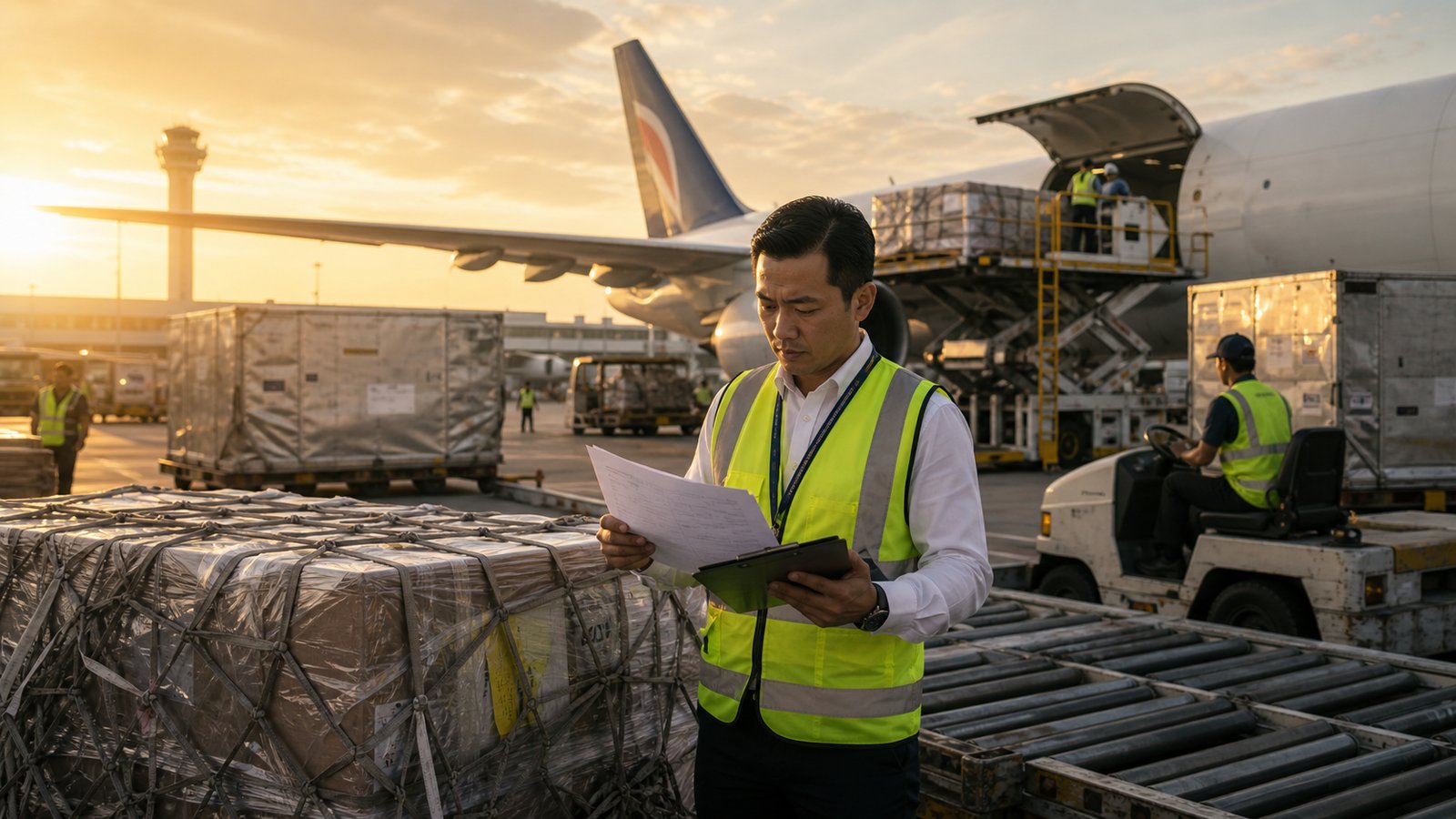
Why does air freight feel so much safer than sea, when the liability is often heavier? Faster transit, fewer days exposed, smaller parcels, and a clean handover at KLIA all make air forwarding look like the low-risk lane, right up until a house air waybill turns the forwarder into a contracting carrier and the picture changes.
Almost all air forwarding content is written for the cargo owner, the pharma shipper or the electronics exporter worrying about their goods, and very little of it speaks to the air forwarder's own liability, even though air forwarders are a distinct segment with their own rules, their own convention, and their own exposure. KLIA is one of the busiest cargo gateways in the region, and the firms moving that freight carry a risk their sea-freight peers simply do not.
This guide is for Malaysian air freight forwarders and IATA cargo agents. It sets out how issuing a house air waybill changes your liability, what the Montreal Convention limits actually mean in money, and how the air section of freight forwarder's liability insurance responds.
Key Facts: Air Freight Forwarder Liability
What is a house air waybill? It is the transport document an air freight forwarder issues to its customer, sitting beneath the master air waybill that the actual airline issues to the forwarder. Issuing a house air waybill can make the forwarder a contracting carrier, with carrier-style liability to the shipper.
What is the Montreal Convention? It is the 1999 treaty governing international carriage by air, including cargo liability, administered through ICAO, and it sets both the carrier's liability limit and the conditions for claims.
What is the air cargo liability limit? Under the Montreal Convention, the limit for loss, damage, or delay to cargo is 26 SDR per kilogramme, about $35 per kilogramme, effective 28 December 2024 after the ICAO five-year inflation review raised it from 22 SDR.
Who is an IATA cargo agent? It is a forwarder accredited under the IATA Cargo Agency Programme to issue air waybills and handle airline cargo, which brings contractual and financial obligations to the airlines through the settlement system.
How does freight forwarder's liability cover respond? Through an air-cargo or carrier-liability section that picks up the forwarder's liability as contracting carrier, plus errors and omissions for documentation and handling failures, subject to policy terms and conditions.
For the base cover, see freight forwarder's liability insurance, and for the sea-freight comparison, see the Hague-Visby Rules.
The House Air Waybill Changes What You Are
The single most important fact in air forwarding liability is what happens the moment you issue a house air waybill. The airline issues a master air waybill to you, naming you as the shipper for its purposes, and you then issue a house air waybill to your customer, naming yourself as the carrier for theirs, and that second document is both the trap and the opportunity.
By issuing it in your own name you contract with your customer as a carrier rather than merely as an agent arranging carriage, which means you take on the carrier's obligations and the carrier's liability to that customer, governed by the Montreal Convention wherever the carriage is international. You are no longer just booking space, you are answering for the cargo as though you flew it yourself.
The alternative is to act purely as the airline's agent, issuing the airline's own air waybill directly to the shipper, which keeps the carrier liability with the airline but also gives up the margin and the control that issuing your own house air waybill provides. Most forwarders choose the house air waybill, which means most forwarders are carrying carrier liability whether or not they have ever priced it in.
What the Montreal Limit Means in Real Money
The Montreal Convention caps cargo liability at 26 SDR per kilogramme, roughly $35 per kilogramme, and has done so since 28 December 2024. That number cuts both ways for a forwarder, and understanding which way it is cutting is the whole point.
As a shield, the limit caps what your customer can recover from you as contracting carrier at 26 SDR per kilogramme of the affected cargo, regardless of its actual value, so a 10 kilogramme parcel of semiconductors worth $200,000 is capped at about $350 in carrier liability, which is real protection for you. As a gap, that same cap is the disaster for your customer, who recovers $350 against a $200,000 loss and may then argue that you should have advised them to insure the cargo separately.
Because air cargo is high in value relative to its weight, the gap between cargo value and the weight-based cap is wider in air than almost anywhere else, which is exactly why the conversation about separate cover matters more here than in any other mode.
| Mode | Convention | Cargo liability limit |
|---|---|---|
| Sea | Hague-Visby Rules | 2 SDR per kg or 666.67 SDR per package, whichever is higher (about $2.70 per kg) |
| Air | Montreal Convention 1999 | 26 SDR per kg (about $35 per kg), effective 28 December 2024 |
| Road | CMR Convention | 8.33 SDR per kg (about $11.25 per kg) |
The air limit is higher per kilogramme than sea, yet air cargo values per kilogramme are higher still, so the proportional shortfall is usually worse, which is why advising the customer to insure the cargo in its own name matters more in air than in any other mode. The mechanism is set out in why your forwarder is not your insurer.
Issuing house air waybills without an air-liability section in your cover?
Voyage places freight forwarder's liability insurance for Malaysian air forwarders directly with the underwriters who write these risks, and can check your wording covers your liability as contracting carrier under the Montreal Convention. Send the details through the quote form for a 48-hour indication, or WhatsApp +60 14 925 5243.
The IATA Cargo Agent Obligations
Accreditation under the IATA Cargo Agency Programme lets you issue air waybills and clear cargo through the airlines, and it brings obligations that sit alongside the cargo liability, the most important of which is financial: as an accredited agent you settle airline charges through the IATA settlement system, which means you are carrying the airlines' money and answering for it.
That creates two distinct exposures rather than one. The first is the cargo liability already described, arising from the house air waybills you issue, and the second is a financial and professional exposure to the airlines and to IATA for correct documentation, correct charges, and timely settlement, which is errors and omissions territory rather than cargo damage.
A forwarder who is an IATA cargo agent therefore needs cover that reaches both the carrier liability on the cargo and the professional liability on the agency obligations, because a policy written only for cargo damage leaves the agency exposure wide open.
Where Air Forwarders Actually Get Caught
Air forwarding claims cluster around a handful of failures, several of them documentary rather than physical, because the sheer speed of air freight turns a paperwork error into a problem fast. Delay is the first, since the Montreal Convention makes the carrier liable for it and air customers buy air precisely because timing matters, so a missed connection or a documentation hold can produce a delay claim that sea freight would never see, with the cap applying but the claim still landing.
Documentation and description errors are the second, because a wrong weight, a wrong commodity, or a missing dangerous goods declaration on an air waybill carries the same misdeclaration risk as sea freight with the added safety sensitivity of aircraft, an exposure covered in misdeclared dangerous goods forwarder liability. Handling and temperature failures are the third, especially for pharma and perishables routed through KLIA, where a cold-chain break destroys the value even when the box arrives on time, and since the high-value air segments are exactly the ones where the weight-based cap leaves the widest gap, air liability loops straight back to the cargo cover the customer should be holding, set out for sensitive cargo in the pharmaceutical and medical devices view.
Matching Cover to the Air Operation
An air forwarder's liability programme needs to reflect what the house air waybill actually makes you, and three points decide whether the cover fits. The first is to confirm the policy has an air-cargo or carrier-liability section that responds to your liability as contracting carrier under the Montreal Convention, not only a sea-cargo section, because a sea-built FFL may not answer an air waybill claim at all.
The second is to confirm the errors and omissions section reaches your IATA cargo agent obligations, including documentation, charges, and settlement, since that exposure is separate from cargo damage and the two sections together are what actually cover the air forwarder where one alone does not. The third is to size the limits to your traffic, including the delay and high-value pharma or electronics lanes where the proportional gap is widest.
For the product and sector, see freight forwarder's liability insurance, marine liability cover, and freight forwarders and logistics.
Frequently Asked Questions
Does issuing a house air waybill make me a carrier?
Generally yes, because issuing the document in your own name contracts you with your customer as a carrier rather than as the airline's agent, which brings carrier-style liability under the Montreal Convention for international carriage. The alternative is to issue the airline's own air waybill as its agent, keeping the liability with the airline but giving up margin and control, and most forwarders issue house air waybills and carry the liability that comes with them.
What is the air cargo liability limit under the Montreal Convention?
It is 26 SDR per kilogramme, about $35 per kilogramme, effective 28 December 2024 after the ICAO five-year review raised it from 22 SDR. The limit applies to loss, damage, and delay and is based on the weight of the affected cargo regardless of its value, which leaves a wide gap between the cap and the actual loss for high-value air cargo.
Is air freight liability lower than sea freight?
The per-kilogramme cap is higher in air, at 26 SDR against 2 SDR for sea under Hague-Visby, but air cargo values per kilogramme are usually much higher, so the proportional shortfall against actual value is often worse in air. The faster transit also makes delay a live claim type that rarely arises at sea, so air forwarders carry a real and distinct exposure.
What does IATA cargo agent accreditation add to my liability?
It adds a financial and professional exposure to the airlines and IATA for correct documentation, correct charges, and timely settlement through the settlement system, on top of the cargo liability from your house air waybills. This is errors and omissions territory rather than cargo damage, so cover for an IATA cargo agent needs to reach both.
Will my sea-freight FFL cover my air shipments?
Not necessarily, because a policy built around sea cargo and the Hague-Visby regime may not include an air-cargo or carrier-liability section responding to Montreal Convention claims. If you issue house air waybills, confirm the wording covers air carriage specifically, because a gap here is the kind you find at the claim rather than before it.
Voyage Conclusion
Air forwarding inverts the usual intuition, because the speed and the small parcels feel safe while the house air waybill quietly makes you a carrier, and the weight-based Montreal cap leaves the widest value gap of any mode. The forwarder who issues house air waybills at KLIA carries carrier liability and IATA agency obligations together, and the cover has to reach both.
Voyage places freight forwarder's liability insurance for Malaysian air forwarders directly with the underwriters who write these risks, with an air-cargo section sized to your traffic. See freight forwarder's liability insurance, the freight forwarders and logistics view, and why your forwarder is not your client's insurer. For a quote, use the contact form or WhatsApp +60 14 925 5243 for a 48-hour indication.
Disclaimer: This article provides general guidance on air freight forwarder liability and the Montreal Convention as of June 2026. Coverage terms, conditions, and availability vary by insurer, policy, and jurisdiction. Regulatory requirements differ between countries and may change.
Always review your specific policy wording and consult a qualified insurance or legal professional before making coverage decisions.
Why Voyage
Marine Insurance Specialists
International Underwriter Access
Both Sides of the Supply Chain
Malaysia and Singapore Expertise
Other industries
Explore other industries we cover


Get Best Rates / Quotation

Voyage is a specialist marine insurance intermediary arranging marine cargo and marine liability coverage for businesses in Malaysia, Singapore, and internationally. All insurance is placed through licensed broking partners.
Riskflow Sdn Bhd (202101001225):
Suite 3.19 (North Block), The Ampwalk, 218 Jalan Ampang, 50450 Kuala Lumpur, Wilayah Persekutuan Kuala Lumpur
t: +60149255243 (Kevin H.)
email: kevin@voyagecover.com