What Is P&I Insurance? Malaysia & Singapore Guide
P&I insurance explained for Malaysia and Singapore vessel owners: cover, clubs, cargo claims, pollution, crew injury, and renewals.
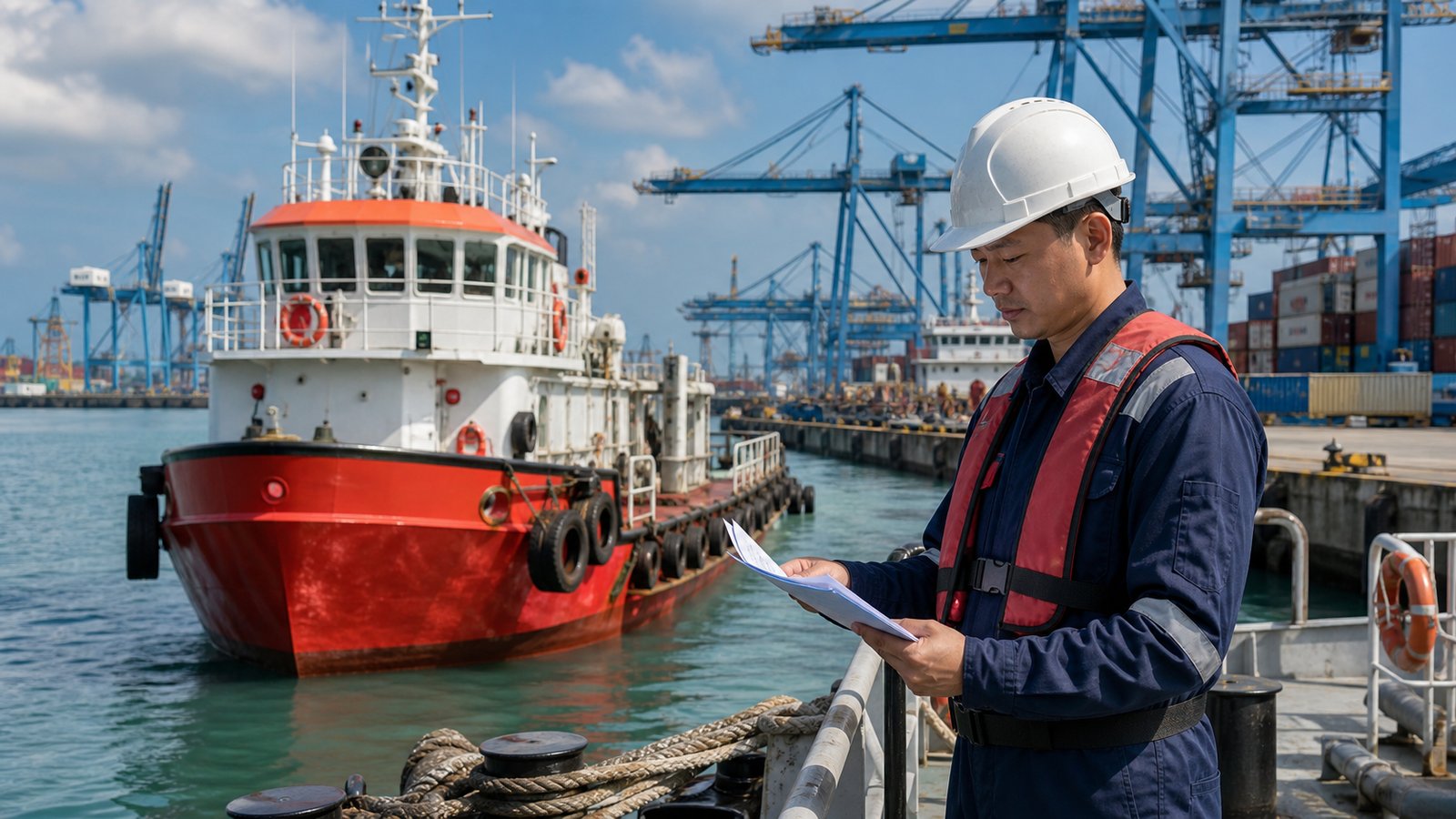
A vessel can be insured for its hull and machinery and still be dangerously underinsured. Hull and machinery protects the ship as an asset. It does not, by itself, answer the liabilities that follow the ship: crew injury, cargo claims, pollution, wreck removal, dock damage, passenger injury, collision liability beyond the hull policy, fines, and third-party claims from a voyage gone wrong.
That is the job of protection and indemnity insurance, usually shortened to P&I insurance. For Malaysian and Singaporean vessel owners, operators, charterers, and marine businesses, P&I is the liability half of the vessel insurance programme. It sits beside Hull and Machinery Insurance, and it is separate from Marine Cargo Insurance, which protects the cargo owner's goods.
Key Facts: What P&I Insurance Means
| Question | Direct answer |
|---|---|
| What is P&I insurance? | Third-party liability insurance for shipowners, operators, and charterers arising from the use and operation of vessels. |
| Who buys it? | Vessel owners, bareboat charterers, time charterers, voyage charterers, fleet operators, harbour craft owners, offshore operators, and some specialist marine businesses. |
| What does it cover? | Crew injury, cargo liability, pollution, wreck removal, collision liability, dock damage, passenger injury, fines, and other maritime liabilities, subject to the club rules or policy wording. |
| Is it the same as cargo insurance? | No. Cargo insurance protects the cargo owner. P&I protects the carrier or vessel interest against legal liability to others, including cargo owners. |
| Is it the same as hull insurance? | No. Hull and Machinery covers physical damage to the vessel. P&I covers third-party liabilities generated by the vessel's operation. |
| How is P&I usually arranged? | Large ocean-going vessels commonly enter a mutual P&I club. Smaller craft, harbour operators, and some coastal fleets may use fixed-premium P&I. |
If you already operate vessels, see P&I Insurance Malaysia & Singapore for Voyage's placement page. If you are still trying to understand the structure, keep reading.
What Is P&I Insurance?
P&I insurance is liability cover for the third-party claims that arise when a vessel trades, loads cargo, carries crew, enters ports, collides, pollutes, grounds, damages property, or causes loss to another party. The cover is called "protection and indemnity" because the historic club structure protected members against specified liabilities and indemnified them after they became legally liable.
The International Group of P&I Clubs describes its member clubs as independent, not-for-profit mutual insurance associations providing cover for shipowner and charterer members against third-party liabilities arising from the use and operation of ships. As of the current International Group description, 12 clubs provide marine liability cover for about 87 percent of the world's ocean-going tonnage.
That matters because P&I is not a normal retail insurance product. It is a specialist marine liability system. The largest end of the market is club-based and mutual. Smaller vessels and some specialist operations may be insured on a fixed-premium basis through commercial insurers.
Who Needs P&I Insurance?
You need P&I if your operation can create maritime liability to another person or business. The trigger is not "owning a ship" in the abstract. The trigger is operational exposure.
| Operator type | Why P&I matters |
|---|---|
| Ocean-going vessel owner | Needs P&I for crew, cargo, pollution, wreck removal, collision, port, and third-party liability exposures. |
| Coastal vessel or tug owner | Needs liability cover for crew, collision, towage, property damage, pollution, and port incidents. |
| Harbour craft operator | May need fixed-premium P&I where mutual club entry is not proportionate to vessel size and trading pattern. |
| Charterer | May need charterers' P&I for liability assumed under the charterparty, including cargo, bunker, port, and third-party exposures. |
| Offshore operator | Needs cover adapted to offshore operations, contracts, towage, specialist craft, and field conditions. |
| Cargo owner | Usually does not buy P&I for its own cargo. It buys cargo insurance, then the cargo insurer may recover from the carrier whose P&I responds if the carrier is legally liable. |
In Malaysia and Singapore, the dividing line often appears around mixed fleets: tugs, barges, harbour craft, coastal vessels, workboats, small tankers, and chartered tonnage. These do not all need the same P&I structure. Some belong in a mutual club. Some are better handled through fixed-premium P&I. Some need a package alongside hull, war, charterers' liability, terminal liability, or Marine Liability Insurance.
What Does P&I Insurance Cover?
Every P&I placement depends on the club rules or policy wording, but the common liability categories are consistent across the market.
Crew injury, illness, death, and repatriation
Crew claims are a core P&I exposure. A vessel owner may face contractual, statutory, or general maritime obligations for medical treatment, wages, repatriation, death benefits, and related expenses. P&I responds to those liabilities when they fall within the rules or policy.
Cargo damage claims against the carrier
This is where cargo owners often get confused. If cargo is damaged on a vessel, the cargo owner normally claims first under its own cargo policy. The cargo insurer may then pursue the carrier. If the carrier is legally liable under the bill of lading and applicable carriage convention, the carrier's P&I responds. That is different from first-party cargo insurance. See Hague-Visby Rules for the carrier liability cap problem.
Pollution liability
Pollution is one of the most severe P&I exposures. P&I can respond to clean-up costs, third-party claims, fines, and convention certificate requirements, subject to limits, exclusions, and applicable law. Tankers and fuel-carrying vessels need special attention to certificate requirements and liability limits.
Wreck removal
If a vessel grounds, sinks, or obstructs navigation, authorities may order wreck removal. The cost can exceed the value of the vessel. P&I is the liability cover that usually sits behind the owner's obligation to remove or mark the wreck.
Collision liability and damage to fixed or floating objects
Hull policies often handle physical damage to the insured vessel and may cover part of collision liability. P&I covers liability elements not picked up by the hull policy, plus damage to docks, terminals, buoys, navigational equipment, and other third-party property, subject to wording.
Passenger, stowaway, migrant, and third-party injury claims
Passenger vessels, ferries, offshore crew-transfer craft, and harbour operators face people-risk beyond crew. P&I responds where the insured is legally liable and the claim falls inside the cover.
Fines and regulatory liabilities
Some fines may be covered where insurable by law and allowed by the club rules or policy. This is never automatic. Fines require careful review because public policy, intentional conduct, sanctions, and local law can restrict cover.
What P&I Does Not Replace
P&I is powerful, but it is not a substitute for every marine policy.
| Risk | Usually handled by | Why P&I is not enough |
|---|---|---|
| Physical damage to the vessel | Hull and Machinery Insurance | P&I is liability cover, not vessel asset cover. |
| Physical loss of cargo owned by the trader | Marine Cargo Insurance | P&I responds to carrier liability, not the cargo owner's first-party loss. |
| Annual cargo programme for exporters/importers | Marine Cargo Open Cover | P&I belongs to the vessel or carrier side. Cargo open cover belongs to the cargo owner side. |
| Freight forwarder E&O and cargo legal liability | Freight Forwarders Liability Insurance | Forwarder liability and shipowner P&I are related but not interchangeable. |
| War damage to the vessel | Hull war / war P&I / specialist war placement | Standard P&I has war exclusions and war risks need separate review. |
How P&I Clubs Work
A mutual P&I club is owned by its members. Members contribute through calls or premiums, and the club pays covered claims for members. The club's board or committee is drawn from the membership, and professional managers run the day-to-day underwriting, claims, loss prevention, and correspondent network.
The International Group structure matters because very large claims are pooled and reinsured at group level. That gives ocean-going shipowners access to liability capacity that a normal fixed-limit commercial policy would struggle to match.
The policy year also follows a marine-market rhythm. Many club rules run from noon GMT or UTC on 20 February to noon on the next 20 February. That is why P&I renewal work happens in the February cycle, not at a random anniversary date.
Mutual Club P&I vs Fixed-Premium P&I
Not every vessel belongs in an International Group club. The right structure depends on vessel size, trade, limit requirement, claims profile, flag, class, port calls, charterparty obligations, and buyer or financier requirements.
| Feature | Mutual club P&I | Fixed-premium P&I |
|---|---|---|
| Typical users | Ocean-going commercial vessels and larger fleets | Smaller vessels, harbour craft, coastal fleets, specialist operators |
| Pricing | Calls or mutual premium, with potential additional calls depending on club structure | Fixed premium set by commercial insurer |
| Limit | Often much larger, supported by pooling and reinsurance | Defined policy limit |
| Claims support | Club claims teams and correspondent network | Insurer and appointed claims handlers |
| Best fit | Where contract, trade, and liability severity require club capacity | Where a defined limit and fixed cost match the vessel's exposure |
For Malaysian and Singaporean operators, the practical question is not "club or fixed premium?" in the abstract. It is: what does your vessel do, where does it trade, what liabilities does the charterparty impose, what certificates are needed, and what limit would actually survive a serious incident?
Where Cargo Liability and P&I Meet
P&I appears in cargo conversations because the carrier's liability to cargo owners is a P&I risk. But that does not mean the cargo owner should rely on the carrier's P&I.
A cargo owner wants first-party cargo insurance because it pays the insured cargo interest according to the policy. A carrier's P&I responds only when the carrier is legally liable, subject to defences and liability limits. Under regimes such as Hague-Visby, that liability may be far below invoice value. That is why cargo insurance and P&I should be seen as two sides of the claim chain, not substitutes.
If you are a cargo owner comparing the two, use Voyage's P&I vs Cargo Insurance Quick Reference.
What Information Do You Need for a P&I Quote?
Before asking for P&I terms, prepare the information an underwriter or club will need.
- Vessel name, IMO number, flag, class, gross tonnage, year built, and vessel type.
- Ownership, management, and operating structure.
- Trading area, ports, cargoes, passenger/crew exposure, and any sanctioned or high-risk routes.
- Charterparty obligations, if the vessel is chartered or chartering.
- Existing hull, war, cargo, charterers, and liability placements.
- Claims record for at least five years if available.
- Certificates required by flag state, port state, financiers, charterers, or contracts.
- Desired limit and any contractual minimum limits.
Voyage can review this as part of a wider marine programme, especially where P&I needs to sit beside hull, cargo, marine liability, war, or charterers' liability cover.
Malaysia and Singapore Placement Notes
Singapore is a major P&I and marine insurance hub, while Malaysia has a wide mix of port, coastal, offshore, commodity, and logistics exposures. A Malaysian owner with Singapore port calls may need different claims support, correspondent access, certificates, and policy wording from a purely domestic harbour craft operator.
Three practical checks matter before placement:
- Does the contract require club entry, or is fixed-premium P&I acceptable? Some charterers, financiers, and counterparties expect recognised club cover.
- Does the trade create certificate obligations? Pollution, bunker, wreck removal, passenger, and other convention certificates should be checked before binding.
- Does the vessel's actual operation match the proposed cover? A policy written for ordinary coastal trade may not fit offshore work, towage, dangerous cargo, or high-risk war areas.
Need P&I placed beside hull or cargo cover?
Send Voyage the vessel list, trading area, and current insurance schedule. We will tell you whether mutual club P&I, fixed-premium P&I, or a combined marine liability structure fits the exposure.
Talk to Voyage About P&IFrequently Asked Questions
What is P&I insurance in shipping?
P&I insurance is protection and indemnity insurance: third-party liability cover for shipowners, operators, and charterers. It responds to liabilities such as crew injury, cargo claims, pollution, wreck removal, collision liability, and other maritime third-party claims, subject to club rules or policy wording.
Is P&I insurance the same as marine cargo insurance?
No. Marine cargo insurance protects the cargo owner against physical loss or damage to goods. P&I protects the carrier, shipowner, or charterer against legal liability to others, including cargo owners. A cargo owner should not rely on a carrier's P&I as a substitute for its own cargo policy.
Does P&I cover cargo damage?
Yes, but only from the carrier side. P&I can cover the carrier's legal liability for cargo loss or damage. It does not pay the cargo owner simply because cargo was damaged. The carrier must be legally liable, and liability limits or defences may apply.
What is the difference between P&I and Hull and Machinery insurance?
Hull and Machinery insurance covers physical damage to the insured vessel and machinery. P&I covers third-party liabilities generated by operating the vessel, such as crew injury, cargo claims, pollution, wreck removal, and dock damage.
What is a P&I club?
A P&I club is a mutual marine insurance association owned by its members. Shipowners and charterers pay calls or premiums into the club, and the club handles covered liability claims for members under its rules.
When does the P&I policy year start?
Many P&I club policy years run from noon GMT or UTC on 20 February to noon on the next 20 February. Fixed-premium P&I policies may use different inception dates depending on the insurer and placement.
Who needs P&I insurance in Malaysia and Singapore?
Vessel owners, operators, charterers, harbour craft owners, offshore operators, and some marine businesses may need P&I insurance. The right structure depends on the vessel type, trading area, contractual obligations, certificates required, and liability limit needed.
Can a small vessel use fixed-premium P&I instead of a club?
Often, yes. Smaller vessels, harbour craft, and coastal operators may be better suited to fixed-premium P&I if the limit and wording match their exposure. Larger ocean-going vessels and contractually sensitive trades may require mutual club cover.
Official Sources and Further Reading
- International Group of P&I Clubs - current group structure and marine liability cover description.
- Japan P&I Club: P&I Insurance - insurance period, calls, and mutual premium structure.
- The Shipowners' Club Rules 2025 - policy-year example and club-rule content categories.
- The Swedish Club: Period of Insurance - 20 February policy-year explanation.
Disclaimer: This guide provides general information on P&I insurance as of June 2026. P&I cover depends on club rules, policy wording, vessel type, trade, sanctions position, certificates, jurisdiction, and underwriter acceptance. Always review your own wording and obtain professional advice before relying on cover.
Why Voyage
Marine Insurance Specialists
International Underwriter Access
Both Sides of the Supply Chain
Malaysia and Singapore Expertise
Other industries
Explore other industries we cover


Get Best Rates / Quotation

Voyage is a specialist marine insurance intermediary arranging marine cargo and marine liability coverage for businesses in Malaysia, Singapore, and internationally. All insurance is placed through licensed broking partners.
Riskflow Sdn Bhd (202101001225):
Suite 3.19 (North Block), The Ampwalk, 218 Jalan Ampang, 50450 Kuala Lumpur, Wilayah Persekutuan Kuala Lumpur
t: +60149255243 (Kevin H.)
email: kevin@voyagecover.com