Rubber Glove Cargo Insurance Malaysia
One water-stained carton can trigger a full sterility rejection on a glove shipment. How to cover moisture damage, rejection, and declared value.
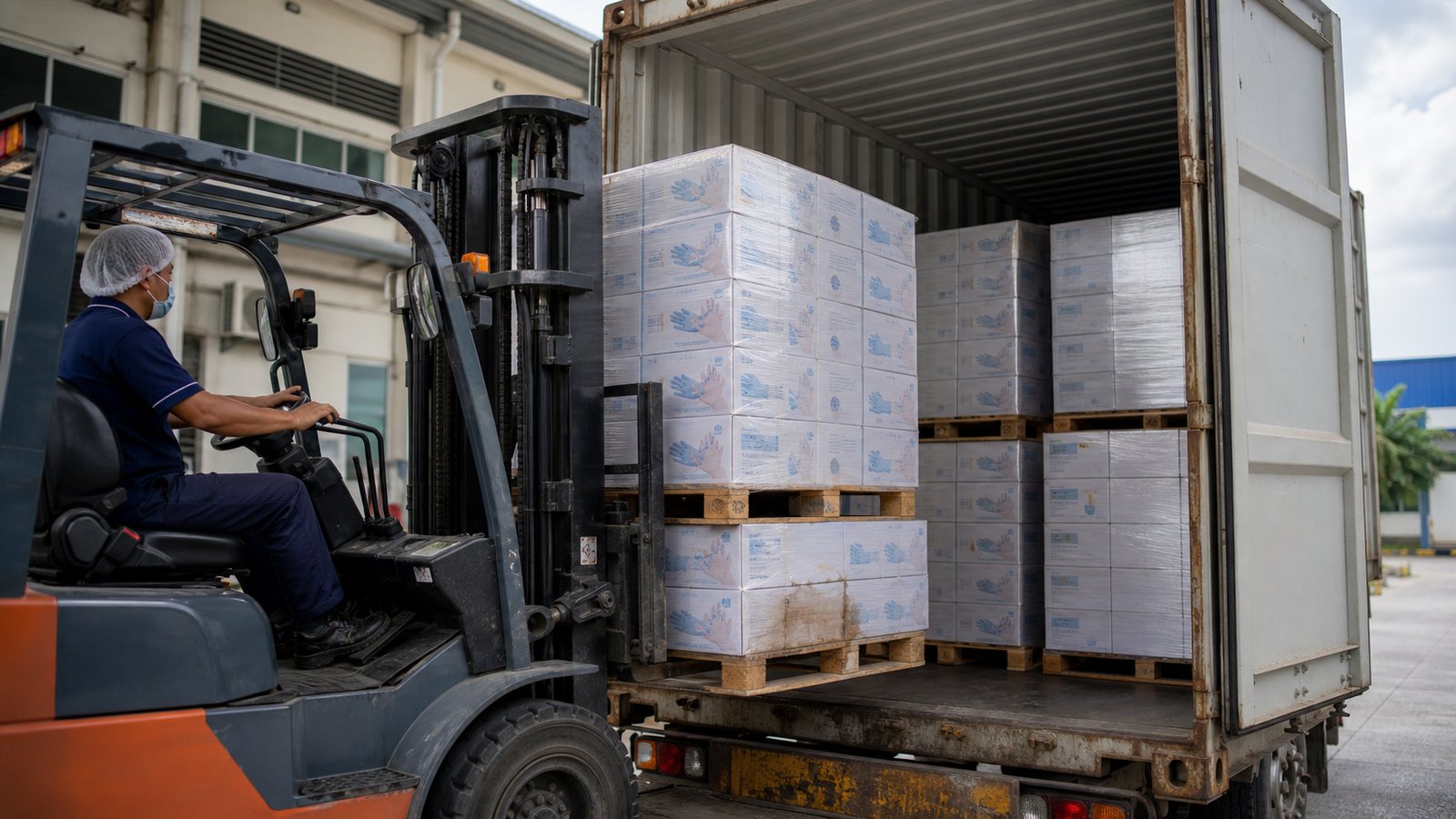
A full container load of nitrile examination gloves leaves Port Klang for a hospital distributor in the United States. On arrival the cartons stacked at the door end are water-stained, and the buyer rejects the consignment on sterility grounds even though most of the boxes look untouched. The exporter assumes the cargo policy will pay. Whether it does turns on three things the booking never recorded: the cause of the water, the declared value, and whether the rejection is a physical-damage claim or a quality dispute.
Malaysia produces around 45 percent of the world's rubber gloves, the largest share of any country, ahead of China at roughly 28 percent, with glove exports reaching a record level near RM13.7 billion in 2024 (MARGMA, 2024). Most of that volume is medical, surgical, dental, and veterinary product going into regulated markets. That regulatory weight is exactly what makes glove cargo claims more complicated than the tough-looking product suggests.
Why a Tough Product Has Fragile Claims
Gloves survive handling that would destroy electronics. The claim risk is not breakage; it is condition, sterility, and value. A consignment can be physically intact and still be rejected, and it can be damaged in a way that only a regulated buyer will catch. The cover has to be built for that, not for crush resistance.
Key Facts: Malaysian Glove Cargo Cover
What is rubber glove cargo insurance Malaysia? It is marine cargo cover for natural rubber and nitrile gloves moving from Malaysian factories to overseas buyers. The policy should match the product, the declared value, the destination market's regulatory expectations, and the route.
What clause form do exporters usually start from? Most glove cargo is placed on ICC (A), the broadest standard marine cargo form covering all risks of physical loss or damage except stated exclusions (IUA / LMA clause text, 2009 edition).
What is the most common loss? Water and moisture damage to cartons and inner packaging, which for medical gloves often converts into a full sterility-based rejection rather than a partial loss.
What decides the settlement size? The declared value basis. Glove margins are thin and volumes are large, so insuring on cost rather than on a basis that reflects the buyer claim leaves the exporter short on a rejected container.
Is a quality rejection a cargo claim? Not by itself. A cargo claim needs insured physical loss or damage in transit. A rejection on specification, certification, or anti-dumping grounds with no transit damage is a commercial or compliance matter.
Commodity Profile: From Klang to 195 Markets
Malaysian glove output is concentrated among large manufacturers shipping high carton counts in dry containers, predominantly synthetic nitrile, with natural rubber gloves making up the balance. The product reaches close to 195 countries, with the United States a leading destination, and recent tariff shifts on competing supply have pushed more US demand toward Malaysian product (MARGMA, 2024).
The repeat exporter structure for this flow is normally marine cargo open cover, because a glove maker ships continuously and needs declarations, value basis, and claim steps pre-agreed. The industry context sits under rubber and agricultural commodities cargo insurance Malaysia, with finished-goods manufacturing overlap covered in manufacturing and industrial exports cargo insurance Malaysia.
Transit Risks Specific to Gloves
Generic content treats gloves as ordinary boxed goods. The real risk set is narrower and tied to the product chemistry and the buyer.
| Risk | How it shows up | Evidence that supports the claim |
|---|---|---|
| Water and moisture damage | Stained, softened, or mouldy cartons; compromised inner packaging | Container inspection, seal record, photos, source of water |
| Heat and humidity in transit | Degraded elasticity, discolouration, accelerated ageing of nitrile | Stowage record, voyage conditions, buyer test result |
| Sterility and contamination | Medical buyer rejects on packaging breach or contamination | Survey, lab result, packaging integrity evidence |
| Theft and shortage | Part-load loss at consolidation or destination | Weight tickets, seal records, tally sheets |
Moisture is the recurring theme. Container sweat on a long tropical sea leg, a leaking door seal, or rain during loading can wet the lower cartons, and for a medical buyer a wetted carton is not a discount conversation, it is a rejection. The fundamentals for rubber-based exports are in insuring rubber and latex exports from Malaysia, and the exporter baseline in marine cargo insurance for Malaysian exporters.
Coverage Response: Clauses, Packing, and the Sterility Line
ICC (A) is the usual starting form because it covers all risks of physical loss or damage except the stated exclusions. For gloves, the exclusions that bite are insufficiency or unsuitability of packing, inherent vice, and ordinary loss. A carton that failed because the inner moisture barrier was inadequate at packing can run into the packing exclusion; gloves that aged because of the ordinary conditions of a long voyage rather than a specific event can run into inherent vice.
The harder issue is the sterility line. When a medical buyer rejects a whole consignment because some cartons were wetted, the exporter is arguing that a transit event caused physical damage that justifies the loss. That argument is far stronger when the source of water is identified as an insured peril and the pre-shipment condition and packing are documented. Where the rejection is really about specification, certification, or anti-dumping duty at the destination, there is no transit damage to claim, and the exporter should treat it as a commercial matter rather than a cargo loss, subject to policy terms.
Declared Value: Thin Margins, Large Containers
Glove economics make the insured value basis decisive. Margins are slim and a single container carries a very large carton count, so a rejected load is a big absolute number even at a modest unit price. If the cover insures cost only, the exporter absorbs freight and the gap between cost and the buyer claim. The value should reflect what it takes to make the customer whole, and the duty value declared at destination is a separate figure from the insured value, a distinction set out in customs valuation methods and cargo insured value.
Trade Documentation for Glove Exports
The glove export file has to serve finance, the regulated buyer, and the claims handler. Each needs a different layer of the same shipment record.
| Stage | Documents to retain | Claim question it answers |
|---|---|---|
| Before packing | Product spec, batch and lot records, quality and sterility certificate | Was the product sound and compliant before transit? |
| At packing and loading | Carton and inner-packaging spec, container inspection, stowage, seal number, photos | Was it packed, stowed, and sealed correctly? |
| In transit | Bill of lading, voyage and transshipment record, any exception notes | Where could a damage event have occurred? |
| At destination | Arrival inspection, buyer rejection wording, lab result, shortage tally | What was the actual condition and reason at discovery? |
For occasional rather than continuous sendings, weigh the placement options in open cover versus single shipment, and review how rating is built in how marine cargo insurance pricing works so the value basis and conditions are fixed before a loss.
Common Claim Scenarios for Glove Cargo
Scenario 1: door-end cartons wetted, whole load rejected
Water enters at the door seal and stains the rear cartons. The medical buyer rejects the entire container on sterility grounds. The claim depends on identifying the water source as a transit peril, the container inspection showing the seal or door fault, and the pre-shipment record showing dry, compliant cartons at loading. With those, a full or substantial loss has a route; without them, the insurer may treat it as ordinary sweat or a packing issue.
Scenario 2: nitrile ageing after a heat-exposed voyage
Gloves arrive with reduced elasticity after a long, hot voyage. The exporter must show a specific transit event rather than the ordinary conditions of the route, because ageing attributable to the nature of the product and an ordinary voyage can fall to inherent vice. Stowage records and buyer test results carry this file.
Scenario 3: rejection on anti-dumping or certification grounds
The buyer or customs blocks the consignment over duty classification or a certification gap, with the gloves physically sound. This is a commercial or compliance problem, not a cargo claim, and the exporter should not expect the cargo policy to respond.
Programme Design for Glove Exporters
A glove manufacturer shipping continuously should run an open cover rather than insuring container by container. The settings below are where glove programmes most often need attention.
| Programme setting | Recommended treatment |
|---|---|
| Cargo description | Name nitrile or natural rubber gloves and the medical or industrial grade, not a generic label |
| Insured value basis | Set to reflect freight and the buyer claim, not cost price alone |
| Moisture protection | Specify container liners, desiccant, and stowage rules for tropical sea legs |
| Rejection handling | Pre-agree survey and the split between damage claim and quality dispute |
| Per-sending limit | Set around peak container value on the busiest lanes |
This also sharpens the quote conversation. A glove exporter who can state annual containers, product grades, destination markets, peak container value, and rejection history is ready for a serious quote. A request for "glove insurance" with no value basis is not.
Frequently Asked Questions
Does glove cargo insurance cover a sterility rejection?
Only where the rejection follows insured physical loss or damage in transit, such as wetting from a door-seal failure. A rejection on specification or certification with no transit damage is a commercial matter.
Is moisture damage to gloves usually covered?
It can be where the water comes from an insured peril and packing met specification. Ordinary container sweat and inadequate moisture packing can bring the inherent-vice or packing exclusions into play.
What value should a glove exporter insure?
A basis that reflects freight and the buyer claim, not cost price alone, because thin margins and large carton counts make a rejected container a large absolute loss.
Are nitrile and natural rubber gloves treated differently?
The policy form may be the same, but the claim evidence differs. Nitrile ageing claims focus on heat and elasticity, while both types share moisture and sterility exposure for medical grades.
Does cargo insurance cover anti-dumping duty or customs rejection?
No. Duty and certification rejections with physically sound goods are compliance and commercial issues, not insured cargo losses.
Should a glove maker use open cover?
Continuous exporters usually should, because cargo description, value basis, moisture protection, and rejection handling can be agreed before each shipment rather than after a loss.
Insuring Rubber Glove Exports with Voyage
Glove claims turn on the source of moisture, the declared value, and the line between transit damage and a quality rejection. Voyage can help Malaysian glove manufacturers place marine cargo open cover that matches nitrile and natural rubber product, medical-grade buyers, and the moisture and value settings that decide whether a rejected container is recoverable.
Get a tailored quote. WhatsApp Kevin at +60 14 925 5243 or request a callback. Quotes turn around in 24-48 hours where the underlying cover is in place.
Disclaimer: This article provides general guidance on rubber glove cargo insurance in Malaysia as of June 2026. Coverage terms, conditions, and availability vary by insurer, policy, and jurisdiction. Always review your specific policy wording and consult a qualified insurance professional before making coverage decisions.
Why Voyage
Marine Insurance Specialists
International Underwriter Access
Both Sides of the Supply Chain
Malaysia and Singapore Expertise
Other industries
Explore other industries we cover


Get Best Rates / Quotation

Voyage is a specialist marine insurance intermediary arranging marine cargo and marine liability coverage for businesses in Malaysia, Singapore, and internationally. All insurance is placed through licensed broking partners.
Riskflow Sdn Bhd (202101001225):
Suite 3.19 (North Block), The Ampwalk, 218 Jalan Ampang, 50450 Kuala Lumpur, Wilayah Persekutuan Kuala Lumpur
t: +60149255243 (Kevin H.)
email: kevin@voyagecover.com