Malaysia to US Electronics Cargo Insurance: Corridor and Tariff Risk 2026
US tariffs are reshaping how Malaysian electronics ship to America. Corridor risk, transhipment, storage exposure, and declared value cover for 2026.
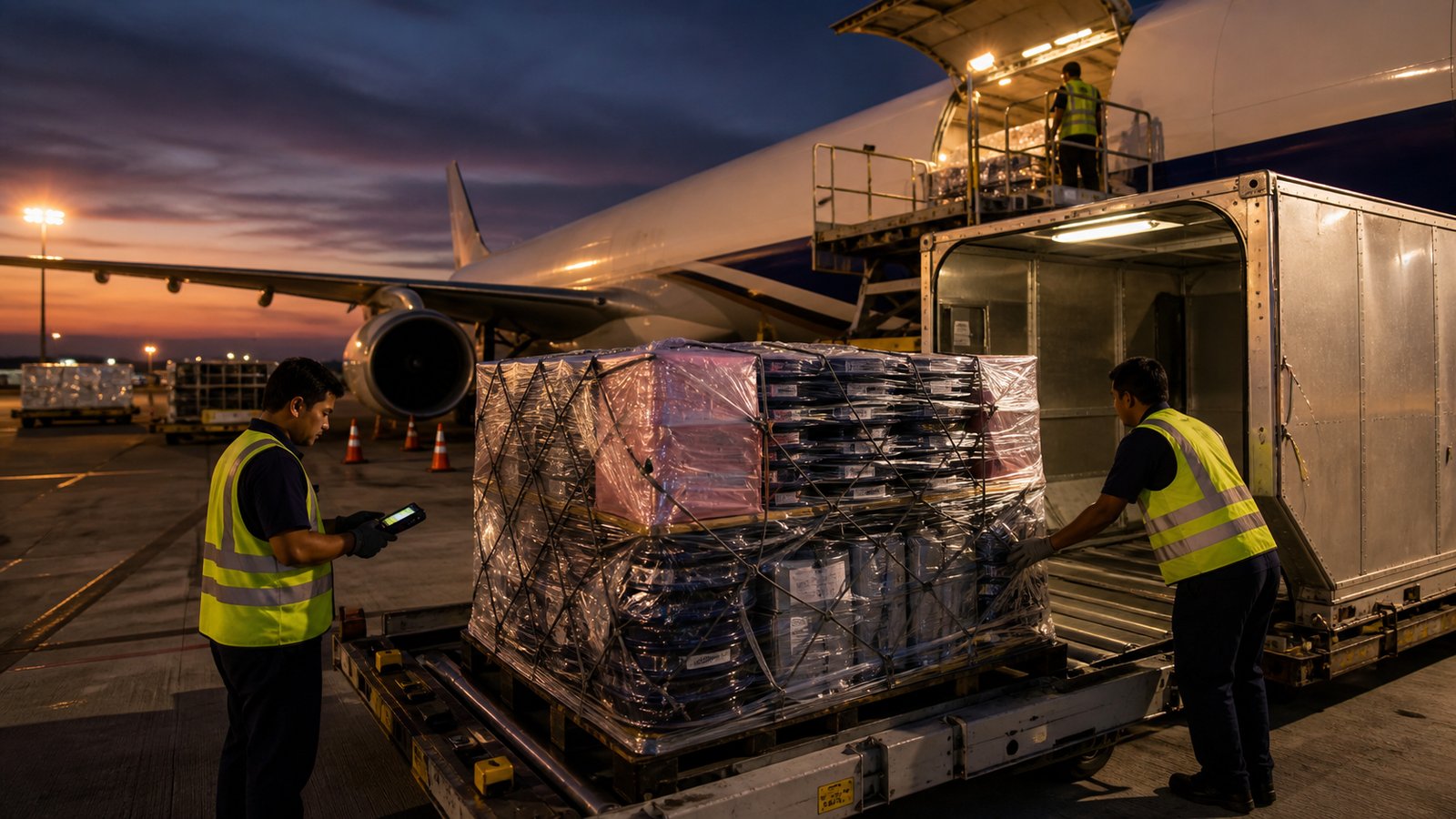
Malaysia shipped a record RM601.21 billion of electrical and electronics goods in 2024, of which semiconductors were RM437.5 billion (MATRADE / MIDA, 2024), and the United States is one of the largest buyers, drawing roughly USD 12 billion of Malaysian semiconductors a year on US trade figures. In 2026 that corridor stopped being routine. A 25 percent Section 232 tariff on a narrow set of advanced semiconductors took effect on 15 January 2026, and on 11 March 2026 the US Trade Representative opened a Section 301 investigation covering Malaysia, with chips named as a sector of concern (US Section 232 proclamation and USTR, 2026).
Tariff policy is not a cargo peril. What it does is change shipper behaviour, and shipper behaviour is what creates cargo risk. Front-loading before a deadline, re-routing through new hubs, and stockpiling at either end all move the exposure around, and a cargo programme built for steady, predictable flows is the one most likely to be caught out.
How Tariffs Move the Cargo Risk
The risk does not come from the tariff line itself. It comes from the rush, the detour, and the warehouse that the tariff creates. Each of those is an insurable exposure that a normal open cover may not be sized for.
Key Facts: Malaysia to US Electronics Corridor Cover
What is Malaysia to US electronics cargo insurance? It is marine and air cargo cover for semiconductors, components, and finished E&E moving from Malaysian plants to US buyers, structured for the value density and the corridor conditions rather than a generic all-risks template.
What clause form do exporters usually start from? Most high-value E&E is placed on ICC (A), the broadest standard marine cargo form covering all risks of physical loss or damage except stated exclusions (IUA / LMA clause text, 2009 edition), with the Institute air cargo equivalent for air legs.
How do the 2026 tariffs affect cargo cover? They change behaviour, not the policy peril. Front-loading, transhipment, and stockpiling raise exposure at peaks, in transit through extra hubs, and in storage, so per-sending limits and storage cover need to reflect the new pattern.
Does cargo insurance cover the tariff or duty itself? Not as a standard feature. The insured value is normally goods value plus freight plus an agreed uplift; duty and increased-value exposure can be insured separately where the exporter or buyer carries that cost.
What is the biggest claim risk on this corridor? High value concentrated in small consignments, which makes declared value accuracy and security the deciding factors in whether a loss is fully recovered.
The Corridor: Lanes, Hubs, and the 2026 Shift
Malaysian E&E leaves the Penang and Kulim clusters and the Klang Valley as wafers, components, modules, and finished devices, much of it by air for speed and security and the rest containerised. The US leg often runs through a transhipment hub, with Singapore a common consolidation and re-export point, before a trans-Pacific air or ocean movement. Each added hub is an added handoff, and each handoff is a point where a high-value consignment can be delayed, mishandled, or targeted.
The 2026 tariff measures reshape this in three ways. Exporters front-load ahead of effective dates, which concentrates value into peak shipments. Some re-route or restructure flows to manage exposure, which introduces unfamiliar lanes and handlers. And buyers or sellers stockpile at one end, which parks large values in warehouses that the transit policy may not cover once goods come to rest. The industry context for this sector sits under electronics and semiconductor cargo insurance Malaysia, and the Singapore re-export leg is covered in Singapore re-exporter cargo insurance.
Risk Profile on the Malaysia to US Corridor
The corridor risks cluster into four groups, weighted by the 2026 conditions rather than a normal year.
| Risk | How the 2026 pattern raises it | Cover or evidence point |
|---|---|---|
| Peak value concentration | Front-loading puts more value in single sendings | Per-sending limit set to peak, not average, value |
| Transhipment exposure | Re-routing adds hubs and unfamiliar handlers | Continuous cover across all legs and dwell periods |
| Storage and accumulation | Stockpiling parks value in warehouses at rest | Storage extension or stock throughput, not transit only |
| Targeted theft | High-value, low-volume cargo at busy hubs | Security warranties realistic for every shipment |
The goods themselves still carry the ordinary E&E exposures of electrostatic discharge, moisture, and shock, which run alongside the corridor risks above. The handling fundamentals are in electronics cargo insurance Malaysia.
Building the Insurance Programme for This Corridor
A continuous E&E exporter normally runs an open cover marine cargo policy so each consignment is declared and insured automatically, with high-value sendings often better matched to specialist and high-value transit insurance. In 2026 conditions, three settings need deliberate attention. Per-sending limits should be raised to cover front-loaded peak shipments rather than an average month. Cover should attach across every leg and every dwell point of a transhipped journey, not just the main flight or sailing. And where goods come to rest in a stockpile, a storage extension or a stock throughput structure should pick up the accumulation that a transit-only policy drops at the warehouse door.
One tariff-specific question is the insured value. A standard cargo value is goods plus freight plus an agreed uplift, and it does not automatically include duty. Where the exporter or buyer now carries a 25 percent duty on landed cost, it is worth deciding whether that exposure should be insured through an increased-value or duty arrangement rather than left uncovered, subject to policy terms.
Documentation and Incoterms Patterns on This Route
Electronics trades commonly on FCA, FOB, CIF, and DAP. Under Incoterms 2020 (ICC Paris), CIP requires ICC (A) minimum cover while CIF requires only ICC (C) minimum, so the term on the contract decides who arranges what level of cover, and on a high-value corridor the ICC (C) floor is rarely adequate. The valuation question also matters because the duty value declared to US customs and the value insured for cargo are different figures for different purposes, a distinction set out in customs valuation methods and cargo insured value.
For air movements, carrier liability is capped under the Montreal Convention 1999 at 26 SDR per kilogram, far below the value of a tray of advanced devices, which is why first-party cargo cover matters more than any recovery from the airline. The evidence file for an E&E claim is the same on this corridor as elsewhere: outgoing test records, ESD and moisture packaging specification, handling-unit and security history, and incoming inspection or failure analysis at the US buyer. Where flows are occasional rather than continuous, compare the structures in open cover versus single shipment.
Common Claims on the Malaysia to US Corridor
The most corridor-specific claim in 2026 is a loss on a front-loaded peak shipment whose value exceeded the per-sending limit, leaving the exporter recovering only up to the cap. The fix is a limit set to peak rather than average value before the rush, not after the loss. A second pattern is damage or shortage at an unfamiliar transhipment hub introduced by re-routing, where the tally chain and security records decide whether the loss can be located and recovered. A third is a stockpiled lot damaged or stolen while at rest in a warehouse, which a transit-only policy declines because cover ended when the goods came to rest, the exposure a storage extension or stock throughput is meant to catch. In each case the headline all-risks label matters less than whether the programme was sized for the way goods actually moved in 2026.
Frequently Asked Questions
Do US tariffs change what my cargo insurance covers?
Not directly. Tariffs are a trade cost, not a cargo peril. What they change is shipper behaviour, front-loading, re-routing, and stockpiling, which shifts where the exposure sits and can leave per-sending limits and storage cover undersized.
Does cargo insurance pay the import duty if goods are lost?
Not as standard. The insured value is normally goods value plus freight plus an agreed uplift. Duty and increased-value exposure can be insured separately where the exporter or buyer carries that cost.
What cover do I need if I stockpile electronics in a US warehouse?
A transit-only policy generally ends when goods come to rest, so a storage extension or a stock throughput structure is needed to cover accumulation in a warehouse. Confirm whether the cover continues at the destination before stockpiling.
How does transhipment through Singapore affect my cover?
Each added hub is an added handoff and dwell period. Cover should attach continuously across every leg, and the tally and security records at each handoff are what locate a loss and support recovery.
How much does the airline pay if high-value electronics are lost in air transit?
Carrier liability for air cargo is capped under the Montreal Convention 1999 at 26 SDR per kilogram, well below the value of advanced devices. First-party cargo insurance covers the full insured value, so the two are not equivalent.
Should the per-sending limit change because of tariff front-loading?
Usually yes. Front-loading concentrates value into peak shipments, so the limit should be set to the peak consignment value rather than an average month to avoid recovering only up to an undersized cap.
Insuring Malaysia to US Electronics Cargo with Voyage
The 2026 corridor rewards a programme sized for how goods actually move, peak sendings, extra hubs, and warehouse stockpiles, not a steady-state template. Voyage can help Malaysian electronics exporters place specialist high-value transit and open cover that match the corridor, the declared value, and the storage exposure the tariff environment has created.
Get a tailored quote. WhatsApp Kevin at +60 14 925 5243 or request a callback. Quotes turn around in 24-48 hours where the underlying cover is in place.
Disclaimer: This article provides general guidance on Malaysia to US electronics cargo insurance as of June 2026. Tariff measures and coverage terms, conditions, and availability vary by insurer, policy, and jurisdiction and can change. Always review your specific policy wording and consult a qualified insurance professional before making coverage decisions.
Why Voyage
Marine Insurance Specialists
International Underwriter Access
Both Sides of the Supply Chain
Malaysia and Singapore Expertise
Other industries
Explore other industries we cover


Get Best Rates / Quotation

Voyage is a specialist marine insurance intermediary arranging marine cargo and marine liability coverage for businesses in Malaysia, Singapore, and internationally. All insurance is placed through licensed broking partners.
Riskflow Sdn Bhd (202101001225):
Suite 3.19 (North Block), The Ampwalk, 218 Jalan Ampang, 50450 Kuala Lumpur, Wilayah Persekutuan Kuala Lumpur
t: +60149255243 (Kevin H.)
email: kevin@voyagecover.com