Halal Cargo Insurance: Malaysia to the GCC Corridor
How marine cargo insurance protects halal exports from Malaysia to Saudi Arabia and the GCC, and where halal-integrity rejections fall outside cover.
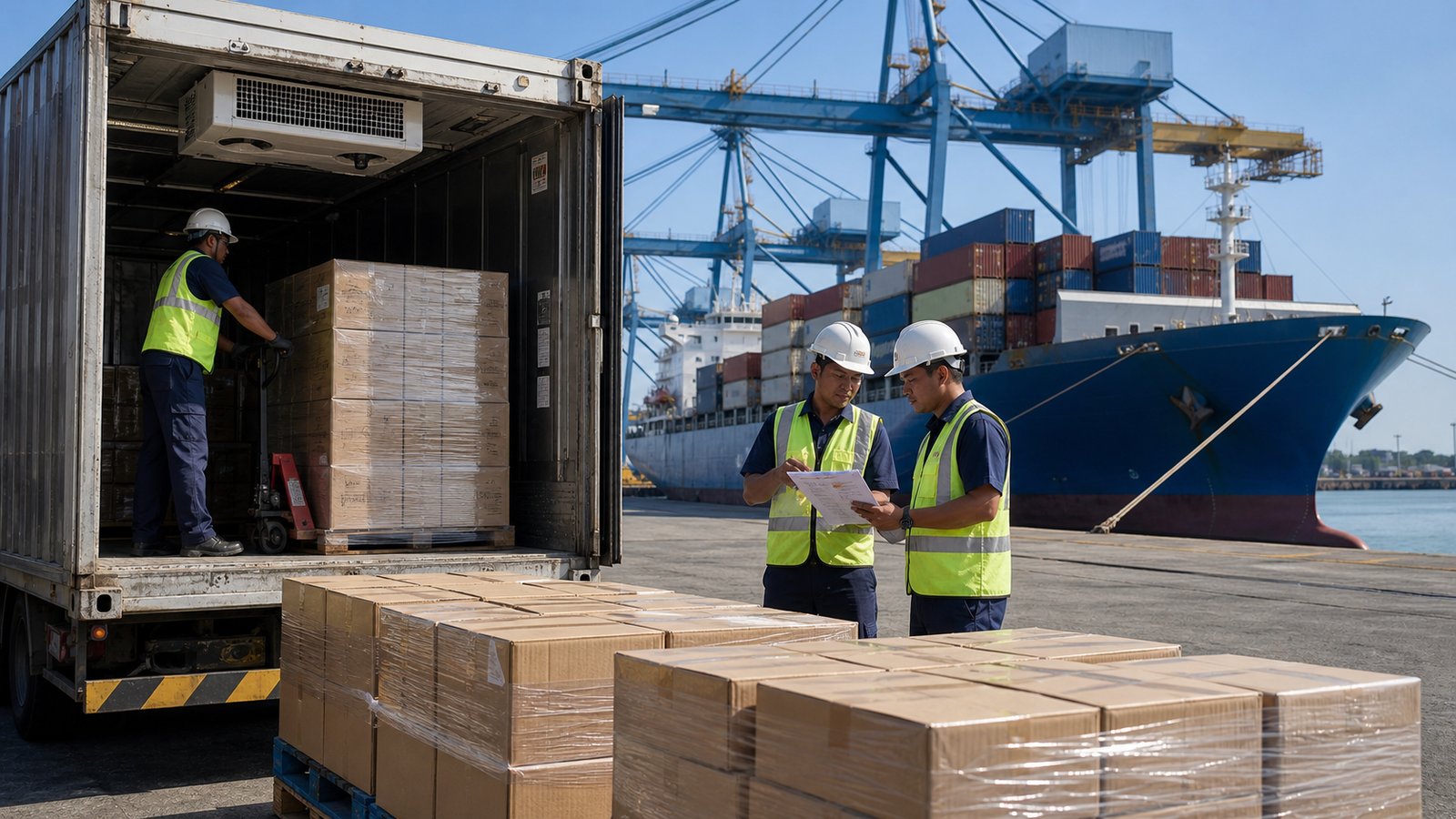
Malaysia exported RM61.79 billion in halal products in 2024, a 15 percent rise from RM53.72 billion in 2023, according to figures released by the Ministry of Investment, Trade and Industry (MITI) and MATRADE in April 2025. A large share of that value moves by sea to the Gulf Cooperation Council (GCC) markets, where buyers expect not only physically sound goods but verifiable halal integrity from origin to shelf. For exporters on this corridor, the insurance question is sharper than it first appears: marine cargo cover protects the goods against physical loss and damage, but the most expensive failure mode, a halal-status rejection of physically sound cargo, sits largely outside that protection.
Why the Malaysia to GCC corridor needs its own insurance view
The Malaysia to GCC trade lane carries processed food, beverages, confectionery, cosmetics, pharmaceuticals, and ingredients, much of it certified under Malaysia's Department of Islamic Development (JAKIM) halal scheme. GCC importing authorities, including Saudi Arabia's Food and Drug Authority (SFDA), recognise a defined set of foreign halal certification bodies, and JAKIM is among the most widely accepted. That recognition is what makes Malaysian halal exports commercially valuable, and it is also what creates a risk profile that standard cargo discussions miss. A shipment can arrive in perfect physical condition and still be rejected if its halal integrity is judged to have been compromised in transit, or if certification documentation does not satisfy the receiving authority.
The corridor itself runs long and warm. Vessels routing from Port Klang or Port of Tanjung Pelepas to Jeddah, Dammam, Jebel Ali, or Hamad cross the Indian Ocean and the Arabian Sea, with transhipment common at regional hubs. Heat, humidity, extended transit, and multiple handling points raise the odds of both ordinary physical damage and the kind of contact or cross-contamination event that puts halal status in question.
Key Facts: Halal Cargo Insurance on the Malaysia to GCC Corridor
What does halal cargo insurance cover on the Malaysia to GCC route? Marine cargo insurance covers physical loss of or damage to the goods in transit; it does not certify or guarantee halal status. The cover responds to perils such as sea damage, contamination, and theft, subject to policy terms.
Is a halal-integrity rejection an insured cargo claim? A halal-integrity rejection of physically sound goods is generally a commercial or compliance matter, not a standard marine cargo claim. Cargo policies respond to physical loss or damage, not to a buyer or authority refusing goods on certification grounds.
Which halal authority do GCC markets recognise from Malaysia? JAKIM, the Department of Islamic Development Malaysia, is the recognised national halal certification authority, and its certification is accepted by a defined list of GCC importing authorities including the Saudi Food and Drug Authority. Recognition lists are reviewed periodically by each importing country.
Can cross-contamination in a container be an insured loss? Cross-contamination that causes physical damage or rendering of goods unfit can be an insured loss under all-risks wording, depending on the cause and the exclusions. A purely status-based objection without physical change is harder to place within cargo cover.
What is the leading cargo clause set for halal food shipments? Institute Cargo Clauses (A), the all-risks form in the IUA / LMA clause text, 2009 edition, is the broadest standard wording and is commonly specified for high-value or contamination-sensitive food cargo.
Who arranges this cover for Malaysian exporters? Voyage is an intermediary that arranges and places marine cargo cover with insurers, tailoring the programme to the commodity, corridor, and certification requirements of halal exporters.
The risk profile on the corridor
The risks on this lane fall into two groups, and keeping them separate is the whole point of insuring it well.
The first group is conventional cargo risk. Long ocean transit and warm sea temperatures stress temperature-sensitive products. Refrigerated containers can fail. Stevedore handling at transhipment ports causes crushing and puncture damage. Theft and pilferage occur at congested terminals. Water ingress from heavy weather or container defects ruins paper-based packaging and the goods inside. These are the perils that marine cargo insurance was built to answer, and on an all-risks basis the policy responds to physical loss or damage from any cause not specifically excluded.
The second group is halal-integrity risk, and it overlaps with the first only partially. Halal integrity in transit depends on segregation and cleanliness. Halal cargo loaded into a container that previously carried haram product, for example pork or alcohol, without documented cleaning can be challenged on contamination grounds. Mixed consolidation, where halal and non-halal cargo share a container or a cold-storage space without a barrier, raises the same question. A container seal broken and resealed, or a chain of custody that cannot be evidenced, weakens the halal claim even when the goods themselves are untouched.
Where these two groups intersect, cargo insurance can respond. If a previously contaminated container physically taints the goods so they are unfit, that is physical damage with a cause, and an all-risks policy may answer it, subject to the inherent vice and exclusion tests. Where they do not intersect, cover thins out. If goods arrive clean, sealed, and physically perfect but a GCC authority rejects the consignment because the halal certificate was issued incorrectly, or because the segregation audit trail is missing, the loss is commercial. The exporter bears the rejected stock, the return freight, and the lost sale, and a standard marine cargo policy is not designed to indemnify any of that.
Building the insurance programme for the corridor
For a halal exporter shipping regularly to the GCC, the practical structure is an open cover that automatically insures every declared shipment on agreed terms, rather than arranging a fresh policy per consignment. An open cover for marine cargo suits exporters with continuous flow, because it removes the gap where a shipment sails before cover is bound. Our guide on open cover versus single shipment cover sets out when each structure fits.
The clause selection matters most. Institute Cargo Clauses (A), in the IUA / LMA clause text, 2009 edition, is the all-risks form and the usual choice for food and ingredient cargo, because contamination and damage can arise from causes that named-perils wordings under ICC (B) or ICC (C) would not pick up. The all-risks form still carries the standard exclusions: inherent vice, ordinary loss and wear, insufficiency of packing, delay, and consequential loss. Those exclusions are where many halal-corridor disputes actually land, so they deserve attention at placement, not at claim time. Our explainer on the Institute Cargo Clauses walks through what each level covers and excludes.
Sum insured should reflect the commercial invoice value plus freight and a customary uplift, and the basis of valuation should be agreed in the policy so it is not argued after a loss. The way customs and insurers treat declared value is covered in our note on customs valuation and insured value. Where halal exporters move under documentary credits, the certificate of insurance has to match the letter of credit exactly, which we address in the documentation section below. The broader picture for outbound shippers is in our guide for Malaysian exporters, and the sector view sits on our food, beverage and halal exports cargo insurance page.
| Event on the GCC corridor | Nature of loss | Typical insurance response |
|---|---|---|
| Reefer failure spoils chilled food in transit | Physical damage | Potentially covered under ICC (A), subject to policy terms and the cause of failure |
| Goods physically tainted by residue in an uncleaned container | Physical contamination | Can be covered if it is physical damage from a non-excluded cause |
| SFDA or buyer rejects sound goods on certificate error | Commercial or compliance loss | Outside standard marine cargo cover |
| Consignment delayed, shelf life shortened, buyer discounts | Delay and consequential loss | Excluded under standard cargo wording |
| Theft of cartons at a transhipment terminal | Physical loss | Covered under ICC (A) all-risks |
Documentation and Incoterms patterns on the lane
GCC trade on this corridor is documentation heavy, and the cargo insurance certificate is only one paper in a stack that includes the JAKIM halal certificate, the certificate of origin, and often a letter of credit. The way these documents interlock decides whether a shipment clears and whether a claim can be evidenced. Our guide to JAKIM halal certification for export markets sets out how the certification chain is built and presented to importing authorities.
Incoterms 2020, published by the International Chamber of Commerce, decides who is responsible for arranging insurance and at what point risk passes. Two rules carry a stated minimum insurance level. CIP requires the seller to provide insurance at the ICC (A) level as a minimum, while CIF requires only the ICC (C) level. For halal food and ingredient cargo, a CIF sale at the bare ICC (C) minimum leaves the buyer exposed to exactly the contamination and damage perils that matter most on a long warm route, so exporters and buyers frequently agree an uplift to ICC (A) even under a CIF term. Our Incoterms 2020 guide lays out all eleven rules and where the insurance obligation falls.
Under a letter of credit, the insurance certificate must match the credit's stated cover level, currency, and assured exactly, or the bank can reject the documents. Where a GCC buyer demands all-risks cover, that has to be reflected in the certificate wording at issue, not negotiated afterwards. A common failure point on this corridor is a certificate that names the wrong assured or omits the on-carriage to an inland GCC destination, which then breaks the chain if a loss occurs after the discharge port.
Common claims on the corridor
The claims that recur on the Malaysia to GCC lane cluster around heat, handling, and the halal-physical boundary. Reefer breakdowns spoiling chilled and frozen halal product are the most frequent temperature-related loss, and they usually do respond under all-risks cover where the failure is a genuine equipment or peril event rather than a packing or pre-existing condition issue. Crushing and water damage at congested transhipment ports generate a steady stream of partial-loss claims on cartoned goods.
The harder claims are the contamination cases. When goods arrive physically tainted, the question an insurer asks is whether the taint is physical damage from a covered cause, or whether it stems from inherent vice, insufficient packing, or a pre-shipment condition, all of which are excluded. A halal exporter who can evidence a clean, documented container, intact seals, and proper segregation is in a far stronger position to show the loss was a covered peril rather than an excluded one. Where the objection is purely about halal status, with the goods physically sound, the cargo policy will not be the route to recovery, and the exporter's protection lies instead in tight certification, clear contracts, and well-drafted sale terms.
Frequently asked questions
Does marine cargo insurance cover a halal certification rejection?
No, not as a standard feature. Marine cargo insurance responds to physical loss of or damage to the goods. If a consignment arrives physically sound but is rejected because the halal certificate was issued incorrectly or the certification chain cannot be evidenced, that is a commercial or compliance loss outside the cargo policy. The protection there is accurate certification and well-drafted sale contracts.
What is the difference between a halal-integrity loss and an insured physical loss?
An insured physical loss involves actual loss of or damage to the goods, such as spoilage from a reefer failure, theft, or contamination that renders the product unfit. A halal-integrity loss is the goods losing their halal status or acceptability, which may happen without any physical change. Cargo insurance answers the first; it generally does not answer the second unless physical damage is the cause.
Can cross-contamination from a dirty container be claimed?
It can, if the contamination is physical damage from a cause the policy covers and no exclusion applies. If goods are physically tainted by residue in an uncleaned container, that may be a covered physical loss under ICC (A). If the only objection is a halal-status concern with the goods physically intact, the cargo policy is unlikely to respond.
Which Incoterm should a halal exporter to the GCC use?
That depends on the commercial deal, but the insurance consequence is clear. Under CIP the seller must arrange ICC (A) all-risks cover as a minimum, while under CIF only ICC (C) is required. For long, warm, contamination-sensitive halal cargo, agreeing ICC (A) level cover regardless of the term gives the goods the broadest protection. Voyage can place cover to match whichever term the contract uses.
Is JAKIM certification accepted across the GCC?
JAKIM is widely recognised by GCC importing authorities, including Saudi Arabia's Food and Drug Authority, and is among the most accepted foreign halal certifications. Recognition lists are maintained and reviewed by each importing country, so exporters should confirm current acceptance for the specific destination market before shipping.
How quickly can cover be arranged for a GCC shipment?
Where an open cover or the underlying programme is already in place, individual shipments are declared and certificated quickly, often the same day. For a new exporter setting up cover, Voyage turns quotes around in 24 to 48 hours where the underlying cover is in place.
Does the policy cover the goods all the way to an inland GCC destination?
It can, if the transit clause and the certificate describe the full journey including on-carriage from the discharge port to the named inland destination. A certificate that ends at the GCC port of discharge leaves the inland leg uninsured, so the transit definition should match the actual delivery point.
Insuring Malaysia to GCC halal cargo with Voyage
Voyage arranges marine cargo open cover tailored to halal exporters on the GCC corridor, matching clause level, valuation basis, and certificate wording to your JAKIM certification and your buyers' letter-of-credit terms, so the physical-loss side of the risk is properly placed while the halal-integrity side is managed through documentation.
Get a tailored quote. WhatsApp Kevin at +60 14 925 5243 or request a callback. Quotes turn around in 24-48 hours where the underlying cover is in place.
Disclaimer: This article provides general guidance on halal cargo insurance for the Malaysia to GCC corridor as of June 2026. Coverage terms, conditions, and availability vary by insurer, policy, and jurisdiction. Always review your specific policy wording and consult a qualified insurance professional before making coverage decisions.
Why Voyage
Marine Insurance Specialists
International Underwriter Access
Both Sides of the Supply Chain
Malaysia and Singapore Expertise
Other industries
Explore other industries we cover


Get Best Rates / Quotation

Voyage is a specialist marine insurance intermediary arranging marine cargo and marine liability coverage for businesses in Malaysia, Singapore, and internationally. All insurance is placed through licensed broking partners.
Riskflow Sdn Bhd (202101001225):
Suite 3.19 (North Block), The Ampwalk, 218 Jalan Ampang, 50450 Kuala Lumpur, Wilayah Persekutuan Kuala Lumpur
t: +60149255243 (Kevin H.)
email: kevin@voyagecover.com