Freight Forwarder Liability in Malaysia: Who Pays for Cargo, Document or Declaration Issues?
When cargo is damaged, documents are wrong, or declarations fail, who pays? Where standard FFL ends and E&O cover begins for Malaysian freight forwarders.
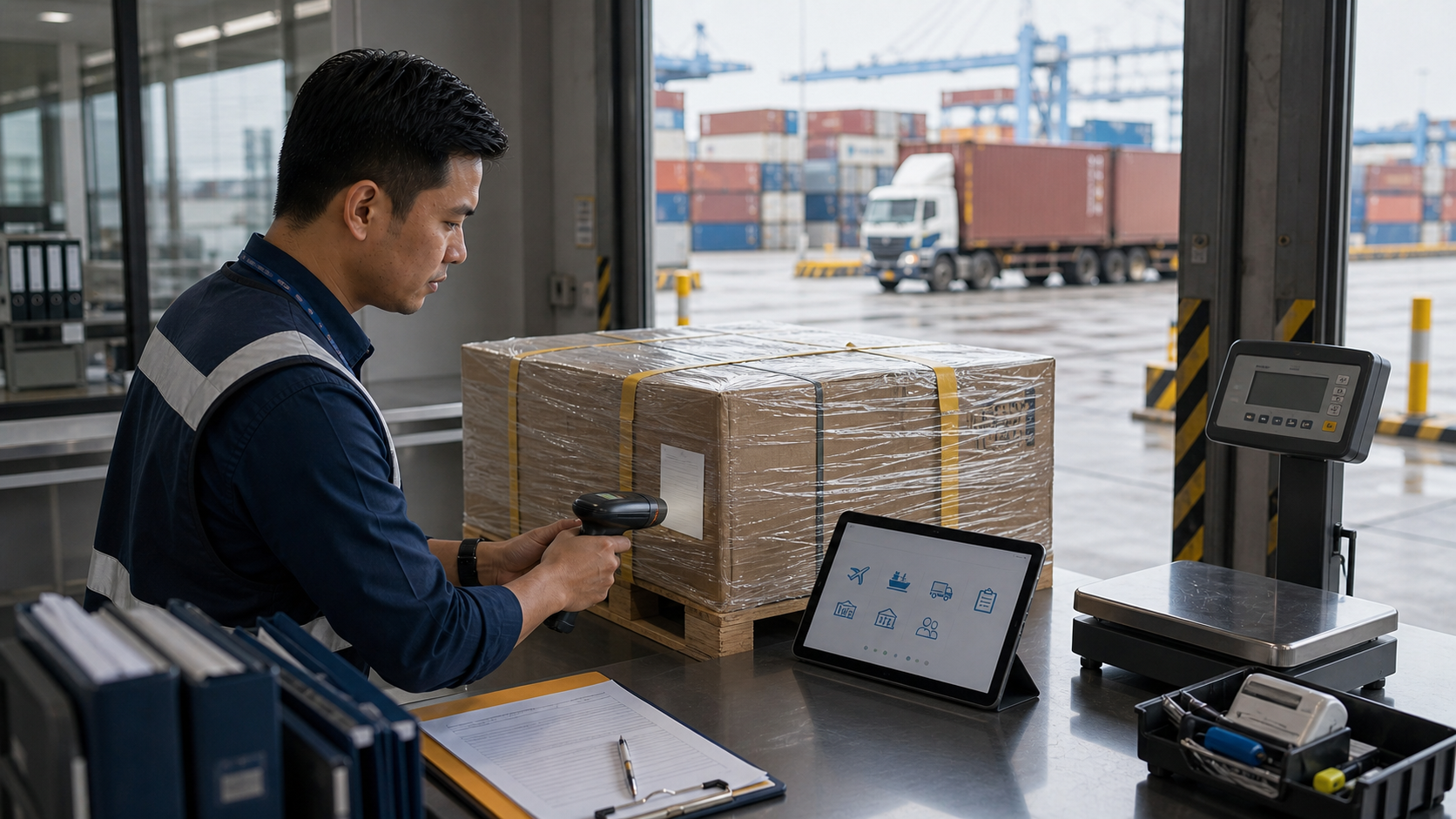
Illustrative example, not a specific client case. A Malaysian freight forwarder handles a shipment of industrial equipment from Port Klang to Hamburg. The forwarder's documentation team enters the wrong HS code on the customs declaration. German customs detains the container. The importer incurs EUR 15,000 in demurrage, EUR 8,000 in re-classification fees, and loses a EUR 200,000 contract because the goods arrived three weeks late. The importer sues the forwarder. The forwarder's FFL insurer declines the claim: the loss arose from a documentation error, not from physical damage to cargo in the forwarder's care.
This gap between physical cargo liability and professional liability is one of the most under-insured exposures in Malaysian freight forwarding.
Key Facts: Freight Forwarder Liability Types
What does a freight forwarder's standard liability cover? Standard Freight Forwarder's Liability (FFL) insurance covers the forwarder's legal liability for physical loss of or damage to cargo while in the forwarder's care, custody, or control. It is a liability policy, not a property policy: it responds only when the forwarder is legally at fault for the loss.
What does errors and omissions (E&O) cover? E&O insurance covers financial losses arising from professional mistakes: wrong HS codes, missed deadlines, incorrect routing instructions, failure to arrange insurance when instructed, and other documentation or advisory errors. E&O losses are typically financial rather than physical.
Does standard FFL include E&O? Not always. Some FFL policies include an E&O extension; others exclude professional liability entirely. Malaysian forwarders need to check their specific policy wording to confirm whether professional mistakes are covered.
What is the FMFF STC position on documentation errors? Under FMFF STC Clause 6.1-6.2, the customer is responsible for accurate declaration of cargo particulars. Under Clause 7.3, the forwarder is not liable for errors of third parties unless the forwarder failed to exercise due diligence in selecting or supervising them. But Clause 7.1 makes the forwarder liable for failure to exercise reasonable care in its own performance.
Three Categories of Forwarder Exposure
Malaysian freight forwarders face liability from three distinct sources. Each triggers a different insurance response.
Category 1: Physical Cargo Damage
Cargo is damaged while in the forwarder's warehouse, during loading, or while being handled by the forwarder's staff. The forwarder is liable for the physical damage because the loss occurred in their care. Standard FFL responds to this category.
Examples: forklift drops a pallet during loading; water leak in the forwarder's warehouse damages stored cargo; improper stacking causes crushing damage; container doors left open during rain at the forwarder's yard.
The FMFF STC caps this liability at RM2,800 per shipping unit or RM5.00 per kilogram, with a maximum of RM100,000 per claim (Clause 7.8). This cap applies where the STC is incorporated and not overridden.
Category 2: Documentation Errors
The forwarder makes a mistake in the paperwork: wrong HS code, incorrect weight declaration, wrong consignee details, mismatched bill of lading and commercial invoice, or failure to obtain required certificates. The cargo may be physically fine, but the documentation error causes financial loss to the shipper or consignee.
Examples: wrong HS code leads to customs detention and penalty; incorrect Letter of Credit documentation causes bank rejection under UCP 600; failure to include phytosanitary certificate causes rejection at destination; wrong Incoterm cited in shipping instructions creates insurance gap.
Standard FFL may not cover these losses because no physical damage to cargo occurred. The loss is financial, arising from a professional error. E&O cover is needed.
Category 3: Declaration Failures
The forwarder fails to declare goods correctly to customs or regulatory authorities: undeclared dangerous goods, non-declaration of strategic trade items under the Strategic Trade Act 2010, failure to declare controlled goods requiring MITI permits, or incorrect origin declarations affecting preferential duty treatment.
Examples: undeclared DG leads to port authority fine and cargo seizure; failure to obtain MITI strategic trade permit for dual-use goods results in Customs penalty; incorrect certificate of origin causes destination country to deny preferential tariff, costing the importer significant duty.
These exposures combine elements of both FFL and E&O. The cargo may be physically seized (creating a cargo loss) as a result of a documentation or declaration failure (a professional error). The insurance response depends on how the loss is characterised and whether the policy covers the proximate cause.
Where FFL Ends and E&O Begins
| Scenario | FFL Response | E&O Response |
|---|---|---|
| Forklift damages cargo during loading at forwarder's facility | Covered: physical damage in forwarder's care | Not triggered: no professional error |
| Wrong HS code causes customs detention and demurrage | Likely not covered: no physical damage | Covered: financial loss from professional error |
| Forwarder fails to arrange insurance when instructed; cargo is lost at sea | Not covered: forwarder did not cause the loss | Covered: failure to perform professional duty |
| Cargo misrouted to wrong port; additional freight and delay costs | Not covered: no physical damage | Covered: professional error in routing instructions |
| Undeclared DG causes fire on vessel, destroying other cargo | Possible third-party claim coverage | Possible coverage for the declaration failure |
| LC documents rejected because insurance certificate does not match LC terms | Not covered: no physical damage | Covered: documentation error causing financial loss |
The pattern is clear. Physical cargo damage in the forwarder's care triggers FFL. Financial losses from professional mistakes trigger E&O. Many real-world claims sit at the boundary, and the policy wording determines which side of the line they fall on.
Get a tailored quote. WhatsApp Kevin at +60 19 990 2450 or request a callback.
The Malaysian Regulatory Context
Malaysian freight forwarders operate in a regulatory environment that increases documentation-related exposure.
K2 customs declaration. The K2 form is the standard export declaration filed through the uCustoms system. Errors in the K2, including wrong HS codes, incorrect values, or missing regulatory declarations, can result in Customs penalties and shipment delays.
Strategic Trade Act 2010. Dual-use goods, electronics, and chemical precursors controlled under the STA 2010 require MITI permits. A forwarder who ships controlled goods without the MITI permit faces both Customs enforcement and potential criminal liability under the Act. This is a declaration failure with severe consequences.
EUDR compliance. Malaysian exporters of palm oil, rubber, and timber to the EU must comply with the EU Deforestation Regulation. A forwarder handling the export documentation who fails to include the required EUDR compliance documentation exposes both the exporter and themselves to market access issues at the EU destination.
Letter of Credit documentation. Forwarders frequently handle LC documentation for their shipper clients. An error in the insurance certificate, bill of lading, or commercial invoice that creates a discrepancy under UCP 600 can delay payment and trigger financial losses far exceeding the forwarder's handling fee.
How to Close the Gap
Malaysian forwarders handling complex documentation, customs brokerage, or advisory services need to confirm three things about their liability insurance programme:
Does the FFL policy include E&O? Check the policy wording, not the broker's summary. Some policies include E&O as a standard extension; others exclude it explicitly. If E&O is included, check the sub-limit: a RM100,000 E&O sub-limit within a RM500,000 FFL policy may be inadequate if the forwarder handles high-value documentation work.
Is customs brokerage covered? Forwarders who act as licensed customs agents under the Customs Act 1967 face additional professional liability for declarations filed on behalf of clients. Not all FFL policies extend to customs brokerage activities.
Is failure to insure covered? If a client instructs the forwarder to arrange cargo insurance and the forwarder fails to do so, the forwarder may be liable for the uninsured loss. This is a professional negligence claim, not a cargo handling claim. E&O cover is the correct response.
The freight forwarder's liability insurance money page covers Voyage's FFL product in detail, including E&O extensions and the underwriting information needed for placement.
Frequently Asked Questions
Does standard FFL cover wrong HS code entries on customs declarations?
Standard FFL covers physical cargo damage, not documentation errors. A wrong HS code causing financial loss requires E&O cover.
What happens if a forwarder fails to arrange cargo insurance when instructed by the client?
The forwarder may be liable for the uninsured loss under professional negligence. E&O cover responds to this scenario.
Does the FMFF STC protect the forwarder from all documentation-related claims?
No. The STC limits liability and shifts information responsibility to the customer, but the forwarder remains liable for failure to exercise reasonable care (Clause 7.1). The STC is a contractual limitation, not a shield.
Is customs brokerage covered under FFL?
Not always. Check whether the policy extends to declarations filed as a customs agent. Some policies cover this; others exclude it.
Can a forwarder be liable for a third-party claim arising from DG misdeclaration?
Yes. Third-party claims from other cargo interests and vessel owners can be substantial and may fall outside standard FFL if the cause is a documentation error rather than physical handling.
How much E&O cover does a Malaysian forwarder need?
The limit should reflect worst-case professional error exposure, not average handling fees. A forwarder handling LC documentation for high-value shipments needs more E&O cover than one handling basic bookings.
Close the E&O Gap with Voyage
Voyage is a specialist marine insurance intermediary arranging freight forwarder's liability insurance for Malaysian logistics operators. The E&O gap is real, and Voyage structures FFL programmes that cover both physical cargo liability and professional mistakes, placed directly with underwriters who understand the Malaysian forwarding market.
Get a tailored quote. WhatsApp Kevin at +60 19 990 2450 or request a callback. Quotes turn around in 24-48 hours where the underlying cover is in place.
Disclaimer: This article provides general guidance on freight forwarder liability for cargo, documentation, and declaration issues as of June 2026. Coverage terms, conditions, and availability vary by insurer, policy, and jurisdiction. Always review your specific policy wording and consult a qualified insurance professional before making coverage decisions.
Why Voyage
Marine Insurance Specialists
International Underwriter Access
Both Sides of the Supply Chain
Malaysia and Singapore Expertise
Other industries
Explore other industries we cover


Get Best Rates / Quotation

Voyage is a specialist marine insurance intermediary arranging marine cargo and marine liability coverage for businesses in Malaysia, Singapore, and internationally. All insurance is placed through licensed broking partners.
Riskflow Sdn Bhd (202101001225):
Suite 3.19 (North Block), The Ampwalk, 218 Jalan Ampang, 50450 Kuala Lumpur, Wilayah Persekutuan Kuala Lumpur
t: +60149255243 (Kevin H.)
email: kevin@voyagecover.com