Force Majeure in Shipping: When the Carrier Will Not Pay and What Protects Your Cargo
When a carrier invokes force majeure, cargo liability disappears. How Hague-Visby Article IV defences work and why cargo insurance is your only recovery.
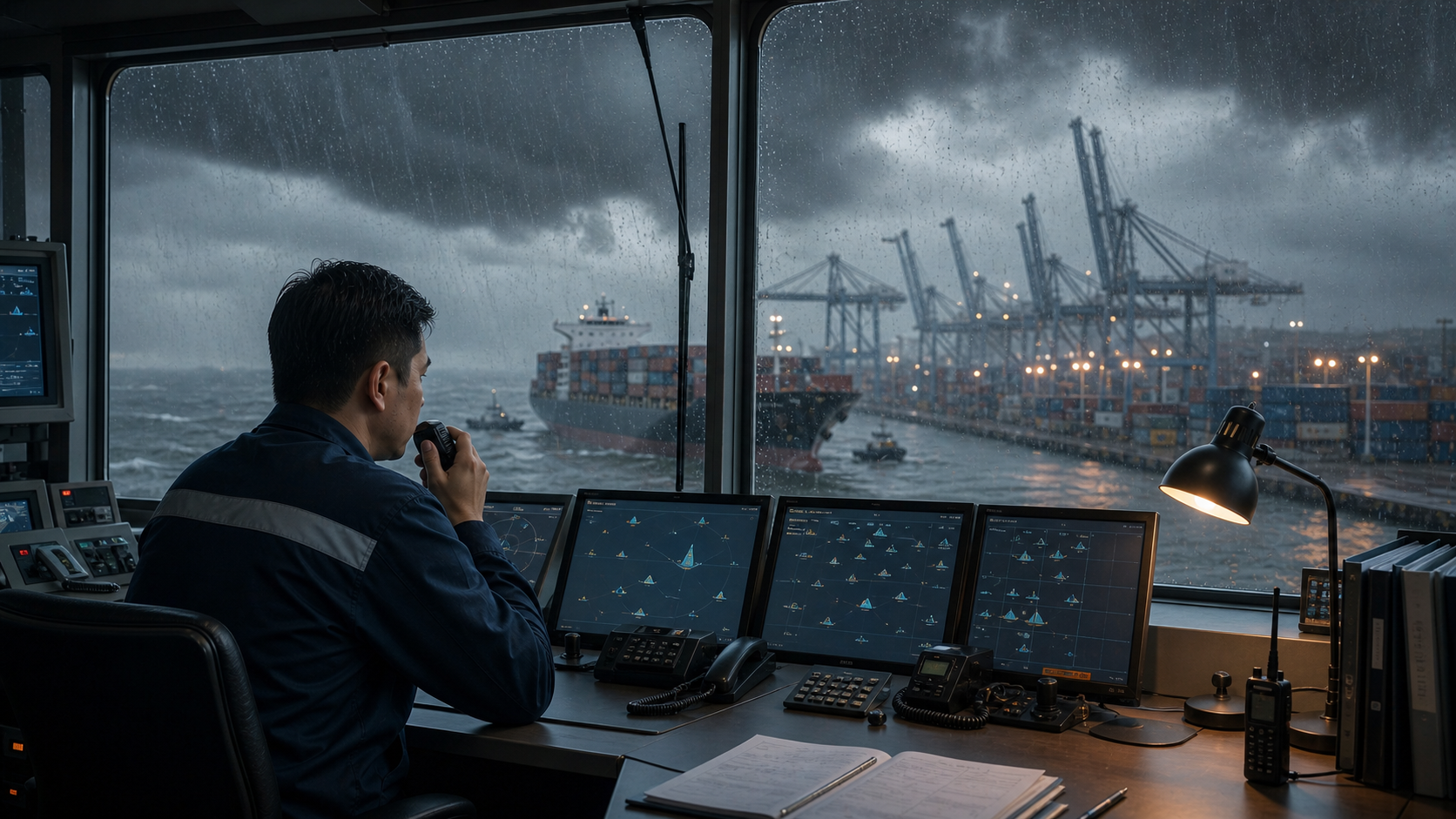
If your cargo is destroyed in a typhoon at sea, does the shipping line pay? In most cases, no. The carrier invokes force majeure, and the Hague-Visby Rules give the carrier a defence. Your goods are gone, the carrier is not liable, and unless you hold your own marine cargo insurance, the loss is yours.
Force majeure is not a loophole. It is the structural reality of maritime law. The carrier's defences under the Hague-Visby Rules are extensive, well-tested, and routinely upheld. Understanding what the carrier does and does not owe is the starting point for structuring cargo insurance that actually protects the goods.
Key Facts: Force Majeure and Carrier Liability
What is force majeure in shipping? Force majeure refers to extraordinary events beyond the control of the contracting parties, including natural disasters, war, epidemics, government actions, and other events that make performance of the contract impossible or impractical. In maritime law, the concept is codified through the carrier's defences in the Hague-Visby Rules rather than through a standalone force majeure clause.
Does the carrier pay when cargo is lost to force majeure? Generally no. Under the Hague-Visby Rules, Article IV(2) lists 17 specific defences that allow the carrier to avoid liability for cargo loss or damage, including acts of God, perils of the sea, acts of war, quarantine restrictions, and strikes.
What protects the cargo owner when the carrier is not liable? Marine cargo insurance. A property insurance policy covering the goods themselves, independent of who caused the loss. When the carrier escapes liability through force majeure or any other defence, the cargo owner's marine cargo insurance is the only recovery mechanism.
What are the carrier's liability limits even when they are liable? Under the Hague-Visby Rules, the carrier's maximum liability is 666.67 SDR per package or 2 SDR per kilogram, whichever is higher (Hague-Visby Rules, Article IV.5(a)). For air carriage, the Montreal Convention 1999 limits liability to 26 SDR per kilogram (as updated 28 December 2024).
The Carrier's 17 Defences Under Hague-Visby Article IV(2)
Article IV(2) of the Hague-Visby Rules provides the carrier with 17 enumerated defences against cargo claims. Each removes the carrier's liability when the loss is caused by the specified event. The most commercially significant for Malaysian trade:
| Defence | Article IV(2) Reference | Practical Example |
|---|---|---|
| Act, neglect, or default of the master in navigation or management of the ship | (a) | Vessel runs aground due to navigational error; carrier not liable for cargo damage |
| Fire, unless caused by the actual fault or privity of the carrier | (b) | Engine room fire spreads to cargo holds; carrier escapes liability unless they personally caused the fire |
| Perils, dangers, and accidents of the sea | (c) | Heavy weather damages deck cargo; carrier not liable for sea-state damage |
| Act of God | (d) | Earthquake at port destroys cargo; carrier not liable |
| Act of war | (e) | Missile strike on vessel in a conflict zone; carrier not liable |
| Quarantine restrictions | (h) | Destination port quarantines the vessel; perishable cargo deteriorates during the quarantine period |
| Strikes, lockouts, stoppages of labour | (j) | Dockworker strike prevents discharge; cargo deteriorates in the hold |
| Inherent vice or nature of the goods | (m) | Palm oil solidifies due to temperature drop within normal transit conditions |
| Insufficiency of packing | (n) | Goods damaged because shipper used inadequate packaging |
The nautical fault exemption under Article IV(2)(a) is particularly significant. It means the carrier is not liable when the master makes a navigational error that causes loss, even though the master is the carrier's employee. This defence has been called an anachronism, but it remains effective law in every jurisdiction that applies the Hague-Visby Rules, including Malaysia under the Carriage of Goods by Sea Act 1950.
When Force Majeure Does Not Protect the Carrier
The carrier's defences are powerful but not absolute. Two conditions must be met before the carrier can rely on Article IV(2) defences.
Seaworthiness obligation. Under Article III(1), the carrier must exercise due diligence to make the ship seaworthy "before and at the beginning of the voyage." If the loss occurs because the vessel was unseaworthy at the start of the voyage, the carrier cannot rely on the Article IV(2) defences, even if a force majeure event also contributed to the loss. The burden of proving unseaworthiness initially lies with the cargo claimant, but once raised, the carrier must demonstrate that due diligence was exercised.
Care of cargo obligation. Under Article III(2), the carrier must "properly and carefully load, handle, stow, carry, keep, care for, and discharge the goods." A carrier who stows cargo improperly cannot blame heavy weather when the improperly stowed cargo shifts and is damaged. The UK Supreme Court in Volcafe Ltd v CSAV (2018) confirmed that the carrier bears the burden of disproving negligence in cargo care before relying on the Article IV(2) defences.
For Malaysian shippers, this means the carrier's force majeure defence is weaker when: the vessel had known mechanical issues before sailing; the cargo was stowed in a manner inconsistent with good practice; or the carrier was aware of weather conditions that should have prompted a route change.
Why Cargo Insurance Is the Primary Recovery Path
Even when the carrier is liable, recovery from the carrier is limited by convention caps and complicated by jurisdictional issues, time bars, and the carrier's financial capacity. Marine cargo insurance provides a fundamentally different recovery mechanism.
| Recovery Path | Carrier Claim | Cargo Insurance Claim |
|---|---|---|
| Trigger | Carrier must be at fault and unable to rely on Article IV(2) defences | Physical loss or damage to cargo from an insured peril, regardless of fault |
| Recovery cap | 666.67 SDR/package or 2 SDR/kg (sea); 26 SDR/kg (air) | Full insured value (typically CIF + 10%) |
| Time to settle | Months to years; litigation or arbitration often required | Typically weeks; insurer then subrogate against the carrier |
| Time bar | One year from delivery under Hague-Visby | Per policy terms, typically longer |
| Force majeure | Eliminates carrier liability entirely | Does not affect coverage (physical damage from force majeure is a covered peril under ICC (A)) |
The comparison makes the case. A carrier claim is a liability claim: you must prove the carrier was at fault, overcome the defences, and accept the convention cap. A cargo insurance claim is a property claim: the goods were damaged, the peril is covered, and the insurer pays the insured value. The insurer then subrogate against the carrier if the carrier was at fault, handling the litigation at the insurer's cost.
This is why the starting position for any Malaysian exporter or importer should be: own your marine cargo insurance. Do not rely on the carrier. The carrier's liability framework is designed to protect the carrier, not the cargo owner.
Force Majeure Across Transport Modes
Malaysian supply chains frequently involve multimodal transport: sea to Port Klang, road to a warehouse, air for time-sensitive components. Each mode carries its own force majeure framework.
For sea carriage, Hague-Visby provides the broadest carrier defences. For air carriage under the Montreal Convention 1999, the carrier is liable for loss of or damage to cargo unless the carrier proves the damage was caused by inherent defect, defective packing, war, or an act of public authority; the defences are narrower than Hague-Visby. For road carriage under CMR, the carrier is not liable if the loss was caused by the wrongful act of the claimant, instructions of the claimant, inherent vice, or circumstances which the carrier could not avoid. For rail under CIM-COTIF, the framework is similar to CMR.
Our guide to carrier liability limits across transport modes sets out the convention-by-convention comparison. The consistent finding: every convention provides carrier defences, and every convention caps the carrier's liability at levels below the full cargo value. Marine cargo insurance fills the gap across all modes.
Practical Implications for Malaysian Traders
FOB buyers: Under FOB (Free on Board), risk transfers to the buyer when goods cross the ship's rail at the port of shipment. If a force majeure event damages the cargo during the sea voyage, the loss falls on the buyer. The buyer needs their own cargo insurance from the point of shipment. The Incoterms 2020 insurance responsibility framework makes this clear.
CIF sellers: Under CIF (Cost, Insurance and Freight), the seller arranges insurance for the buyer's benefit. The minimum required cover under Incoterms 2020 is ICC (C), the most restrictive named-perils clause set. ICC (C) covers major casualties (sinking, stranding, collision, fire) but not theft, pilferage, or water damage. Buyers who want full protection should negotiate ICC (A) cover or arrange their own supplementary insurance.
CIP buyers and sellers: Under CIP (Carriage and Insurance Paid To), the minimum insurance requirement changed under Incoterms 2020 to ICC (A), the broadest all-risks cover. This is a meaningful upgrade from the pre-2020 ICC (C) minimum and reflects the recognition that narrower cover leaves too many gaps.
Frequently Asked Questions
Does the carrier pay for cargo damaged by a typhoon at sea?
Generally no. A typhoon qualifies as a "peril of the sea" under Hague-Visby Article IV(2)(c), a carrier defence. The carrier is not liable, provided the vessel was seaworthy at the start of the voyage.
What is the nautical fault exemption?
Under Hague-Visby Article IV(2)(a), the carrier is not liable for loss arising from the master's or crew's errors in navigation or management of the ship, even when the error directly caused the loss.
Can I recover the full value of my cargo from the carrier if the carrier is at fault?
No. Carrier liability under the Hague-Visby Rules is capped at 666.67 SDR per package or 2 SDR per kilogram, whichever is higher. For high-value cargo, the cap covers a fraction of the actual loss.
Does force majeure affect my cargo insurance coverage?
No. Cargo insurance covers physical loss from insured perils regardless of fault. Force majeure affects carrier liability, not cargo insurance. Under ICC (A), force majeure events that damage cargo are covered perils.
What is the time limit for claiming against the carrier?
Under the Hague-Visby Rules, suit must be brought within one year of delivery or the date the goods should have been delivered. Missing this time bar extinguishes the claim.
Is ICC (C) cover sufficient to protect against force majeure losses?
ICC (C) covers only named perils: fire, explosion, sinking, stranding, collision, and discharge at a port of distress. It does not cover theft, water damage, or many other perils. ICC (A) provides the broadest protection and is the recommended minimum for most shipments, subject to policy terms and conditions.
Speak to Voyage About Force Majeure Protection
Voyage is a specialist marine insurance intermediary arranging marine cargo insurance for Malaysian traders. When the carrier will not pay, your cargo insurance is the only recovery path. Voyage places cover directly with the underwriters who write these risks, on ICC (A) terms, with war and strikes extensions where needed.
Get a tailored quote. WhatsApp Kevin at +60 19 990 2450 or request a callback. Quotes turn around in 24-48 hours where the underlying cover is in place.
Disclaimer: This article provides general guidance on force majeure and carrier liability in shipping as of June 2026. Coverage terms, conditions, and availability vary by insurer, policy, and jurisdiction. Always review your specific policy wording and consult a qualified insurance professional before making coverage decisions.
Why Voyage
Marine Insurance Specialists
International Underwriter Access
Both Sides of the Supply Chain
Malaysia and Singapore Expertise
Other industries
Explore other industries we cover


Get Best Rates / Quotation

Voyage is a specialist marine insurance intermediary arranging marine cargo and marine liability coverage for businesses in Malaysia, Singapore, and internationally. All insurance is placed through licensed broking partners.
Riskflow Sdn Bhd (202101001225):
Suite 3.19 (North Block), The Ampwalk, 218 Jalan Ampang, 50450 Kuala Lumpur, Wilayah Persekutuan Kuala Lumpur
t: +60149255243 (Kevin H.)
email: kevin@voyagecover.com