Demurrage and Detention Rates Compared Across Malaysian Shipping Lines
Demurrage and detention rates compared across MY shipping lines. Free time, escalation tiers, the cargo cover that responds.
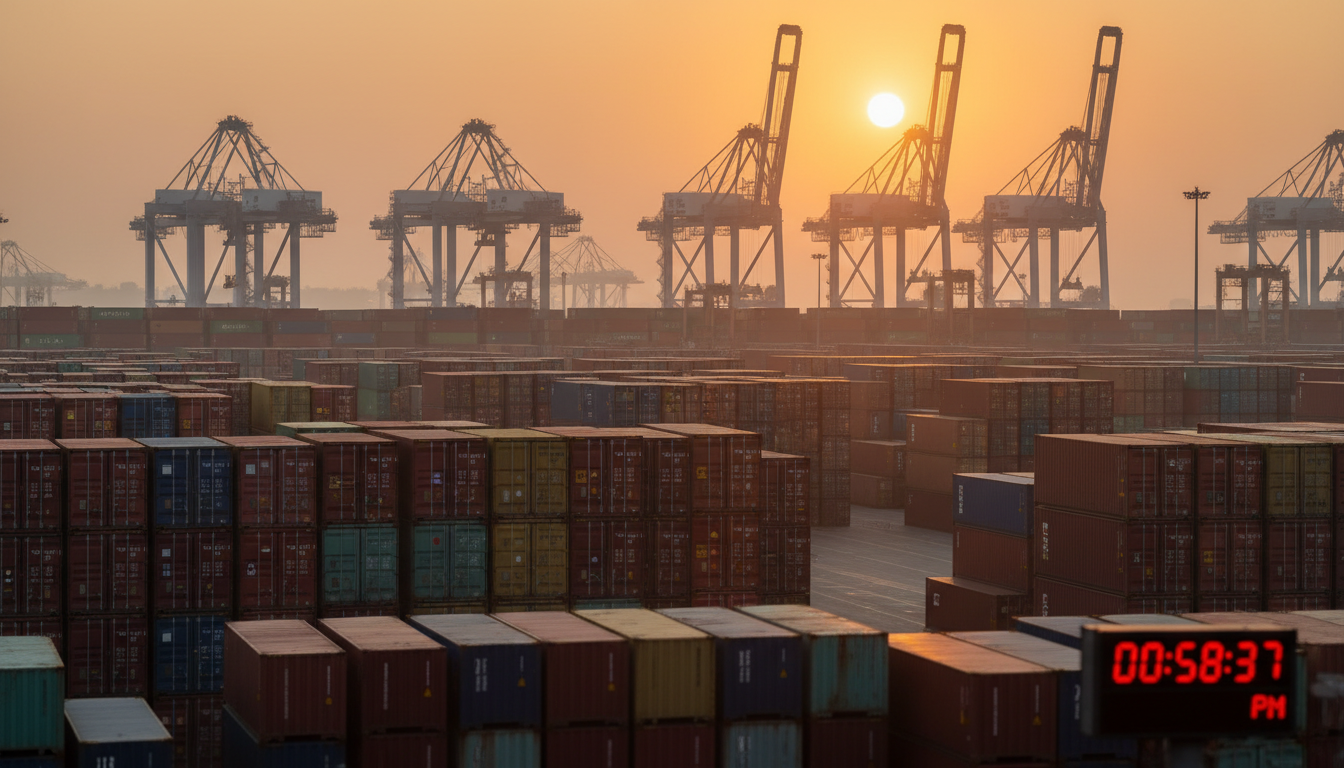
A 40-foot container delayed seven days at Port Klang routinely accumulates four-figure demurrage charges before detention even begins on the empty return. The exact bill depends on the carrier, the trade lane, and any negotiated free-time uplift, and is published on each carrier's tariff page (Maersk, MSC, CMA CGM, Evergreen, OOCL, Wan Hai, ONE, and Hapag-Lloyd all publish updated MY tariffs). That bill stacks on top of your cargo value, your finance charges, and your consignee's frustration.
Yet most traders discover their actual demurrage exposure only after the first bill arrives, because the mechanics are buried in carrier tariffs, the rates vary by shipping line and port, and standard cargo insurance explicitly excludes delay-related costs. Understanding how demurrage and detention are structured, what triggers them, and which insurance extension actually responds is the difference between absorbing these costs yourself and transferring them where they belong.
Key Facts: Demurrage and Detention in Malaysia
What is the difference between demurrage and detention? Demurrage is charged for full containers that sit in the terminal beyond the free time after discharge. Detention is charged for empty containers retained beyond the free time after the consignee has collected them. The terminal controls the demurrage clock; the consignee controls the detention clock.
How long is the standard free time? Typically 7 calendar days at Malaysian ports, though high-volume shippers under long-term contracts negotiate 14 to 21 days. Free time begins from container discharge for demurrage and from container collection for detention. Negotiating longer free time upfront is far cheaper than paying tiered overage rates after the fact.
How are rates structured? Almost universally tiered: a low-rate first tier (typical industry range approximately $50-100 per day for the first 3-7 days of overage), a mid-rate tier (typical range $150-250 per day), and a high-rate tier ($300-500+ per day for prolonged overage). Rates per carrier are published on their official tariff pages and update quarterly; verify the live tariff before each booking.
Can demurrage and detention be combined as a single charge? Some carriers publish a "combined demurrage and detention" tariff that runs from the moment free time expires until the empty is returned, regardless of where the container is at any given time. This is increasingly common in short-window markets and simplifies billing but may cost more overall if the empty returns quickly.
What triggers the most demurrage and detention exposure? Customs delays (clearance backlogs, valuation disputes, ISPM-15 certificate issues, phytosanitary or halal certification bottlenecks), document delays (Letter of Credit presentation discrepancies, bill of lading not yet surrendered), and consignee delays (port congestion, no transport arranged, warehouse capacity constraints). These are operational, not carrier faults, but you pay for the delay regardless.
For context on how these delays cascade, see Institute Cargo Clauses (A), (B), and (C) and when marine cargo coverage ends. For the insurance extension that responds, see marine cargo open cover.
Resource: Cargo Insurance Coverage Audit
For delay-related cargo cover, take the Cargo Insurance Coverage Audit to verify cover-end timing.
Demurrage versus Detention: The Core Distinction
The line separating demurrage and detention is where control of the container shifts from the terminal to the consignee. Demurrage is terminal liability; detention is the consignee's responsibility. This distinction matters because the party responsible for delay varies by incoterm, by who arranged inland transport, and by who holds the bill of lading.
Under FOB or CFR, the buyer assumes risk once the goods are on board the vessel. The buyer also typically arranges port-side transport and is responsible for clearing customs and collecting the container. Any delay in collection triggers detention charges. The seller is rarely liable.
Under CIF or CIP, the seller arranges main carriage, but the buyer arranges inland delivery. Demurrage (full container in terminal) is usually the seller's liability if the buyer is slow to arrange collection. Detention (empty) becomes the buyer's liability once the consignee takes possession. The language of your contract determines who absorbs the cost.
| Charge Type | When It Starts | Who Controls the Container | Combined Tariff Option |
|---|---|---|---|
| Demurrage | After free time expires from discharge | Terminal operator; container remains at port | Yes, some carriers merge demurrage and detention into one daily rate |
| Detention | After free time expires from collection | Consignee or cargo owner; container at warehouse or in use | Yes, combined rate applies from discharge until empty return |
For ongoing trading programmes with routine D&D exposure, Marine Cargo Open Cover with a demurrage and detention extension is the structure that holds; for the base cargo cover that runs alongside, Marine Cargo Insurance is the right fit. For carrier-side recovery during disputes, see the Hague-Visby Cargo Recovery Card. Read more on Freight Forwarders & Logistics Insurance.
Free Time: How It Works and How to Extend It
Free time is a courtesy period; carriers grant it to account for normal customs clearance and consignee logistics. Once free time expires, the clock runs at a daily rate, often compounding into a three-tier structure. The day you discharge the container, the clock starts.
At Port Klang and Westport, 7 calendar days is standard for most carriers on scheduled services. Breakbulk or project cargo may receive 10 to 14 days. Tanjung Pelepas (PTP) typically offers 7 calendar days for the main carriers. Regional carriers operating MY-to-Singapore feeder services sometimes negotiate 14 days with large volume shippers to account for the short transit and the consolidation window. Negotiating extended free time is cheaper than paying overage; if your goods often spend 10-14 days in port waiting for inland connections, negotiate upfront rather than absorb the cost monthly.
You cannot extend free time retroactively once the clock has started. Some carriers will waive the first day or apply a one-time grace extension if you request before the deadline, but do not count on it. The free time cutoff is firm. Once demurrage or detention charges accrue, they compound daily and accelerate at the higher tiers.
The Tiered Rate Model: How Every Major Carrier Structures Its Tariff
Every major international carrier uses a tiered demurrage and detention model. The first tier is the lowest per-diem rate, designed to cover routine delays. The second and third tiers encourage faster movement and penalize prolonged detention. This structure incentivizes consignees to clear cargo quickly and return empties on time.
| Tier | Duration (Days) | Per Day (Illustrative Range) | Use Case |
|---|---|---|---|
| Tier 1 (Grace) | 0-3 days past free time | Industry-typical low-double-digit USD/day | Minor delays in customs or transport coordination |
| Tier 2 (Penalty) | 3-7 days past free time | Industry-typical low-three-digit USD/day | Significant delays; customs issues or port congestion |
| Tier 3 (Heavy Penalty) | 7+ days past free time | Industry-typical mid-three-digit USD/day or above | Severe delays; equipment repositioning costs for the carrier |
Some carriers add a fourth high-rate tier for extreme overstays (14+ days) designed to free up equipment quickly. At those tiered rates, a single container can run into four-figure to five-figure US-dollar bills for a two-to-three-week delay; the exact figure depends entirely on the carrier's published tariff and any negotiated free-time extension.
How Major Malaysian Shipping Lines Structure Their Tariffs
Maersk, MSC, CMA CGM, Evergreen, OOCL, Wan Hai, ONE, and Hapag-Lloyd all publish official tariff pages for Malaysian ports. Rates update quarterly and vary by trade lane, vessel schedule, and contract volume. The structure is always tiered, but the specific dollar amounts and day thresholds differ.
Below is a methodology-focused overview showing how each line structures its free time and tiered escalation. Exact rates drift quarterly, so treat these as illustrative bands and always check the carrier's current tariff page before budgeting.
| Carrier | Free Time at Port Klang | Tier 1 Rate | Tier 2 Rate | Notes (as of May 2026) |
|---|---|---|---|---|
| Maersk | 7 calendar days | Tier 1: industry-typical low-double-digit USD/day | Tier 2: industry-typical low-three-digit USD/day | Separate demurrage and detention; quarterly rate updates |
| MSC | 7 calendar days | Tier 1: industry-typical low-double-digit USD/day | Tier 2: industry-typical low-three-digit USD/day | Combined demurrage/detention option available; long-term contract rates available |
| CMA CGM | 7 calendar days | Tier 1: industry-typical low-double-digit USD/day | Tier 2: industry-typical low-three-digit USD/day | Negotiable on contracts above 50 TEU per month |
| Evergreen (EVL) | 7 calendar days | Tier 1: industry-typical low-double-digit USD/day | Tier 2: industry-typical low-three-digit USD/day | Competitive on MY-Singapore lane; lower Tier 1 to encourage volume |
| OOCL | 7 calendar days | Tier 1: industry-typical low-double-digit USD/day | Tier 2: industry-typical low-three-digit USD/day | Separate D/D; strong in Penang electronics trade |
| Wan Hai | 7 calendar days (negotiable to 14) | Tier 1: industry-typical low-double-digit USD/day | Tier 2: industry-typical low-three-digit USD/day | Regional carrier; aggressive Tier 1 pricing for MY-SG feeder volumes |
| ONE (Orient Express) | 7 calendar days | Tier 1: industry-typical low-double-digit USD/day | Tier 2: industry-typical low-three-digit USD/day | Combined D/D available; competitive on container ship capacity |
| Hapag-Lloyd | 7 calendar days | Tier 1: industry-typical low-double-digit USD/day | Tier 2: industry-typical mid-three-digit USD/day | Premium positioning; strong on project cargo at PTP |
These illustrative ranges are current as of May 2026. Every rate above should be verified against the carrier's official tariff page before booking or budgeting, because quarterly updates and contract-specific pricing can shift these figures. The methodology is consistent across all carriers: low Tier 1 to encourage volume, sharp Tier 2 to penalize delays, and heavy Tier 3 to force resolution.
Demurrage and detention charges are not cargo losses, but they behave like them: they stack on top of the original shipment cost and flow directly to the bottom line. If goods spend more than 10-14 days in port regularly, the Tier 2 and Tier 3 costs are predictable and recoverable under the right insurance structure, where the open cover free time matches the carrier-published tariff and the D&D extension is active at placement, subject to policy terms and conditions. For carrier-side recovery against shipping lines, see the Hague-Visby Cargo Recovery Card.
Port Variation: Port Klang, Northport, Westport, and Tanjung Pelepas
Malaysia's three main container ports do not all use the same terminal operators, so demurrage windows and grace periods vary slightly. The carriers are the same, but the terminal-side rules differ.
Port Klang (Westport, now operating as Westports Malaysia) is the primary container hub. Demurrage clock starts from discharge day for most carriers. Combined demurrage and detention rates are increasingly common here. Northport (the Port Authority terminal) runs a slightly more rigid clock; some carriers impose detention charges from Day 6 of free time, not Day 8.
Tanjung Pelepas (PTP) in Johor typically offers 7 calendar days free time, with most major carriers publishing separate tariffs for PTP versus Port Klang, because the cargo mix and customer base differ. PTP is increasingly attractive for shippers wanting to avoid Port Klang congestion, but this advantage is marginal if your consignee is inland and still faces transport coordination delays.
When negotiating free time or assessing demurrage risk, ask your freight forwarder or carrier which terminal you will be routed to, not just which port. A Westports discharge date 6 days post-arrival and a Northport discharge date on Day 10 mean very different demurrage clocks even at the same port.
The Five Most Common Demurrage and Detention Triggers
Demurrage and detention charges are almost always operational: a delay on your side of the supply chain, not a carrier failure. Understanding the five most common triggers helps you budget for them and, more importantly, prevent them.
| Trigger | Cause | Prevention | Typical Duration |
|---|---|---|---|
| Customs Clearance Delay | JKDM valuation dispute, missing phytosanitary certificate, ISPM-15 compliance, halal certification processing | Submit all documents pre-arrival; request exemption or pre-clearance where available | 3-10 days (can extend longer if documents are rejected) |
| Letter of Credit Discrepancy | Bill of lading not yet presented to issuing bank; LC terms not matched; bill of lading held pending payment | Match all LC terms to the bill of lading before shipment; submit documents within 21 calendar days of shipment date | 5-14 days (payment pending or bank amendment processing) |
| Consignee Transport Not Arranged | Buyer delays organizing inland drayage; no truck or container chassis available | Confirm consignee transport plan before shipment; set internal deadlines 3-4 days before free time expires | 3-7 days (moves to Tier 2 or Tier 3 costs quickly) |
| Warehouse or Consignee Capacity Issue | Recipient site is full, unable to accept delivery until goods are sold down or space cleared | Build 5-7 day buffer into sales forecast; use bonded warehouse for temporary storage if delay is likely | 7-14 days (consignee delays on their end; you are liable) |
| Port Congestion or Terminal Queue | Vessel delayed; discharge slower than forecast due to port saturation or labor shortage | Monitor vessel tracking; request early discharge slot confirmation; negotiate extended free time for congestion-prone ports | 3-5 days beyond normal discharge (you may not pay, but delay cascades) |
In practice, these triggers often combine. A delayed customs clearance overlaps with a transport booking delay, and what began as a 3-day grace-period overage becomes a 12-day Tier 2/Tier 3 bill.
The Cost Compounding Effect: When Seven Days Becomes Twenty-One
A 40-foot container at Port Klang under Maersk's typical tariff (as of May 2026) illustrates how fast demurrage escalates. Suppose free time is 7 days and the container discharges on Day 3 of the week.
Day 1-3 of overage (Tier 1, $70 per day): $210. The container sits in the terminal because customs is valuing the goods. Day 4-7 of overage (Tier 2, $200 per day): $800. The buyer's bank now has the bill of lading and is processing the payment, but your goods remain held. Day 8-14 of overage (Tier 3, $350 per day): $2,450. The empty is still in the terminal because the consignee has no transport booked and port congestion is backing up everything. Total: $3,460 in demurrage alone, plus detention on the empty if it's held another week.
This scenario is not rare. Every customs delay or transport bottleneck adds a day, and every day at Tier 2 or Tier 3 multiplies the bill. This is why traders with routine MY exposure often negotiate extended free time (14-21 days) as part of their contract, which moves the problem into Tier 1 economics and saves thousands per shipment.
The Cargo Insurance Bridge: Demurrage, Detention, and Delay Exclusions
Standard cargo insurance does not cover demurrage or detention. The reason is rooted in the Institute Cargo Clauses (A) 2009, Clause 4.5, which explicitly excludes "loss caused by delay," even if the delay was caused by an insured peril. If a storm damages your cargo and that damage is covered, but the delay to repair or recover the damaged goods extends free time and triggers demurrage, that demurrage cost is not recoverable under your standard policy. This is an intentional exclusion, not an oversight.
However, specialist demurrage and detention (D&D) coverage is available as an extension to marine cargo open cover. This extension covers demurrage and detention charges incurred when the delay is caused by an insured peril (e.g., vessel breakdown forcing unscheduled discharge, war risk causing port closure and delay). It also covers certain operational delays if scheduled as part of the open cover terms.
Some traders confuse this with Freight Forwarders' Liability or Cargo Owners' Legal Liability coverage, which responds to D&D charges caused by the forwarder's or logistics partner's error or omission (e.g., the forwarder fails to arrange customs pre-clearance, triggering a delay). If the delay is operational on your end (you failed to arrange transport, or your consignee is unable to receive goods), neither cargo insurance nor forwarder liability will cover the D&D charges. You absorb the cost.
Demurrage and detention charges are recoverable under your policy only if the policy explicitly includes a D&D extension with named trigger events. Review your marine cargo insurance policy and your specific open cover terms to confirm your extension is active, subject to policy terms and conditions.
Frequently Asked Questions
What is the difference between demurrage and detention?
Demurrage is charged for full containers sitting in the terminal after free time expires. Detention is charged for empty containers held beyond free time after the consignee collects them. The terminal controls demurrage; the consignee controls detention, subject to policy terms and conditions.
Why are Malaysian demurrage rates often higher than Singapore's?
Port Klang and Northport face higher congestion and longer vessel queues than Singapore's PSA terminals, which operate with world-class throughput. Carriers price demurrage higher in congested ports to incentivize faster movement and recover costs related to delayed equipment repositioning. High-volume shippers can negotiate down the rates, but baseline MY rates run 15-25% higher than Singapore, subject to policy terms and conditions.
Does my cargo insurance cover demurrage charges?
Standard Institute Cargo Clauses (A) 2009 explicitly exclude loss caused by delay. Demurrage and detention coverage requires a specific extension to your open cover policy. Even with an extension, coverage applies only if the delay is caused by an insured peril or is scheduled as a covered operational delay under your terms, subject to policy terms and conditions.
Can I extend free time after the container is already at the port?
Retroactive free time extensions are rare and typically only available once, by request, for one-day grace periods. Do not rely on them. Negotiate extended free time upfront at the time of shipment or contract. Some carriers allow gate-out fees (demurrage waiver) if you arrange early return, but this is discretionary and not guaranteed.
Who pays demurrage when the buyer's customs delays clearance?
This depends on your Incoterm. Under FOB or CFR, the buyer assumes risk when the goods are on board and is responsible for customs clearance; the buyer pays demurrage. Under CIF or CIP, the seller arranges carriage, and the buyer is responsible for clearing customs at destination; again, the buyer is typically responsible for demurrage. Always clarify in your contract who is responsible for delays and demurrage claims, subject to policy terms and conditions.
What is "combined demurrage and detention"?
Some carriers publish a single daily rate that covers both demurrage (while the container is in the terminal) and detention (while it is with the consignee), running continuously from the moment free time expires until the empty is returned. This simplifies billing and may cost less overall if empties return quickly, but it can cost more if the empty is returned very fast and the full container was delayed, subject to policy terms and conditions.
Voyage Conclusion
Demurrage and detention charges are operational costs that scale dramatically if not managed proactively. A seven-day delay at a Malaysian port moves from grace-period pricing into penalty pricing very quickly, and a three-week overstay can run into four-figure to five-figure US-dollar container charges, depending entirely on the carrier's published tariff.
Share this brief with your finance director or operations lead before the next shipment lands on their desk. Voyage works with Malaysian and Singaporean traders and forwarders running ongoing port-call programmes under Marine Cargo Open Cover and Marine Cargo Insurance, with D&D extensions available at placement, subject to policy terms and conditions. For the corridor-specific industry view, see Freight Forwarders & Logistics Insurance. WhatsApp +60 14 925 5243 or use the contact form.
Take the Cargo Insurance Coverage Audit
A 9-question self-assessment for cover-end timing, transit clause windows, and delay exposure. For carrier-side recovery during disputes, pair it with the Hague-Visby Cargo Recovery Card. Take the Cargo Insurance Coverage Audit. Free, no signup wall.
Related guides: carrier liability limits and what your shipping line owes, Bill of Lading: surrender vs telex release in Malaysia, when marine cargo coverage ends, Hague-Visby Rules, why your freight forwarder is not your insurer.
For freight forwarders managing client expectations on delay and release, the recoverability question matters: see which Malaysia delay costs are recoverable and which you absorb, freight forwarder's liability insurance, and why cargo insurance referrals protect your business. Voyage works with forwarders as a referral partner across Malaysia and Singapore.
Disclaimer: This article provides general guidance on demurrage and detention rates as of May 2026. Coverage terms, conditions, and availability vary by insurer, policy, and jurisdiction. Regulatory requirements differ between countries and may change. Carrier tariff rates drift quarterly; always verify current rates against the carrier's official tariff page before budgeting or booking.
Always review your specific policy wording and consult a qualified insurance or legal professional before making coverage decisions. Demurrage and detention charges are subject to policy terms and conditions, and not all policies respond to all delay triggers.
Why Voyage
Marine Insurance Specialists
International Underwriter Access
Both Sides of the Supply Chain
Malaysia and Singapore Expertise
Other industries
Explore other industries we cover


Get Best Rates / Quotation

Voyage is a specialist marine insurance intermediary arranging marine cargo and marine liability coverage for businesses in Malaysia, Singapore, and internationally. All insurance is placed through licensed broking partners.
Riskflow Sdn Bhd (202101001225):
Suite 3.19 (North Block), The Ampwalk, 218 Jalan Ampang, 50450 Kuala Lumpur, Wilayah Persekutuan Kuala Lumpur
t: +60149255243 (Kevin H.)
email: kevin@voyagecover.com