Air Freight Cargo Insurance for Pharmaceutical Imports: Montreal Convention Limits and Policy Gaps
Montreal Convention 1999 carrier liability of 26 SDR per kilogramme effective 28 December 2024. Air freight pharma cargo insurance gap explained.
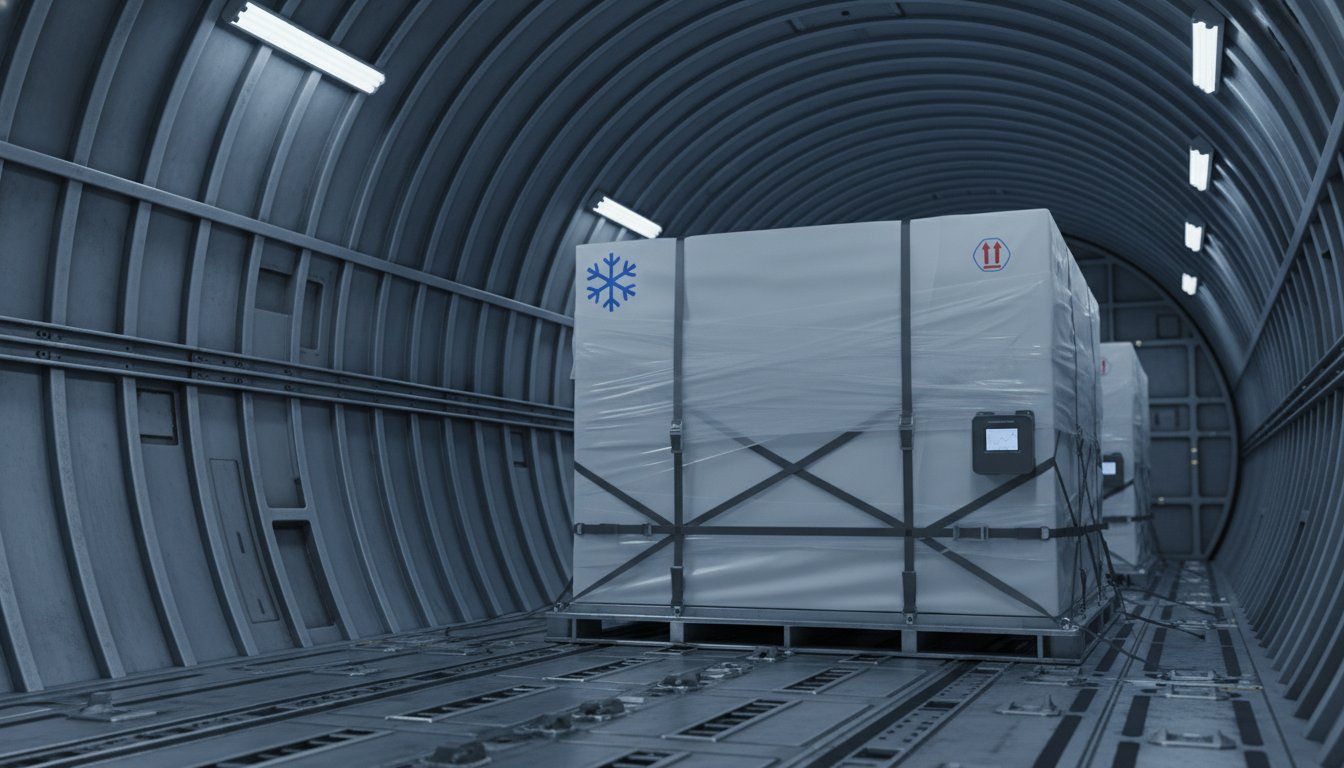
Air freight is the dominant mode for high-value pharmaceutical cargo into Malaysia. Biologics, vaccines, specialty drugs, oncology products, and time-critical OTC launches travel by air not by choice but by necessity: the per-kilogramme cargo values, the stability tolerances, and the time-to-market urgency all push the same way. The air freight bill is materially higher than the equivalent sea reefer freight bill, but the cargo cannot wait the three to five weeks that sea reefer would take from the EU or the US.
What is not in the air freight bill, and what most importers do not realise without specific attention, is the size of the gap between what the air carrier is liable for if something goes wrong and what the cargo is actually worth. Under the Montreal Convention 1999, that gap is structural and consistent. For pharmaceutical cargo, it is the largest gap in the entire transit chain. This guide walks through the convention's mechanics, the post-December 2024 liability cap, and the cargo insurance position that closes the gap.
Key Facts: Air Freight Pharmaceutical Cargo Insurance and the Montreal Convention Gap
What is the Montreal Convention 1999? An international convention governing carrier liability for the international carriage of passengers, baggage, and cargo by air. The convention entered into force on 4 November 2003 and has been ratified by more than 130 states, including Malaysia and all of Malaysia's major pharmaceutical import origins (United States, Germany, Belgium, India, China and Japan).
What is the current cargo liability cap under the Montreal Convention 1999? 26 SDR per kilogramme of gross weight, effective 28 December 2024, following the ICAO five-year inflation review that raised the cap from the previous 22 SDR per kilogramme (ICAO press release, December 2024). At April 2026 SDR-USD rates of approximately $1.35, the cap is approximately $35 per kilogramme.
Does the cap apply to every cargo shipment? Yes, by default. The cap can only be exceeded where the consignor makes a special declaration of value at the time of handing over the cargo to the carrier, and pays a supplementary sum where applicable, under Article 22(3) of the Montreal Convention. In practice, the special declaration mechanism is rarely used in pharmaceutical cargo because the supplementary freight charges are typically prohibitive.
Does the convention apply to all pharmaceutical air freight into Malaysia? Yes, where both the origin and destination countries are parties to the convention. Where one country has not acceded to Montreal but is a party to the older Warsaw Convention 1929 (or one of its protocols), the older regime applies with different and generally lower liability limits. For the four main pharmaceutical import origins into Malaysia (United States, Germany and the EU, China, India), all parties are signatories to the Montreal Convention.
What does the cap mean in commercial terms for biologics? For a 100-kilogramme pallet of biologics worth $150,000, the carrier liability cap is approximately $3,500 (100 × $35). For a higher-value 50-kilogramme oncology shipment worth $400,000, the cap is approximately $1,750. The gap between carrier liability and cargo value is the cargo insurance gap that the policy must close.
How does the cargo insurance policy close the gap? Through Institute Cargo Clauses (A) 2009 cover with explicit air freight scope, a Montreal Convention gap cover endorsement, and the insured value declared at full replacement cost rather than at invoice value alone. The placement-time conversation explicitly addresses the air freight gap on the importer's high-value air freight cargo.
For the underlying framework, see Institute Cargo Clauses for the cover form, Incoterms 2020 for risk transfer mechanics, the pharmaceutical imports cargo insurance cluster hub, and the Pharmaceutical & Medical Devices Cargo Insurance industry page.
Resource: Cargo Insurance Coverage Audit
Take the 9-question Cargo Insurance Coverage Audit to score your air freight pharmaceutical cargo cover against the Montreal Convention gap baseline. Free, no signup wall.
How the Montreal Convention 1999 Came to 26 SDR per Kilogramme
The Montreal Convention 1999 replaced the older Warsaw Convention 1929 regime, consolidating into a single instrument the various amendments and protocols that had accumulated over the seven decades since Warsaw. The convention entered into force on 4 November 2003 and applies to international carriage by air for compensation, between two states parties or within a single state party where the agreed stopping place is in another state.
The cargo liability cap is set under Article 22 of the convention. As originally enacted, the cap was 17 SDR per kilogramme of gross weight. Article 24 of the convention provides for a periodic review of the cap, with the limits adjusted by reference to inflation if cumulative inflation since the last review exceeds 10 percent.
The International Civil Aviation Organization (ICAO) administers the five-year review process. The cap has been adjusted twice since the convention entered into force:
- 28 December 2009: Raised from 17 SDR per kilogramme to 19 SDR per kilogramme.
- 28 December 2019: Raised from 19 SDR per kilogramme to 22 SDR per kilogramme.
- 28 December 2024: Raised from 22 SDR per kilogramme to 26 SDR per kilogramme, the current cap as of May 2026.
The next ICAO five-year review will fall due in late 2029, with any further adjustment taking effect on 28 December 2029. Articles in the marine and cargo insurance industry citing the older 22 SDR per kilogramme figure are referring to pre-December 2024 publications; the current figure is 26.
What an SDR Is and Why It Matters
The Special Drawing Right (SDR) is the unit of account used by the International Monetary Fund and by most international carriage conventions including Montreal, Hague-Visby, CMR, and CIM-COTIF. The SDR's value is set daily by the IMF as a weighted basket of major currencies (US dollar, euro, Chinese renminbi, Japanese yen, and British pound under the current basket composition).
The SDR-to-USD exchange rate moves daily, but typical values in 2025 and 2026 sit around $1.32 to $1.38 per SDR. At April 2026 rates of approximately $1.35 per SDR, the Montreal Convention's 26 SDR per kilogramme cap converts to approximately $35 per kilogramme.
The cap is denominated in SDR rather than US dollar specifically so that inflation in any single currency does not erode the protection. The five-year ICAO inflation review uses SDR-denominated inflation as the trigger.
The Cap in Commercial Terms
For pharmaceutical importers, the practical question is how the 26 SDR per kilogramme cap relates to actual cargo values. The answer is that the cap is materially below cargo value for nearly every category of pharmaceutical cargo that moves by air.
| Cargo Category | Typical Per-Kilogramme Cargo Value Order of Magnitude | Carrier Liability Cap at 26 SDR/kg (approx $35/kg) |
|---|---|---|
| Finished dose generics on air freight | Hundreds of dollars per kilogramme | ~$35/kg |
| Refrigerated biologics (monoclonal antibodies, biosimilars) | Thousands of dollars per kilogramme | ~$35/kg |
| Specialty oncology and rare disease biologics | Tens of thousands of dollars per kilogramme | ~$35/kg |
| Cell and gene therapy products | Very high per-unit value with variable kilogramme density | ~$35/kg |
Across all four categories, the carrier liability cap recovers a small fraction of cargo value. For specialty biologics where per-kilogramme value can be three or four orders of magnitude above the cap, carrier liability is functionally negligible relative to the loss.
The cargo insurance policy is the recovery vehicle that closes the gap. For NPRA-licenced importers running air freight pharmaceutical programmes, Marine Cargo Open Cover with a Montreal Convention gap endorsement is the working placement structure; for one-off air freight movements, Marine Cargo Insurance applies, and for high-value biologic and specialty consignments, Specialist High-Value Transit Insurance applies. For the industry view, see Pharmaceutical & Medical Devices Cargo Insurance.
The Special Declaration of Value Mechanism
Article 22(3) of the Montreal Convention provides one mechanism for the consignor to exceed the cap: a special declaration of value at the time of handing over the cargo to the carrier, accompanied by payment of any supplementary sum requested by the carrier.
In theory, the special declaration mechanism allows the air carrier to assume liability up to the declared value. In practice, the mechanism is rarely used in pharmaceutical cargo for three reasons.
1. The supplementary freight charge is typically prohibitive. Carriers charge a percentage of the declared value over the cap as supplementary freight. For high-value pharmaceutical cargo, the supplementary charge can be a material fraction of the declared excess, eroding the economics of the cover.
2. The carrier retains defences. Even with a special declaration, the carrier can still defend against full liability by demonstrating the loss did not arise from carrier fault. The cap is removed, but the underlying liability framework still applies.
3. Cargo insurance is more efficient. The cargo insurance policy responds to the loss directly, on an all-risks basis, without requiring proof of carrier fault. The premium is generally materially lower than the supplementary freight charge for special declaration.
For most pharmaceutical importers, the practical answer is to leave the carrier liability at the convention cap, place the cargo insurance policy with the Montreal Convention gap explicitly closed by endorsement, and let the cargo insurance handle the bulk of any loss.
How Air Freight Cargo Insurance Closes the Gap
The cargo insurance position on air freight pharmaceutical cargo has four named elements that, together, close the Montreal Convention gap.
1. Institute Cargo Clauses (A) 2009 with Explicit Air Freight Scope
The base cover is ICC (A) 2009, the all-risks form. The wording must explicitly cover air freight as well as sea freight, or the open cover should state the air freight scope clearly. Some general cargo open covers exclude or sub-limit air freight by default; the pharmaceutical placement should explicitly include the air leg.
2. Montreal Convention Gap Cover Endorsement
An endorsement that closes the gap between the 26 SDR per kilogramme carrier liability cap and the cargo's declared value. The endorsement is typically not a separate clause but a clarification of how the policy responds where carrier recovery is limited by the convention.
3. Temperature Deviation Endorsement Aligned to Air Freight Realities
The temperature deviation endorsement on the policy should account for the air freight failure modes: ground handling excursions on the tarmac and apron, transshipment dwell, aircraft cargo hold temperature variability, and the specific behaviour of active and passive temperature-controlled unit load devices.
4. Replacement Cost Valuation
The insured value should be declared at full replacement cost rather than at CIF or CIP value alone. For biologics specifically, the standard 10 percent uplift over CIF or CIP under UCP 600 Article 28 may be insufficient because it misses NPRA registration, stability re-testing, and replacement lead time costs. An uplift in the 15 to 25 percent range over CIF or CIP is more commonly negotiated for biologic air freight placements.
For high-value biologic air freight, the Montreal Convention gap is the largest gap in the transit chain.
Voyage arranges open cover marine cargo insurance for NPRA-licensed pharmaceutical importers with explicit air freight scope and Montreal Convention gap cover endorsed at placement. Request a coverage review at voyagecover.com/#contact-form or WhatsApp Kevin at +60 14 925 5243.
Air Freight Failure Modes the Policy Has to Address
Beyond the Montreal Convention cap, three air freight failure modes recur for pharmaceutical cargo into Malaysia.
Ground handling excursions. The transit chain on air freight includes time on the apron during loading, time on the tarmac during transshipment, and time in airport cargo terminals between aircraft and warehouse. Each segment is an opportunity for temperature exposure. For tropical airports including KLIA, the ambient temperature during peak afternoon hours can push the temperature deviation window quickly for refrigerated cargo. CEIV Pharma certified ground handling materially reduces this risk; uncertified handling significantly increases it.
Transshipment dwell. Where pharmaceutical air freight transships at an intermediate hub (a common routing for EU-to-Malaysia and US-to-Malaysia cargo), the dwell time on the apron between the inbound and outbound aircraft is where excursions concentrate. Active temperature-controlled ULDs handle this best because they maintain temperature under their own power. Passive systems depend on the hold-time tolerance against the transshipment dwell duration.
War risk on transit through Joint War Committee listed areas. EU-to-Malaysia air freight routings that transit the Red Sea and Bab-el-Mandeb expose the cargo to war risk under Clause 6 of ICC (A) 2009. Institute War Clauses (Cargo) CL385 dated 01.01.2009 is the standard cover form, with the JWC current listings determining where war risk surcharges and cover are required.
Comparing Carrier Liability Conventions Across Modes
For context, the air freight Montreal Convention cap sits within a broader set of mode-specific carrier liability conventions, each with its own per-kilogramme or per-package cap.
| Mode | Convention | Carrier Liability Cap | Approximate USD Equivalent at April 2026 SDR Rate |
|---|---|---|---|
| Air freight | Montreal Convention 1999 | 26 SDR per kilogramme of gross weight | ~$35 per kilogramme |
| Sea freight | Hague-Visby Rules | SDR 666.67 per package or 2 SDR per kilogramme, whichever higher | ~$900 per package or ~$2.70 per kilogramme |
| International road | CMR Convention | 8.33 SDR per kilogramme of gross weight | ~$11 per kilogramme |
| International rail | CIM-COTIF | 17 SDR per kilogramme of gross weight | ~$23 per kilogramme |
The pattern is consistent across all four modes: per-kilogramme caps that bear no relationship to cargo value. For pharmaceutical cargo, where per-kilogramme value commonly runs into the hundreds, thousands, or tens of thousands of dollars, the carrier recovery covers a small fraction of cargo value regardless of mode. Cargo insurance is the recovery vehicle in every case.
The Pre-2024 SDR Cap and Older Policy Wordings
Marine cargo insurance content published before late 2024 cites the older 22 SDR per kilogramme cap. Policy wordings and references that still cite 22 SDR per kilogramme are not technically wrong (the figure was correct between 28 December 2019 and 27 December 2024), but they are out of date.
For policies placed or renewed after 28 December 2024, the cargo insurance documentation should reflect the 26 SDR per kilogramme cap. The practical effect on the cargo insurance position is small in proportional terms (26 versus 22 is an 18 percent increase in the cap), but it matters for accuracy at claim and for the Montreal Convention gap calculation. Reviewing existing policies at the next renewal to ensure the current cap is reflected is part of the placement review.
The Warsaw Convention Carve-Out
The Montreal Convention 1999 has more than 130 state parties, including all major pharmaceutical import origins to Malaysia. Where the origin or destination of a particular shipment involves a state that has not acceded to Montreal but is a party to the older Warsaw Convention 1929 or one of its protocols, the older regime applies. The Warsaw Convention cargo cap is materially lower, expressed in gold francs or amended SDR equivalent depending on protocol, and the older convention has different defences and procedural requirements.
For pharmaceutical cargo into Malaysia, the four main import corridors (United States, Germany and the EU, China, India) are all Montreal Convention routes. The Warsaw carve-out is operationally relevant only for less common origins or for very specific routings, but the cargo insurance placement should be aware of which convention applies if any part of the routing is non-Montreal.
Frequently Asked Questions
What is the current Montreal Convention cargo liability cap?
26 SDR per kilogramme of gross weight, effective 28 December 2024, following the ICAO five-year inflation review (raised from the previous 22 SDR per kilogramme). At April 2026 SDR-USD rates of approximately $1.35, this is approximately $35 per kilogramme. The next ICAO five-year review is due in late 2029.
Why is the Montreal Convention cap denominated in SDR rather than US dollars?
The Special Drawing Right is the IMF unit of account, and its value is set daily as a weighted basket of major currencies. Denominating the cap in SDR rather than a single currency prevents inflation in any one currency from eroding the protection over time. The five-year ICAO inflation review uses SDR-denominated inflation as the trigger.
Can I exceed the Montreal Convention cap by declaring value at shipment?
In theory, yes. Article 22(3) of the Montreal Convention 1999 provides for a special declaration of value at the time of handing over the cargo to the carrier, accompanied by payment of any supplementary sum requested by the carrier. In practice, the special declaration mechanism is rarely used for pharmaceutical cargo because the supplementary freight charges are typically prohibitive and cargo insurance is more efficient.
Does the Montreal Convention apply to my pharmaceutical air freight into Malaysia?
Yes, where both the origin and destination countries are parties to the convention. Malaysia and all four main pharmaceutical import origins to Malaysia (United States, Germany and the EU, China, India) are parties to the Montreal Convention 1999. For less common origins or for specific routings, the cargo insurance placement should confirm which convention applies.
What does a Montreal Convention gap cover endorsement actually do?
It clarifies that the cargo insurance policy responds for the difference between the 26 SDR per kilogramme carrier liability cap and the cargo's declared value. The policy pays the difference (subject to deductibles, sub-limits, and policy terms), with subrogation against the carrier for the portion recoverable under the convention.
What air freight failure modes is the cargo insurance policy most likely to respond to?
Ground handling excursions on the apron and tarmac, transshipment dwell exposures, active temperature-controlled ULD failures, passive shipper hold-time exceedance, and war risk where the routing transits Joint War Committee listed areas. For each, the policy responds under ICC (A) 2009 with the appropriate endorsements layered in (temperature deviation, Montreal gap cover, war risk via CL385).
How does IATA CEIV Pharma certification affect the cargo insurance position?
CEIV Pharma certified airlines, ground handlers, and forwarders produce structured documentation as part of the certified handling process, materially supporting the cargo insurance claim position. CEIV Pharma is not a substitute for the cargo insurance policy, but it reduces the operational probability of temperature excursion and strengthens the chain-of-custody documentation pack at claim.
Should I insure biologic air freight at invoice value or full replacement cost?
Full replacement cost. Biologic replacement cost includes NPRA registration costs, stability re-testing, replacement lead time, and freight at higher pharmaceutical rates. The standard 10 percent uplift over CIF or CIP under UCP 600 Article 28 may be insufficient. An uplift in the 15 to 25 percent range over CIF or CIP is more commonly negotiated for biologic air freight placements, with the exact figure agreed against the importer's cargo profile.
Voyage Conclusion
The Montreal Convention 1999 carrier liability cap of 26 SDR per kilogramme of gross weight (effective 28 December 2024 under the ICAO five-year inflation review) is the structural gap in air freight pharmaceutical cargo. For biologics where per-kilogramme cargo value runs orders of magnitude above the approximately $35 per kilogramme cap, the cargo insurance gap is the entirety of the loss. The cargo insurance policy must explicitly close that gap through Montreal Convention gap cover, temperature deviation endorsement, and replacement cost valuation negotiated at placement.
Talk to Voyage about Marine Cargo Open Cover for air freight pharmaceutical importers, with Montreal Convention gap cover and temperature deviation endorsed at placement. For high-value biologic consignments, Specialist High-Value Transit Insurance applies. For the industry view, see Pharmaceutical & Medical Devices Cargo Insurance. WhatsApp +60 14 925 5243 or use the contact form.
Take the Cargo Insurance Coverage Audit
Score your pharmaceutical cargo programme: Cargo Insurance Coverage Audit. Free, no signup wall.
Related in the pharmaceutical cluster: pharmaceutical imports cargo insurance cluster hub, reefer container pharmaceutical handling, biologic drug transport in Malaysia, plus the broader foundational guides: Institute Cargo Clauses and LC insurance certificate requirements.
Disclaimer: This article provides general guidance on Montreal Convention 1999 carrier liability and air freight pharmaceutical cargo insurance as of May 2026. The Montreal Convention cargo cap is subject to the ICAO five-year inflation review; SDR-USD exchange rates fluctuate daily. Confirm current rates and any new ICAO adjustments before relying on specific figures.
Coverage terms, conditions, and availability vary by insurer, policy, and jurisdiction. Always review your specific policy wording and consult a qualified insurance or legal professional before making coverage decisions.
Why Voyage
Marine Insurance Specialists
International Underwriter Access
Both Sides of the Supply Chain
Malaysia and Singapore Expertise
Other industries
Explore other industries we cover


Get Best Rates / Quotation

Voyage is a specialist marine insurance intermediary arranging marine cargo and marine liability coverage for businesses in Malaysia, Singapore, and internationally. All insurance is placed through licensed broking partners.
Riskflow Sdn Bhd (202101001225):
Suite 3.19 (North Block), The Ampwalk, 218 Jalan Ampang, 50450 Kuala Lumpur, Wilayah Persekutuan Kuala Lumpur
t: +60149255243 (Kevin H.)
email: kevin@voyagecover.com